




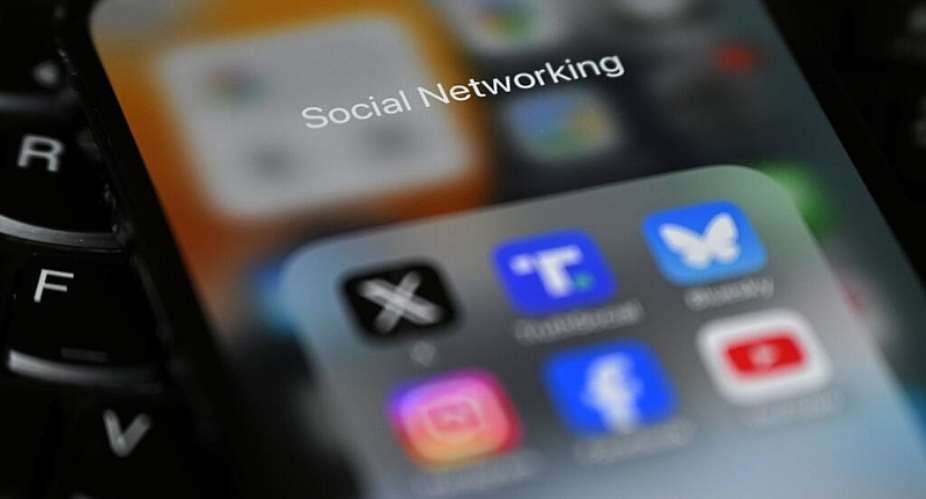
Britain will ban children aged under 16 from using a range of social media apps, including Snapchat, TikTok and YouTube, to protect them from harmful content and excessive screen time, Prime Minister Keir Starmer announced on Monday.
Some children's charities welcomed the sweeping change, which is likely to trigger a major fight with US tech giants, but others warned it could make teenagers less safe online.
YouTube and Meta, the parent company of Facebook and Instagram, warned that a blanket social media restriction could push kids into unregulated online spaces.
Starmer, likely to face a leadership challenge in the coming weeks, said social media sites were exposing children to content that is "dangerous" and "designed to be addictive".
Watch more Should kids be banned from social media? The world is deciding
The ban will "include platforms like Snapchat, TikTok, YouTube, Instagram, Facebook and X" but not messaging services such as WhatsApp, the government said.
Starmer said the upcoming ban was influenced by the experience of Australia, which in December became the first nation to ban people under 16 from social media.
He added during a press conference in Downing Street that he hoped to pass the regulation by late December and for the ban to come into force in spring next year.
Read more Australia investigates tech giants for 'failing to obey' social media ban for children
He suggested that YouTube Kids, Lego Play and Google Classroom would not be prohibited.
The government said in a statement it would also be considering overnight curfews and breaks in infinite scrolling for minors, and would announce more detail in July.
Blocking 'harmful functions'
Australia's Prime Minister Anthony Albanese welcomed the move in a post on X, saying: "Social media giants operate across borders. By standing together, we can do more to hold them accountable and keep children safe online."
Read more Why is Australia banning children under 16 from social media – and can they enforce it?
Canada and France are among other countries considering similar bans, while Indonesia began enforcing its ban for users under 16 in March.
Britain's ban could anger US President Donald Trump after the US embassy in London earlier this month came out against "broad social media bans".
Starmer's announcement follows a government-led consultation where British teenagers trialled social media bans and time limits on apps.
The National Society for the Prevention of Cruelty to Children called the ban "a win" for children and parents, but insisted that it must be followed up with "robust age checks on platforms" and "an effective enforcement regime".
Save The Children UK's senior adviser Jeffrey DeMarco said his charity was concerned a ban "pushes children into less regulated spaces, where they are less likely to seek help when something goes wrong".
A spokesperson for YouTube responded with a warning that such a blanket ban would push children towards "less safe services".
The government also said it would block "harmful functions" on gaming services and live streaming platforms allowing strangers to contact children.
"Is there a situation in the offline world where you would just let your child pair up with a stranger? An adult that you don't know about? No. So we're taking action on that," Starmer said, without giving details.
Self-generated content
The UK government's consultation on the issue, which closed in late May, attracted about 116,000 contributions, making it the second-largest response ever received.
More than 83 percent of parents who responded said the risks posed by social media outweighed the benefits for children, with 91 percent backing a minimum age of 16.
The UK announcement comes a week after the government said tech giants must stop children in Britain from being able to send and receive nude images on their devices.
Britain's interior ministry said it was giving companies, including Apple and Google, three months to introduce safety features to block children from taking and accessing naked photos on phones and tablets.
If they failed to do so, the government would introduce legislation forcing them to activate the technology, it warned.
A law change would stop children from being able to access pornography, while also making it more difficult for child abusers to target children, it said.
According to analysis by the Internet Watch Foundation charity cited by the government, 91 percent of online child sexual abuse reports recorded in 2024 contained self-generated content from children themselves.
(FRANCE 24 with AFP, AP)

 Publish Sophia Akuffo’s resignation letter now – Martin Amidu urges govt
 Bole SHS investigates alleged sexual misconduct involving teacher and student
 Justice Sophia Akuffo did not disclose reason for Council of State resignation —...
 Journalists disappear as intimidation grips Mozambique's Cabo Delgado region
 Bossman Asare resigns as EC Deputy Chair, Samuel Tettey retires — Presidency
 Bawumia's responses would've been leaked as Arthur Kennedy did in his complaints...
 ‘No blank cheque' for president or government says Senegal’s Sonko
 Government to transfer over 80% of DACF directly to assemblies to deepen decentr...
 President Mahama presides over 48th ceremonial changing of the Guard at Presiden...
 'We are nothing without foreigners; our men are lazy' – South African workers pr...


