




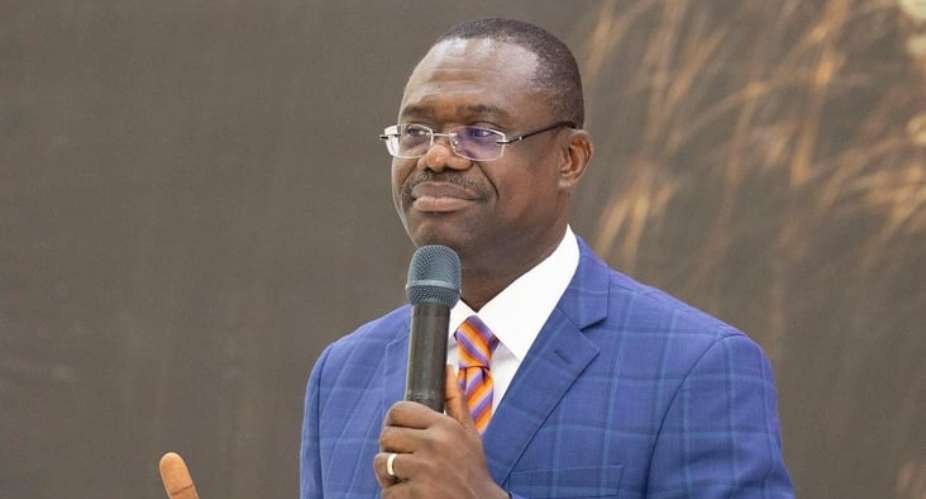
Dr Joseph Siaw Agyepong, Executive Chairman of the Jospong Group of Companies, has revealed that Ghana’s growing reputation as a leader in environmental sanitation technology across Africa is beginning to yield significant results.
According to him, the country now has more than 50 waste treatment and composting facilities, with Ghanaian firms increasingly exporting their expertise to other African countries, including Kenya and Ethiopia.
Dr Siaw Agyepong made the remarks during a high-level stakeholder dialogue on landfill and waste management in the Greater Accra Metropolitan Area (GAMA), held on June 8, 2026, under the theme, “Strengthening Final Disposal Site Operations and Sustainable Solid Waste Management Infrastructure in the Greater Accra Region.”
He stressed the importance of developing homegrown solutions to address Africa’s sanitation challenges rather than relying heavily on external models. He urged African governments to prioritise local expertise and leverage indigenous innovations to solve problems on the continent.
Dr Siaw Agyepong noted that Ghana’s sanitation model stands out because of its purpose-driven approach. Reflecting on his personal journey from humble beginnings and limited formal education to becoming a continental business leader, he attributed his success to purpose, perseverance and strong values.
He said sanitation should not be viewed merely as a cost centre but as a platform for job creation, disease prevention and the development of resilient communities.
Calling on African leaders to support indigenous enterprises, he said, “Through working together, Africans can create a prosperous and sustainable future for themselves and for generations to come.”
The dialogue was organised by the Ministry of Local Government, Chieftaincy and Religious Affairs in collaboration with the Jospong Group of Companies and the Environmental Service Providers Association (ESPA). It was attended by 26 Metropolitan, Municipal and District Chief Executives (MMDCEs) from across the Greater Accra Region.
Participants included government officials, ESPA members, chief executives and representatives of waste management companies, landfill operators, Borla taxi and tricycle associations, officials from the Environmental Protection Authority and the Ministry of Finance, non governmental organisations, community based organisations, sanitation experts, private sector operators and other stakeholders in the sanitation sector.
Dr Siaw Agyepong attributed the success of the Jospong Group largely to investments in local expertise and human resource development.
“The Jospong Group has invested heavily in human capacity development. We have technical experts and hundreds of highly qualified professionals,” he said.
He also warned that persistent funding gaps continue to threaten efforts to maintain environmental cleanliness and safety within GAMA. He therefore called for urgent investment in modern waste treatment facilities and dedicated funding support for waste management companies.
In his capacity as President of ESPA, Dr Siaw Agyepong highlighted the association’s advocacy role in promoting environmental sanitation and waste management through collaboration with both public and private sector institutions.
He explained that ESPA, which has more than 40 members, was established in 2001 as a company limited by guarantee to serve as an advocacy body for environmental service providers, particularly those operating in the waste management sector.
According to him, the association works closely with Metropolitan, Municipal and District Assemblies to improve solid and liquid waste management services in line with government policies aimed at ensuring a clean and healthy environment.
“ESPA organises training programmes, workshops and seminars to enhance the skills and knowledge of its members while promoting best practices in waste management,” he stated.
He added that the association also supports recycling initiatives and environmentally friendly waste management solutions while encouraging greater private sector participation in the sector.
During the dialogue, participants deliberated on a range of issues, including landfill capacity and operational challenges, outstanding sector obligations and financing concerns, immediate interventions ahead of the rainy season, environmental compliance measures, long term infrastructure investment needs, and opportunities for resource recovery and waste diversion.
Addressing the gathering, the Minister for Local Government, Chieftaincy and Religious Affairs, Mr Ahmed Ibrahim, directed all Regional Coordinating Councils and MMDCEs across the country to prioritise the provision of logistics and operational tools for environmental health officers.
He described the work of environmental health officers as critical to the success of local assemblies and essential to improving public health and sanitation.
“Their work hinges on the core of the community,” Mr Ibrahim said. “Environmental health officers are on the frontlines of sanitation, disease prevention and community education. Without their work, the assemblies cannot make meaningful progress.”
The Minister made the remarks in response to concerns raised by an environmental health officer regarding mobility and logistical challenges that continue to hinder field operations.
Mr Ibrahim instructed assemblies to urgently address the identified gaps by providing transportation, protective equipment and other resources necessary for effective service delivery.
“We cannot expect officers to inspect facilities, monitor waste disposal and engage communities on foot in this era. The assemblies must equip them properly. It is not a favour, it is an investment in the health of our people,” he stressed.
He added that the Ministry would monitor compliance with the directive and incorporate logistical support for environmental health officers into future assessments of assembly performance.



 Publish Sophia Akuffo’s resignation letter now – Martin Amidu urges govt
 Bole SHS investigates alleged sexual misconduct involving teacher and student
 Justice Sophia Akuffo did not disclose reason for Council of State resignation —...
 Journalists disappear as intimidation grips Mozambique's Cabo Delgado region
 Bossman Asare resigns as EC Deputy Chair, Samuel Tettey retires — Presidency
 Bawumia's responses would've been leaked as Arthur Kennedy did in his complaints...
 ‘No blank cheque' for president or government says Senegal’s Sonko
 Government to transfer over 80% of DACF directly to assemblies to deepen decentr...
 President Mahama presides over 48th ceremonial changing of the Guard at Presiden...
 'We are nothing without foreigners; our men are lazy' – South African workers pr...


