




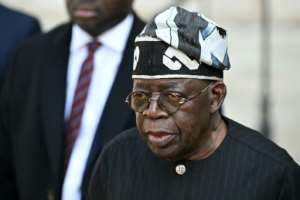
President Bola Ahmed Tinubu's Democracy Day address touched on several important issues confronting Nigeria, including the need to strengthen local government administration. Among the observations that drew public attention was his assertion that the collapse of grassroots governance has contributed to the country's worsening insecurity.
On the surface, the argument appears logical. Effective governance at the local level can help address social challenges, improve public service delivery, and foster closer engagement between government and citizens. However, when examined against the realities of Nigeria's security architecture, the proposition raises an important question: Can the country's deepening insecurity truly be attributed to weak local government administration?
The answer requires a broader and more nuanced examination of the factors driving insecurity across the nation. No serious observer would deny that local governments in Nigeria have struggled for decades. Many councils have become shadows of what they were intended to be, hampered by inadequate funding, political interference, corruption, and limited administrative capacity. As the tier of government closest to the people, their inefficiency has undoubtedly affected development at the grassroots.
Yet, there is a significant difference between administrative weakness and the kind of violent insecurity that has plagued Nigeria in recent years.
The country is currently confronted by multiple security threats. In the North-East, terrorism continues to pose challenges despite years of military operations. In the North-West, armed banditry has disrupted communities and livelihoods. Kidnapping for ransom has become a nationwide menace, even as the South-West region is beginning to have its own fair share of the challenges. Parts of the South-East continue to grapple with violent separatist agitation, while communal conflicts and organized criminal activities persist in several regions.
These are not ordinary law-and-order challenges. They are sophisticated security threats involving heavily armed groups, criminal networks, and actors operating across state and sometimes international boundaries.
Addressing such threats requires intelligence gathering, law enforcement capabilities, military intervention, technological surveillance, border security, and strategic coordination among multiple agencies. These responsibilities fall overwhelmingly within the jurisdiction of federal and state authorities, not local government councils.
The constitutional reality is clear. Nigeria's local governments neither control the police nor command the military. They do not supervise intelligence agencies. They have no authority to deploy security personnel beyond limited local arrangements. They cannot undertake counterterrorism operations or coordinate national security responses.
In practical terms, expecting local government chairmen to defeat armed bandits and terrorists would be like expecting primary healthcare centers to perform complex surgical procedures without doctors, equipment, or operating theatres.
The issue, therefore, is not whether grassroots governance matters. It certainly does. The issue is whether it can reasonably be presented as a major explanation for Nigeria's security crisis.
The larger picture suggests otherwise. For decades, security has remained primarily a federal responsibility. The Nigerian Police Force, the Armed Forces, the Department of State Services, the Nigeria Security and Civil Defence Corps, and other security agencies operate under frameworks established and funded largely by the federal government.
Consequently, when security deteriorates on a national scale, attention naturally turns toward the institutions that possess the constitutional authority, financial resources, and operational tools to confront such threats.
This is not about assigning blame for its own sake. Rather, it is about recognizing where responsibility ultimately lies.
The federal government allocates trillions of naira annually to defense and security. Security agencies possess sophisticated equipment, intelligence capabilities, and operational structures that local governments simply do not have. Nigerians therefore expect these institutions to be at the forefront of addressing insecurity.
State governments also occupy an important place in the conversation. Although governors often complain about lacking direct control over federal security agencies, they nonetheless wield considerable influence through local intelligence networks, community engagement mechanisms, land administration, and security partnerships.
Indeed, many of the factors fueling insecurity, including disputes over land use, illegal mining, forest governance, youth unemployment, and rural poverty, require active state-level intervention. This is why discussions about insecurity cannot be reduced to the effectiveness or otherwise of local councils.
To be fair to President Tinubu, there is merit in the broader argument that stronger local governments can contribute to safer communities. Functional councils can improve infrastructure, support local conflict-resolution efforts, strengthen community engagement, and facilitate information sharing between residents and security agencies.
A community with good roads, functional schools, healthcare facilities, and economic opportunities is generally less vulnerable to criminal infiltration than one abandoned by government.
However, these contributions are supportive rather than primary. They complement security efforts; they do not replace them.
A well-run local government can help create conditions that discourage crime, but it cannot singlehandedly stop insurgency, dismantle kidnapping syndicates, or neutralize heavily armed criminal groups.
That distinction is important because public policy is most effective when it accurately identifies the root causes of a problem.
Nigeria's security challenges demand reforms that go beyond local government administration. They require improved intelligence gathering, stronger coordination among security agencies, modern surveillance technologies, police reform, effective border management, judicial efficiency, and sustained economic policies that reduce the desperation often exploited by criminal networks.
Equally important is the need for greater accountability at all levels of government. Citizens deserve clear explanations regarding how security resources are utilized and what measurable outcomes are being achieved.
Ultimately, strengthening local governments should remain a national priority. Grassroots governance is essential for development, democratic participation, and community welfare. But it should not become a convenient explanation for a security crisis whose roots extend far beyond the powers and responsibilities of local councils.
As Nigeria continues its search for lasting peace and stability, it is important to keep the larger picture in view. Local governments have a role to play, but the primary responsibility for securing lives and property rests with those who control the nation's security institutions and resources.
The challenge before the country is not merely to strengthen grassroots governance. It is to ensure that every level of government, particularly those entrusted with security responsibilities, effectively performs the duties for which Nigerians elected and empowered them.
Only then can the nation begin to make meaningful progress against the insecurity that continues to threaten its development, unity, and future.

 Wheelchair at the airport won’t kill case – MP reacts to Sedina’s health claims
 Bawumia failed to address indiscipline in NPP despite opportunity — Arthur Kenne...
 People around Bawumia leaked details of our meeting—Arthur Kennedy
 Sinare, Vanderpuye, Azorka tipped for NDC National Chairmanship race
 “Sedina Tamakloe’s case was NPP textbook politics” – Edudzi Tameklo
 Lapaz accident victim at 37 Military Hospital yet to be claimed, family members ...
 Ghana records over 1.3 million tourist arrivals in 2025 as sector generates $4.3...
 We want to see which prison facility housing Sedina Tamakloe – Nana Adutwum
 Social media addiction can derail your career — Prof. Agyare cautions new veteri...
 Wontumi's plea bargain is admission of guilt – Suhuyini


