




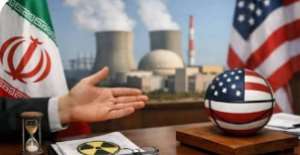
When the history of the 2026 Iran war is written, one of its most remarkable chapters will not be about missiles, blockades, or enriched uranium. It will be about a country long dismissed as a pariah state that quietly stepped into the vacuum between two hostile powers and refused to let the world slide into catastrophe. Pakistan's emergence as the sole mediator in the United States-Iran conflict is one of the most consequential diplomatic pivots of the twenty-first century and it is happening in real time.
As of Saturday, June 13, 2026, Prime Minister Shehbaz Sharif has announced that a historic breakthrough is closer than ever, with a major peace agreement expected to be finalized within the next twenty-four hours, and Islamabad already preparing for the electronic signing of the accord.
The proposed agreement, informally named the "Islamabad Declaration" in acknowledgement of Pakistan's role in facilitating diplomatic engagement between both sides, could within days reorder the geopolitical architecture of the Middle East.
The journey to this moment began in the ruins of February 28, 2026. On that date, joint US-Israeli strikes killed Iran's Supreme Leader Ayatollah Ali Khamenei and other senior officials. Iran responded with missile and drone attacks on Israel and several Gulf states, including Saudi Arabia.
The strikes ignited not only regional war but also fury on the streets of Muslim-majority countries. In Karachi, at least twelve people were killed when a mob breached the US Consulate compound. The world held its breath.
Into this volatile moment, Pakistan chose not to retreat it advanced.
The Unlikely Peacemaker
For years, Pakistan had been viewed as a pariah state. Its emergence as an indispensable mediator in the US-Iran negotiations represents a remarkable role change. Less than a decade ago, the same US President had accused Pakistan of "lies and deceit" during his first term in 2018. (Al Jazeera Centre for Studies) That Pakistan now sits at the centre of the most consequential diplomatic effort of the Trump era speaks to a dramatic rehabilitation and to shrewd strategic maneuvering by Islamabad.
Analysts say Pakistan's geographic proximity to Iran, coupled with its longstanding ties with the United States, gives it a unique position at a time when direct communication between the two sides remains severely constrained. But geography alone does not explain Islamabad's emergence. The deeper reasons are structural, historical, and deeply personal.
Pakistan hosts no US military bases and is one of the few American partners not targeted by Iran's missiles and drones during the conflict. This unique status led Iran to view Pakistan as a relatively neutral, secure, and reliable platform for dialogue. Against a backdrop of complete breakdown of trust between Washington and Tehran, where no third party with military alliance ties could gain simultaneous acceptance from both sides, Pakistan's neutral stance significantly enhanced its credibility.
There is also a religious and cultural dimension that no other potential mediator could replicate. Pakistan is home to the world's second-largest Shia population, sharing religious roots and cultural affinities with Iran that naturally foster a sense of strategic closeness.
This matters enormously in a conflict that has inflamed Shia communities worldwide. Pakistan's Shia population gave Islamabad legitimacy in Tehran that Riyadh, Ankara, or Cairo could never claim.
And then there is the quiet institutional link that has endured since 1979: since the United States and Iran severed diplomatic ties that year, the Pakistani Embassy in Washington has permanently housed Iran's Interests Section, handling part of Iran's diplomatic affairs in the United States and forming a stable channel for information exchange. Pakistan has, in other words, been functioning as a low-profile conduit between the two adversaries for nearly five decades. What changed in 2026 was that Islamabad chose to act publicly on what it had long done quietly.
The Personal Diplomacy of Asim Munir
Central to the entire enterprise is a personal rapport that would strike observers of earlier Pakistan-US relations as extraordinary. US President Donald Trump has repeatedly referred to Pakistan's Army Chief Field Marshal Asim Munir as "my favorite field marshal," having previously helped mediate the India-Pakistan ceasefire that Trump openly counts among the conflicts he has resolved. Trump has also called Munir "a great fighter," "a very important guy," and "an exceptional human being." That rapport matters.
Pakistan capitalized on the discord that arose when India never acknowledged Trump's mediation claims during the India-Pakistan ceasefire. Moreover, at the start of 2026, Pakistan joined the Board of Peace, a new global body created by Trump in the aftermath of the Israel-Hamas ceasefire, which further increased Trump's trust in Pakistani leadership.
On the Iranian side, Field Marshal Asim Munir and Prime Minister Shehbaz Sharif led Pakistan's diplomatic effort, hosting the April 11-12 Islamabad Talks and delivering proposals between the parties. The army chief shuttled between Islamabad and Tehran while the prime minister pursued a parallel track through Gulf capitals and multilateral forums. White House spokesperson Karoline Leavitt confirmed Pakistan's centrality: "The Pakistanis have been incredible mediators throughout this process, and we really appreciate their friendship and their efforts to bring this deal to a close. They are the only mediator in this negotiation."
From Ceasefire to Declaration
The process began on April 8, when Pakistan's Prime Minister announced that the US and Iran had agreed to a conditional two-week ceasefire, during which talks would be held on a lasting agreement, and the US President described a ten-point plan presented by Iran as "a workable basis" for negotiations.
The first round of formal Islamabad Talks was held at the Islamabad Serena Hotel on April 11 and 12, with delegations from Iran, the United States, and Pakistan present. Islamabad declared public holidays on April 9 and 10 to facilitate the talks, ordering government offices and educational institutions to close while essential services continued to operate.
On April 11, 2026, senior delegations from the United States and Iran converged in Islamabad for the first time since 1979 a historic moment in itself, regardless of the outcome of the talks. Though that first round did not produce a final agreement, the ceasefire held, was extended, and subsequent rounds of shuttle diplomacy continued to narrow the gaps between the parties.
The nuclear question remained the sharpest sticking point. The US President acknowledged that most points had been agreed upon, but said "the only point that really mattered, nuclear, was not." He described Iran as "unyielding" on the issue. Iran's Foreign Minister countered that an agreement was "just inches away" but blamed "maximalist demands" from US negotiators.
By June 12, the picture had shifted dramatically. Prime Minister Sharif confirmed that both sides had agreed on the final text of a peace deal, urging restraint against those spreading misinformation to sabotage the effort. "Setting aside the noise, we can confirm that a final, agreed-upon text of the peace deal has been reached and Pakistan is now working closely with both sides to finalize the next steps. Peace has never been this close as it is now," he wrote on X.
What the Deal Contains and What It Does Not
At the centre of the draft agreement is a sixty-day ceasefire across active fronts in the region. The proposal also calls for the immediate reopening of the Strait of Hormuz, through which nearly a fifth of the world's oil supply passes.
The proposed deal would allow Iran access to twenty-four billion dollars in previously frozen funds during the two-month negotiation period, with nearly half of that amount expected to be released before formal talks begin. State-run Iranian media reported that negotiations on Iran's nuclear programme would begin only after the signing of an agreement aimed at ending the conflict, meaning the current memorandum itself does not contain any direct settlement on nuclear-related issues.
Crucially, Iran's existing stockpile of approximately 440 kilograms of uranium enriched to sixty percent purity remains in Tehran's possession throughout that period. The memorandum of understanding does not name a verification mechanism, an inspection protocol, or any requirement to move enriched material before signing. This is a significant caveat. The nuclear question the issue that has eluded every prior round of diplomacy is deferred, not resolved.
Pakistan's Gain
Pakistan's motivation has not been purely altruistic. Pakistan's meteoric rise as a mediator is driven by a combination of necessity and structural constraints.The country has enormous material stakes in regional stability.
As many as five million Pakistani nationals live in the Gulf region. Pakistan received roughly thirty billion US dollars in remittances between 2025 and 2026, fifty-four percent of which came from the Gulf. A protracted conflict affecting Gulf economies risked forcing many of those workers to return home, depriving Pakistan of a vital source of foreign exchange while simultaneously increasing domestic unemployment.
Pakistan's Balochistan province is also grappling with an insurgency along the border with Iran. Islamabad wanted to avoid any scenario where the Iran war spilled across the border and destabilized its frontier regions further.
Yet the gains extend beyond the economic and the strategic. Pakistan has not enjoyed this kind of diplomatic standing since the 1970s, when it served as a bridge between East and West, facilitating rapprochement between the United States and China. It has now achieved a similar feat by holding talks between the US and Iran in Islamabad and playing a critical role in pausing a nearly forty-day war between them.
A Historic Precedent
Pakistan's precedent-setting role in major geopolitical diplomacy is not entirely new. President Yahya Khan facilitated the backchannel contacts that led to Richard Nixon's historic 1972 visit to China, paving the way for the establishment of diplomatic relations between Washington and Beijing. Pakistan later played a role in the 1988 Geneva Accords that paved the way for the Soviet withdrawal from Afghanistan, acting as a front-line state and key interlocutor in UN-brokered negotiations. More recently, Pakistan facilitated the Taliban-Washington contacts that led to the 2020 Doha Agreement. Each of those moments saw Islamabad punch well above its weight.
The 2026 Iran mediation is the most audacious of them all. It has been conducted under simultaneous domestic pressure Pakistan is fighting its own war in Afghanistan and managing an energy crisis exacerbated by the Gulf conflict while managing competing sensitivities between Washington, Tehran, Riyadh, and Tel Aviv.
The deal is not yet signed. The sixty-day negotiation window, if triggered by a signing in the coming hours, will face the full weight of every unresolved question: uranium disposition, sanctions sequencing, inspection regimes, ballistic missile limits, and Iran's regional proxy posture. None of those issues were resolved in any prior round of talks. But for the first time, both sides are at the table with an agreed text, a named mediator, and a framework for what comes next.
History remembers the countries that made the breakthrough possible. Islamabad, it seems, is about to earn a permanent place in that record.
News Reports & Wire Services
Associated Press (Munir Ahmed & E. Eduardo Castillo) "Why Pakistan Has Emerged as a Mediator Between US and Iran," March 27 / April 10, 2026. (WTOP News / Times of Israel)
Washington Times (Tom Howell Jr.) "Top Pakistani Mediator Says U.S.-Iran Deal Is Close to Completion," June 12, 2026.
Pakistan Observer (Muhammad Junaid) "Pakistan Confirms Preparation for Electronic Signing of US-Iran Peace Agreement," June 13, 2026.
Pakistan Observer (Staff Report) "'Islamabad Declaration': US-Iran Deal Likely to Be Signed in Geneva," June 12, 2026.
TechTimes "Iran Peace Deal Text Agreed: 440kg Enriched Uranium Stays in Tehran During 60-Day Talks," June 13, 2026.
The Federal "Pakistan Says US, Iran May Sign Deal in 24 Hours; What's in the 'Islamabad Agreement'?" June 13, 2026.
Life News Agency "Pakistan PM Announces Breakthrough: Final Text of US-Iran Peace Deal Agreed Upon," June 13, 2026.
Outlook India "US-Iran Peace Deal: Pakistan PM Shehbaz Sharif Confirms Final Text Reached After Mediation," June 13, 2026.
Think Tanks & Policy Institutions
Council on Foreign Relations (Joshua Kurlantzick) “How Pakistan Became the Iran War's Unlikely Peace Negotiator," April 28, 2026.
Chatham House "What Does Pakistan Gain from Its Iran-US Diplomacy?" April 21, 2026.
The Diplomat "Pakistan Is Mediating Between Iran and the US Because It Can and It Must," April 23, 2026.
Al Jazeera Centre for Studies "The Islamabad Opening: How Pakistan Became Washington and Tehran's Key Mediator," May 3, 2026.
International Cooperation Center (Beijing) "Pakistan's Mediation Between the U.S. and Iran Reflects Profound Evolution of the International Landscape," April 20, 2026.
The Conversation (academic) "How Pakistan Became the Primary Mediator Between the US and Iran," May 7, 2026.
Reference / Background Sources
Al Jazeera "Can Pakistan Secure Iran-US Nuclear Compromise, as Trump Says Deal 'Close'?" April 17, 2026.
House of Commons Library "US-Iran Ceasefire and Nuclear Talks in 2026," updated June 11, 2026.
Wikipedia "Pakistan in the 2026 Iran War" / "Islamabad Talks."
French Ministry of Foreign Affairs (Diplomatie.gouv.fr) Statement on Minister Barrot's call with Deputy PM Ishaq Dar, April 10, 2026.
Mustapha Bature Sallama.
Medical/ Science Communicator,
Private Investigator, Criminal investigation and Intelligence Analysis.
International Conflict Management and Peace Building.USIP
[email protected]
+233-555-275-880

 Wheelchair at the airport won’t kill case – MP reacts to Sedina’s health claims
 Bawumia failed to address indiscipline in NPP despite opportunity — Arthur Kenne...
 People around Bawumia leaked details of our meeting—Arthur Kennedy
 Sinare, Vanderpuye, Azorka tipped for NDC National Chairmanship race
 “Sedina Tamakloe’s case was NPP textbook politics” – Edudzi Tameklo
 Lapaz accident victim at 37 Military Hospital yet to be claimed, family members ...
 Ghana records over 1.3 million tourist arrivals in 2025 as sector generates $4.3...
 We want to see which prison facility housing Sedina Tamakloe – Nana Adutwum
 Social media addiction can derail your career — Prof. Agyare cautions new veteri...
 Wontumi's plea bargain is admission of guilt – Suhuyini


