




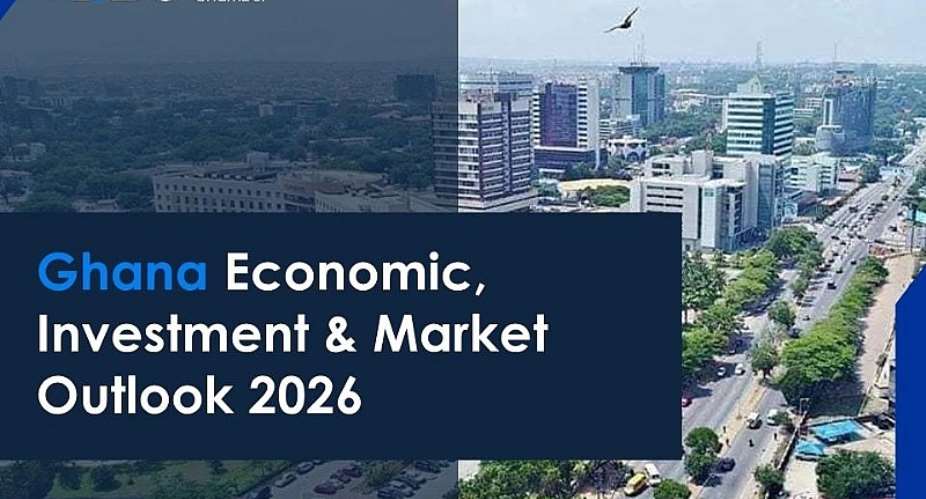
Ghana enters 2026 at a pivotal moment in its economic journey. Following years of fiscal challenges, debt restructuring efforts have largely been completed, the International Monetary Fund (IMF) programme remains on track, and inflation is gradually easing toward more manageable levels. These developments have restored a degree of confidence in the business environment.
Yet beneath the encouraging macroeconomic indicators lies a more nuanced reality. For entrepreneurs and investors, Ghana remains a market of significant opportunities—but also one where success increasingly depends on strategy, efficiency, and disciplined execution.
Stability Returns, But Financing Remains Expensive
One of the most notable developments in 2026 is the return of greater economic stability. The Ghana cedi has experienced less volatility, monetary policy is becoming more predictable, and government spending is increasingly focused on productive investments rather than consumption.
For businesses, this stability provides a stronger foundation for planning and expansion. Manufacturing companies, agro-processors, and logistics operators can forecast costs with greater confidence than they could during the turbulent years of 2023 and 2024.
However, challenges remain. Although interest rates have declined, borrowing costs are still high by international standards. Businesses that once faced lending rates above 30 percent may now find financing available at around 22 percent, but such rates continue to place significant pressure on profitability. As a result, companies with strong cash flows, solid financial records, and access to collateral are likely to benefit the most from the improved environment.
The Digital Economy Continues to Expand
Ghana’s digital economy remains one of the country's strongest growth drivers. Mobile money, fintech services, and e-commerce platforms have moved beyond the startup phase and become integral parts of everyday life. With more than 20 million active mobile money accounts, digital transactions are now the norm for many consumers and businesses.
Despite this progress, several high-potential opportunities remain largely untapped.
The first is business-to-business (B2B) payments and SME financing. Many small and medium-sized enterprises continue to struggle with access to working capital and trade credit, creating opportunities for fintech firms offering innovative financial solutions.
Secondly, digital exports are becoming increasingly important. Ghanaian professionals in technology, design, content creation, and consulting can now access global markets more easily through platforms such as Paystack, Stripe, Deel, and other remote-work infrastructure providers. This has opened new pathways for earning foreign currency without leaving the country.
Agricultural technology also presents enormous potential. Agriculture continues to employ a large share of Ghana's workforce, yet digital adoption remains low. Businesses providing farmers with access to market information, financing, weather forecasting, and supply-chain solutions are beginning to gain traction and attract investment.
Energy: No Longer a Crisis, But Still a Cost Factor
The severe power shortages that once defined Ghana’s energy challenges have largely subsided. Electricity generation capacity has improved, reducing the widespread outages that previously disrupted business operations.
Nevertheless, energy remains a major operational cost. Electricity tariffs have increased, and businesses outside major commercial centres such as Accra and Tema still face occasional reliability issues. Many companies now budget additional funds for solar systems and battery storage to ensure uninterrupted operations.
This shift has created a rapidly growing renewable energy sector. Solar installation companies, commercial and industrial energy providers, and battery storage firms are experiencing strong growth as businesses seek ways to manage energy costs and improve reliability.
For factories, cold-storage operators, hotels, and other energy-intensive enterprises, investing in solar power is increasingly viewed not as an environmental initiative but as a business necessity.
AfCFTA Opens New Markets—But Not Without Challenges
The African Continental Free Trade Area (AfCFTA) remains one of the most significant long-term opportunities available to Ghanaian businesses. As host of the AfCFTA Secretariat, Ghana is well positioned to benefit from increased intra-African trade.
The potential market is enormous, with access to more than 1.4 billion consumers across the continent. Ghanaian producers of processed foods, cosmetics, pharmaceuticals, beverages, and light manufactured goods stand to gain significantly from expanded regional trade.
However, success under AfCFTA requires more than simply having a quality product. Businesses continue to face non-tariff barriers, regulatory differences, border delays, foreign exchange restrictions, and logistical challenges across various markets.
The companies most likely to succeed are those that invest in compliance systems, product standards, documentation, and efficient supply chains. In many cases, mastering the administrative and logistical aspects of trade may prove more important than production capacity itself.
Addressing Ghana’s Human Capital Challenge
While Ghana continues to produce thousands of graduates each year, many employers report a persistent gap between academic qualifications and workplace readiness.
Industries frequently cite shortages in technical and practical skills, including machine operation, software development, project management, data analysis, and specialized manufacturing competencies.
This challenge has created opportunities within the education and training sector. Technical and vocational education institutions, coding academies, digital skills programmes, and corporate training centres are experiencing growing demand as businesses seek to bridge the skills gap.
Forward-looking companies are increasingly investing in employee development programmes, recognizing that talent cultivation has become a competitive advantage.
Three Hard Truths for Business Owners in 2026
Despite the improving business climate, several realities continue to shape the operating environment:
Cash flow remains critical. While credit is becoming more accessible, borrowing remains expensive. Businesses built on sustainable cash generation are better positioned for long-term growth than those relying heavily on debt.
Tax compliance is becoming unavoidable. The Ghana Revenue Authority's expanding use of digital monitoring systems and electronic VAT platforms is reducing opportunities for informal tax practices. Businesses must incorporate compliance into their operating models from the outset.
Consumers are more selective than ever. After years of inflationary pressure, households are increasingly focused on value. Products and services must solve genuine problems, deliver superior quality, or offer clear advantages over competing alternatives.
Looking Ahead
The business environment in Ghana in 2026 cannot be described as either easy or difficult in absolute terms. Rather, it is becoming increasingly selective.
Sectors such as fintech, renewable energy, agro-processing, logistics, digital services, and export-oriented manufacturing continue to benefit from powerful growth trends. Conversely, businesses dependent on cheap imports, low-skilled labour, or informal networks may find the operating environment becoming more challenging.
The next generation of successful Ghanaian entrepreneurs is likely to emerge not from simple trading activities but from building scalable solutions to African challenges. Those who embrace technology, manage finances prudently, invest in talent, and maintain a long-term perspective will be best positioned to thrive.
The opportunities are substantial. The challenges are real. In 2026, the difference between success and failure in Ghana's business landscape increasingly comes down to one factor: execution.

 Anti-LGBTQ Bill is duly passed, I believe it is too late in the day to reverse i...
 Here are areas to face power outages over maintenance works today
 RNAQ ex-wife petitions court to restrict Hajia4Reall’s closeness to her children...
 One dead, two children trapped after three storey building collapse at Adenta
 Obuasi Circuit Court jails farmer 8years over violent mining site attack at Obua...
 Health Minister summons KATH CEO over emergency centre closure
 Unauthorised structures demolished at Haatso
 Fire guts shops opposite Accra Central Police Station
 Stephen Yeboah appointed new registrar of Sunyani Technical University
 Abandoned 250-bed Sewua Regional Hospital rots as KATH battles congestion


