




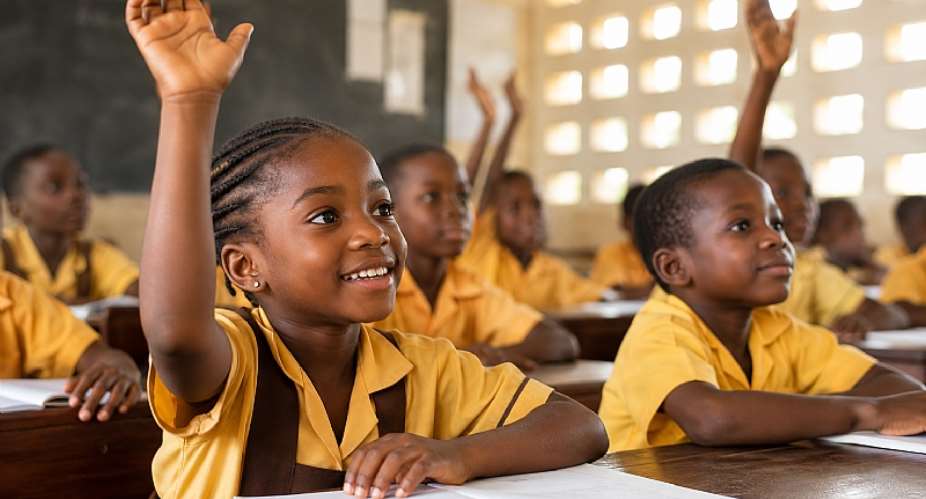
When Ghana introduced the Standard-Based Curriculum (SBC) in 2019 through the National Council for Curriculum and Assessment, it was meant to mark a major shift in education. The old Objective-Based Curriculum, which heavily encouraged teacher-centred learning, was replaced with a system designed to prepare children for the demands of the 21st century. The new approach focused on creativity, collaboration, communication, critical thinking, and active learner participation.
On paper, the vision was excellent.
In practice, however, many schools are still struggling to move beyond the old way of teaching.
Years after the implementation of the SBC, classroom instruction in many basic schools remains largely teacher-centred. Learners are still expected to sit quietly, listen, memorise, and reproduce information during assessments rather than demonstrate understanding, creativity, or practical application of concepts. The result is a classroom culture that looks almost identical to what existed a decade ago.
The most worrying part is that the core competencies at the heart of the curriculum are gradually disappearing from our classrooms. Critical thinking, collaboration, leadership, innovation, and effective communication are not being intentionally developed. Instead of becoming confident and expressive learners, many children are becoming timid, overly dependent on teachers, and afraid to share their thoughts or ideas openly.
This challenge appears even more severe in many private basic schools. Frequent teacher attrition, inadequate supervision, and the employment of unqualified personnel continue to undermine the successful implementation of the curriculum. Some schools recruit WASSCE graduates with little or no pedagogical training simply because they are available and affordable. Others employ experienced teachers who were never properly trained in the principles and methodologies of the Standard-Based Curriculum.
The consequences are visible in everyday classroom practices.
In some kindergartens, children are still made to write formal end-of-term examinations even though the SBC strongly discourages such approaches at the early childhood level. Many teachers continue to rely heavily on closed-ended questions that reward memorisation rather than curiosity, reasoning, or exploration. Yet the SBC was specifically designed to move away from rote learning and encourage project work, group activities, integrated learning, inquiry-based teaching, and practical engagement.
The uncomfortable truth is that changing a curriculum document is far easier than changing classroom culture.
Although Continuous Professional Learning Community (CPLC) sessions are organised in many public schools to help teachers improve their practice, similar structures are either weak or completely absent in many private schools. In several cases, school owners focus more on academic results than on whether teaching methods actually align with the curriculum standards.
This defeats the entire purpose of educational reform.
If Ghana truly wants to achieve the goals of the Standard-Based Curriculum, then teacher development cannot be treated as optional. Schools must invest consistently in training, monitoring, mentoring, and professional growth. Recruitment should not only focus on who can occupy a classroom, but on who is genuinely equipped to facilitate learning under the SBC framework.
Educational transformation will never happen through curriculum documents alone. It happens through teachers who understand the philosophy behind the curriculum and are capable of bringing it to life in the classroom every single day.
When teachers are empowered with the right knowledge, skills, and mindset, learners benefit. And when learners benefit, society eventually gets the thoughtful, creative, and responsible citizens it claims to want.
Alpha Osei Amoako is the Head of Alpha Pathway Educational Consult, an educational consult in Ghana. He is an educational leader, school administrator and education columnist based in Accra, Ghana. He writes regularly on education, society and public affairs for modernghana.com, one of Ghana's leading online platforms for commentary and analysis. He also engages a wide Ghanaian audience through social commentary on Facebook, where he addresses issues at the intersection of education, culture and national development. He


 Brazil's President Lula da Silva beats Flavio Bolsonaro to win re-election
 Nurse rescues mother and baby after unplanned delivery in bush
 McCarthy-Mallam road rehabilitation begins amid commuters’ complaints of heavy t...
 TOR briefs IMF on recovery efforts, inherited debt and sustainability plans
 Aseidu Nketia urges NDC contestants to unite after constituency elections
 EC yet to announce Dormaa Central NDC constituency results
 Baaba Cann questions Obuasi SHTS handling of sexual misconduct allegations again...
 Obuasi SHS headmaster case: “It is better to pay for sex with prostitute than ra...
 NDC not worried about NPP’s Kojo Bamba, he is small boy – Azorka
 Resource exploitation fuelling Africa’s conflicts – Mahama



Comments
You have hit the nail right on the head. The issue should be tackled holistically by the Education ministry. The training of teachers and implementation of SBC must be considered the topmost priority rather than plenty meetings at the ministries. My opinion.
Author's Reply
Exactly