




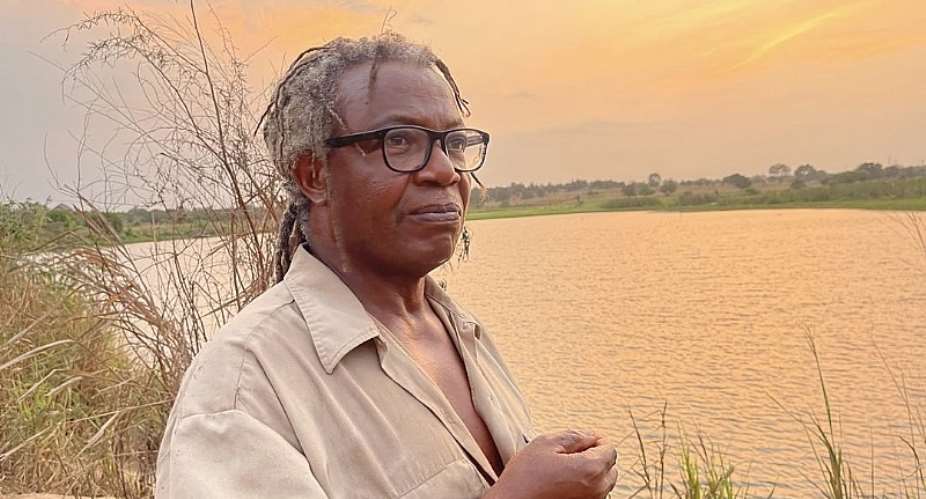
There was a time when Yorubaland bred human giants whose mere presence unsettled empires. Giants who carried intellect like a sharpened cutlass and wielded civilization as both a shield and a weapon. Giants who understood that leadership was not an endless carnival of agbada, titles, newspapers, and cyberspace photographs, but a fearful and solemn covenant between the ancestors, the living, and unborn generations.
These Yoruba ancestral giants knew what current leaders do not: people survive not by noise, dancing, or feasting at lavish Owambe parties, but by discipline, memory, courage, moral and intellectual seriousness.
Today, one looks upon Yorubaland with the sorrow of a man returning to the palace of his fathers only to discover that termites have eaten the pillars.
More saddening is when the supposed elders, both the traditional and elected, are busy arguing over trivial inanities, like which corrupt thieves would get selected in the next elections, when their citizens face existential threats.
History attests that the Yoruba civilization (which spanned three of the European-created nation-states) was once celebrated for order, learning, discipline, industry, communal dignity, and a sophisticated governance system that culminated in the dreaded Oyo Empire.
Today, Yorubaland resembles a vast theatre of derangement, with those in charge more interested in frolicking than in fulfilling the first duty of a government: protecting citizens' security. Just watch the grotesque dancing videos of Osun State Governor Adeleke.
The once-secured highways in Yorubaland have become hunting grounds for kidnappers and marauders who openly carry AK-47s and machetes contrary to the laws of the land. The once sacred forests have become abattoirs of human fear. Marauders have murdered three Yoruba Kings with impunity. Governors would have been killed, but for the heavy security they surround themselves with.
In Yorubaland today, parents send children to school with the silent anxiety of people dispatching loved ones into a war zone. Yet governors issue, through PAs, cold, lifeless, bureaucratic press releases that read like ATM alerts. The corrupt and visionless misleaders are more interested in the coming elections than in protecting their people.
As one watches the absence of seriousness from the entitled, and utterly corrupt governors, one could almost imagine that the kidnapping of schoolchildren and the murder of a teacher in Oyo State were merely disruptions in traffic flow rather than symptoms of civilizational collapse.
In societies still governed by shame and historical memory, such an outrage would have convulsed the entire land. Emergency councils of Obas would have been summoned. The governors of the South West states would have organized regional security measures overnight. Elders would have spoken with fire in their voices. Mourning would have mixed with fury.
Sadly for Yorubaland, those in charge of her affairs today lack the emotional intelligence to empathize with the people they purport to govern. A few hot air balloons generated in cyberspace by rented mouthpieces, and life returned to normal.
That's the fate of Yorubaland today; silence has become the last refuge of exhausted elites.
While this silence from governors permanently trapped in the arithmetic of elections was deafening, there was also nothing but utter silence from the so-called traditional rulers (Obas), who are too intoxicated by imported religions to remember the spiritual architecture that once made Yoruba civilization formidable.
Gifts of SUVs and other office appurtenances have silenced the voices of Yoruba Kabiyesis.
We also have silence from the self-promoted Yoruba leaders, the elderly gladiators of Afenifere, those shameless, tireless manufacturers of factions and useless communiqués, men who cannot share one room without splitting into rival tendencies, yet still insist on presenting themselves as custodians of Yoruba destiny.
And above all, there was silence from a presidency occupied, with delicious irony, by a Yoruba man who often appears emotionally detached from the fears of the very people whose political mythology helped carry him to power.
We accused Muhammadu Buhari on this blog of lacking Emotional Intelligence; Bola Ahmed Tinubu just couldn’t give a damn about anything that doesn’t feather the nests of his Western curators and his Lebanese controllers.
One is compelled to ask: what exactly are many of the Obas, the so-called custodians of tradition in Yorubaland, still preserving?
With their allegiance to imported deities and lavish wayward lifestyles, they are certainly not preserving Yoruba culture or tradition.
And, of course, they do not inspire the spiritual confidence or the civilizational dignity, the necessary ingredients to build a progressive civilizational state.
Most Yoruba leaders, traditional and elected, have abandoned the metaphysical spine upon which Yoruba civilization once stood. The old confidence of a people who saw the universe through their own philosophical lens, which inspired them to build great things - arts, culture, sophisticated political, social, and economic systems, has been exchanged for imported certainties packaged by foreign spiritual merchants masquerading as custodians of ancestral partrimonies.
Yet the same men still demand respect and reverence from the people as though borrowed robes can conceal civilizational nakedness.
The comedic performance of these Yoruba elites would be entertaining if the consequences were not so tragic.
One retarded monarch in Iwo reportedly parades himself as an Amir, as though the throne of his fathers were merely a provincial outpost of an external spiritual empire.
Meanwhile, in Ile-Ife — that sacred cradle from which Yoruba cosmology once radiated — the occupant of the throne often appears more visible in the gossip columns of celebrity marriages, domestic melodrama, divorces, and reproductive athletics than in the difficult labor of offering moral direction to a people under siege.
At this rate and given the current Arole Oodua's shameful performances, one-half expects the next coronation ceremony in Ile-Ife to be coordinated by Instagram and YouTube influencers, reality television producers, and event planners specializing in luxury weddings, ceaseless dramas, and entertainment.
Nothing illustrates the current degeneration of Yoruba civilizational space more painfully than the tragic reduction of titles that were once associated with terror, valor, sacrifice, and martial honor into decorative accessories for elite social climbing.
Consider the office of the Aare Ona Kakanfo.
There was a time when the mention of that title alone caused enemies to tremble. The holder was not a cyberspace-hugging socialite draped in flowing garments and bling-bling, attending birthday parties and award ceremonies. He was the supreme war commander of the Yoruba nation — the man expected to stand between his people and annihilation. Men who occupied that office rode into battle with the full knowledge that death was not an abstraction but an occupational hazard. They defended cities, rallied warriors, and embodied the military will of the entire Yoruba Civilization.
Today, the one who occupies that position has reduced himself to issuing useless press releases through his PA.
Imagine a war commander who wouldn’t even speak directly to his besieged people, except through a rented mouth.
That is the tragedy of Yorubaland today. People want the pomp and pageantry that accrue to offices without accepting the concomitant responsibilities.
The tragedy of Afonja contains a lesson soaked in blood and a historical warning that should instruct present leaders. In pursuit of personal ambition, Afonja betrayed the land when he invited destructive external forces into Yoruba internal conflicts, unleashing consequences from which the old Oyo Empire (and by extension, Yorubaland) never truly recovered.
Civilizations are rarely destroyed only by enemies outside the gate. More often, they are betrayed by ambitious men inside the palace.
Yet today, while kidnappers transform Yoruba forests into profitable theatres of terror, while schoolchildren are abducted like merchandise in a slave market and a mathematics teacher is slaughtered in cold blood, the present holder of that once-feared title drifts across the social landscape in magnificent irrelevance — a ceremonial relic floating through cocktail gatherings and social media. He does this as his people descend into fear and humiliation.
One struggles to understand what the title now represents beyond embroidered robes, choreographed pageantry, and public relations theatrics.
We Yorubas should begin asking serious questions and hold to account those who purport to speak for us.
What makes the Yoruba tragedy especially painful is that this collapse was not historically inevitable. This was the land of Obafemi Awolowo — the civilization that pioneered free education, regional industrialization, administrative sophistication, and social planning at a time when many postcolonial societies were still crawling through institutional infancy.
History punishes societies that mistake nostalgia for strength. Memory alone cannot defend a civilization whose elites have been afflicted by effete decadence, like the current crop of Yoruba elites.
Contemporary Yoruba elites increasingly resemble the exhausted aristocracies that geopolitical analysts often describe before the collapse of great powers (Rome, for example) — detached from reality, intoxicated by self-image, and incapable of recognizing decay even while the ceiling collapses upon their heads.
And nowhere is this decadence more visible than among the permanent “elders” of Afenifere. These men cannot organize coexistence within their own factions without quarrels, betrayals, competing press conferences, and mutual denunciations.
Yet each still speaks with the inflated solemnity of a prophet descending from Sinai with the Ten Commandments. Every disagreement produces another faction. Every ambition manufactures another “leader.”
Yorubaland has become a crowded marketplace of vanity where everybody wishes to become an elder statesman, presidential adviser, political oracle, or kingmaker. Yet, almost nobody wishes to build institutions capable of protecting ordinary people from fear and disorder.
And so the shadow of Afonja hangs heavily over the land.
History teaches that Civilizations do not die only from invasion; they die from elite indifference.
From what we gathered from the pages of history, civilizations die when elite vanity replaces duty. They die when custodians of culture abandon culture. They die when governors govern through public relations rather than moral authority. They die when elders prefer titles to sacrifice.
Civilizations die when a people gradually normalize abnormalities and mediocrity and call it pragmatism.
Future generations will look back upon this era with bewilderment. They will ask how a people so gifted could produce leaders so astonishingly unserious at a moment that demanded courage, discipline, and vision. They will ask why a civilization famous for producing giants surrendered itself to cowards wrapped in agbada, beads, and crowns. They will ask why those entrusted with the inheritance of Oduduwa treated a great civilization like a private social club collapsing under the weight of its own vanity and hubris.
Future historians would note that Yorubaland was not conquered from outside, but was abandoned from within by its otiose elites.
©️ Fẹ̀mi Akọ̀mọ̀làfẹ̀ (1st Dan)
Blog: https://femiakogun.substack.com
YouTube: https://www.youtube.com/@FemiAkomolafe
www.tiktok.com/@panafricandigest
My Mission: Ignorantia et stultitia delendae sunt / Ignorance and stupidity must be destroyed.


 'Our conscience will not allow us to lie' — South Africa evacuees accuse NPP of...
 Second batch of GAF recruits begins six-month basic military training
 'We can only win together' – Kojo Bamba rallies NPP members for 2028
 ‘Congratulations!’: World leaders hail Lula’s election victory in Brazil
 'Stop overthinking, Sammy Gyamfi spoke simple language not PhD thesis' — Frankli...
 IMF broadens engagements as first review of Ghana’s PCI enters second week
 Government rejects GH¢873.94m in Treasury bill bids despite strong investor dema...
 President Mahama woos British investors, urges global debt reforms
 Ashanti Regional Minister impressed with progress of 24-Hour Economy model marke...
 GTA issue: Sanction whoever leaked Abeiku Santana’s letter to Tourism Minister –...


