




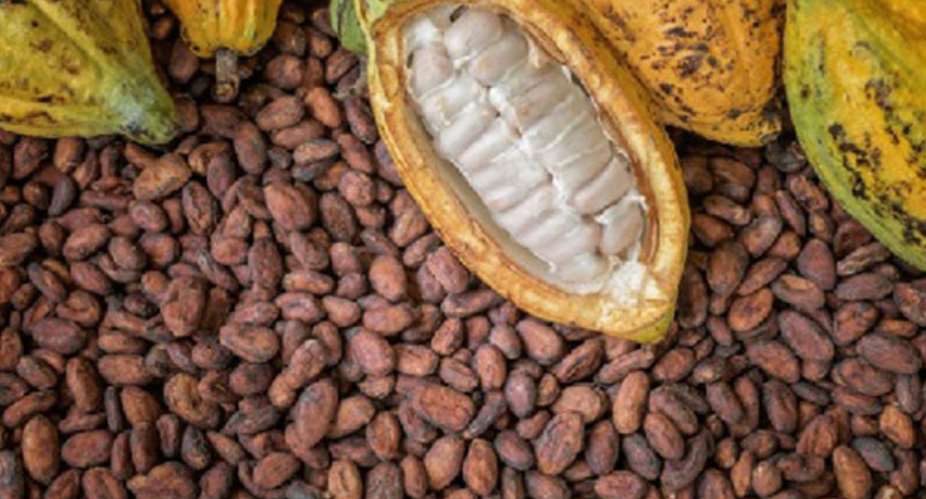
Ghana’s cocoa industry has long been a pillar of the national economy, generating export earnings, supporting rural livelihoods, and shaping the country’s international identity. Yet the sector is increasingly showing signs of structural distress. Climate pressures, institutional debt, volatile global prices, environmental degradation, and declining farmer incomes are exposing the risks of Ghana’s heavy dependence on cocoa as its principal agricultural export.
Rather than continuing to treat cocoa as the country’s economic panacea, Ghana must begin pursuing a broader agricultural diversification strategy. The country’s climate and vegetation support several alternative high-value crops, including black pepper, coffee, vanilla, cardamom, and shea that could complement cocoa production while reducing the economic vulnerabilities associated with reliance on a single commodity.
Ghana’s cocoa economy has struggled for years with deep structural problems. Global price volatility continues to undermine income stability for farmers and state revenues alike. In recent years, lower international prices and production shortfalls have reduced farmgate earnings and intensified financial pressure across the sector. At the same time, climate change has increased the frequency of irregular rainfall, drought conditions, and crop diseases, all of which have weakened yields and reduced productivity.
Smallholder farmers, who form the backbone of Ghana’s cocoa industry, continue to face rising production costs, particularly for fertilizers, pesticides, and disease-control treatments. Many farming communities remain trapped in persistent poverty despite decades of cocoa exports. These economic hardships have also contributed to the continued use of child labour in parts of the sector, attracting growing criticism from international labour and human-rights advocates.
Environmental concerns are adding further pressure. Historically, the expansion of cocoa cultivation has contributed significantly to deforestation and biodiversity loss in Ghana’s forest zones. Increasing international scrutiny over environmental sustainability, particularly from European markets, may further complicate the long-term competitiveness of Ghanaian cocoa exports if sustainable production standards are not strengthened.
The governance challenges within the sector are equally significant. Ghana Cocoa Board, commonly known as COCOBOD, has faced mounting criticism over financial management and operational inefficiencies. The institution relies heavily on forward sales contracts to finance cocoa purchases and sector operations. However, when production falls below expected levels, the country struggles to meet contracted supply volumes, exposing COCOBOD to financial losses and payment delays affecting licensed buyers and farmers.
Efforts to expand local cocoa processing have also produced mixed results. Although policymakers frequently advocate value addition and domestic processing, many Ghanaian processing facilities continue to operate below capacity due to limited access to affordable raw materials and persistent financing constraints.
At the same time, the global chocolate industry itself is undergoing change. Rising cocoa prices, supply disruptions, and climate-related production risks have accelerated investment into cocoa substitutes and cocoa-free chocolate alternatives. While traditional cocoa products will remain dominant for the foreseeable future, technological innovation and shifting consumer preferences could gradually weaken long-term demand growth for conventional cocoa exports.
Against this backdrop, agricultural diversification is becoming increasingly necessary. Ghana’s cocoa-growing regions possess favourable ecological conditions for several commercially viable export crops. Spices such as black pepper, vanilla, and cardamom can thrive in many of the same agroecological zones as cocoa. Black pepper in particular presents a potentially attractive opportunity due to its relatively high international market value and growing global demand.
International market estimates suggest that black pepper prices frequently exceed those of cocoa on a per-metric-ton basis. Although cocoa generally produces higher yields per hectare, black pepper’s stronger price performance and rising demand could make it an important supplementary export crop for Ghanaian farmers. Moreover, spices often require smaller land areas while offering opportunities for value addition and niche export markets.
This does not mean Ghana should abandon cocoa altogether. Cocoa will remain an important component of the national economy for years to come. However, the country’s current level of dependence on a single commodity leaves it dangerously exposed to climate shocks, commodity-price swings, and structural changes in global consumer markets.
The more sustainable path forward lies in diversification. Expanding investment into spices, shea, coffee, horticulture, and agro-processing could strengthen export resilience, improve rural incomes, and reduce the long-term risks associated with overreliance on cocoa. In an increasingly uncertain global agricultural economy, Ghana’s future prosperity may depend not on producing more cocoa alone, but on building a broader and more adaptable export base.
Shaibu A. Gariba
https://www.linkedin.com/in/shaibu-gariba/
Email: [email protected]


 Preaching in moving vehicles banned, not stationed vehicles — Mahama clarifies
 Man picking mushroom accidentally shot dead at Nyagbo Kume Forest, hunter in pol...
 Strike suspended, but negotiations for teachers’ benefits not over — GNAT
 CSA rejects FBI claims, insists Ghana led cybercrime operation
 Govt suspends enforcement of ban on preaching in moving vehicles
 Trump strikes diesel deal with Putin, reversing years of pressure on Russia over...
 Powerful 7.6 magnitude quake shakes Panama, triggering tsunami warning
 GH¢800,000 worth of goods lost in Kia Rhino truck fire at Amanfrom
 I never said Ghana has more nurses than it needs — Akandoh
 I have tried reaching Boakye Agyarko after NPP chairmanship race, but to no avai...


