




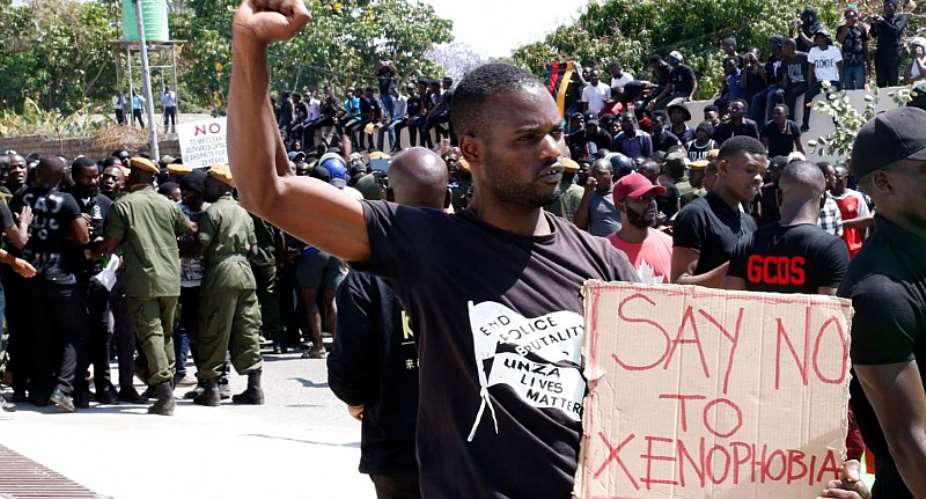
The recent decision by the Government of Ghana to formally petition the African Union over persistent xenophobic attacks against African nationals in South Africa marks a significant diplomatic moment for the continent. It is not merely a protest over isolated incidents of violence. It is a moral cry from one African nation to another and, perhaps more profoundly, a painful reminder that the dream of Pan-African unity remains dangerously fragile.
In a strongly worded diplomatic communication addressed to the Chairperson of the African Union Commission ahead of the Eighth Mid-Year Coordination Meeting scheduled for June 2026 in Egypt, Ghana expressed grave concern over the recurring attacks on African migrants in South Africa, describing the issue as one of “urgent continental interest” demanding collective African action.
The petition, signed by Ghana’s Minister for Foreign Affairs, Samuel Okudzeto Ablakwa, comes against the backdrop of growing fear, anger and disappointment across Africa over the continued targeting of fellow Africans in the very country whose liberation once symbolized the triumph of African solidarity.
Indeed, if there is one question haunting many across the continent today, it is this: What happened to the spirit of Ubuntu?
For decades, South Africa’s anti-apartheid struggle united Africa like few causes ever had. From Accra to Lagos, from Dar es Salaam to Lusaka, African nations rallied behind the liberation movement with unmatched commitment. Governments sacrificed resources. Citizens organized protests. Diplomats confronted global powers. Some countries even hosted South African exiles and liberation fighters at enormous economic and political cost.
At the height of apartheid, South Africa’s suffering was regarded as Africa’s collective suffering.
Today, however, that historic brotherhood appears deeply wounded.
Across several South African communities, horrifying scenes of xenophobic violence have become disturbingly recurrent. Foreign African nationals, including Nigerians, Zimbabweans, Ethiopians, Somalis, Mozambicans, Malawians and increasingly Ghanaians, have repeatedly found themselves subjected to attacks by violent mobs and radical anti-immigrant groups who accuse them of taking jobs, committing crimes or dominating informal businesses.
The derogatory term “amakwerekwere,” often used against foreigners, has become a symbol of exclusion and hostility in a nation once admired globally for preaching reconciliation and human dignity.
The images emerging from these attacks continue to shock the conscience of Africa.
Migrant-owned shops reduced to ashes in broad daylight. Innocent traders beaten publicly. Terrified families fleeing violence with children in their arms. Viral videos circulating on social media show frightened African migrants being chased, assaulted and humiliated while angry crowds chant slogans demanding that foreigners leave South Africa.
Even more troubling are repeated allegations that security agencies often respond too slowly or appear overwhelmed during such attacks.
For many Africans outside South Africa, the pain cuts deeper because the victims are not outsiders from distant continents. They are fellow Africans whose countries once stood firmly behind South Africa during its darkest years under apartheid.
That painful contradiction explains why many now view these attacks not simply as criminal acts, but as a betrayal of Pan-African solidarity itself.
One can only imagine the heartbreak that leaders such as Nelson Mandela, Oliver Tambo and Walter Sisulu would feel if they were alive to witness black Africans turning violently against fellow Africans in the streets of a democratic South Africa.
Mandela repeatedly acknowledged that South Africa’s freedom was achieved largely because Africa stood united behind the liberation struggle. His vision was rooted in reconciliation, justice, dignity and shared humanity. The periodic eruptions of xenophobic violence across parts of South Africa stand in painful contrast to that dream.
The 2008 xenophobic attacks remain among the darkest chapters in post-apartheid South Africa’s democratic history. More than sixty people lost their lives while thousands were displaced after violent mobs attacked foreign Africans living in townships and informal settlements. Yet despite widespread outrage and promises of reform, similar violence resurfaced in 2015, 2019 and subsequent years.
In recent times, organized anti-immigrant movements such as “Operation Dudula” have openly mobilized against African migrants, accusing them of stealing jobs and contributing to crime. Their rhetoric has gained traction among frustrated youths struggling with poverty, unemployment and deepening inequality.
There is no denying that South Africa faces serious socio-economic pressures. Youth unemployment remains alarmingly high. Corruption scandals, weak service delivery, widening inequality and growing distrust in political leadership have intensified public frustration.
Unfortunately, migrants have increasingly become convenient scapegoats for problems rooted primarily in structural economic failures and governance challenges.
Yet the irony remains impossible to ignore.
Many African migrants occupy economic spaces abandoned by others long ago. They run convenience shops in underserved communities, operate within difficult informal sectors and contribute significantly to local economies through trade, taxes, transport and rent. In many townships, residents themselves depend heavily on migrant-owned businesses for affordable goods and daily essentials.
Destroying those businesses does not solve unemployment or poverty. It deepens economic hardship.
Critics argue that the South African government has failed to confront the crisis with the consistency and urgency required. Although political leaders often condemn xenophobic violence publicly, many observers believe official responses have largely remained reactive rather than preventive.
Human rights organizations have repeatedly called for stronger accountability mechanisms, improved policing and swift prosecution of perpetrators.
The political rhetoric surrounding migration has also complicated the crisis. Some politicians and public figures have occasionally linked immigrants to crime and economic hardship, indirectly legitimizing anti-foreigner sentiments among sections of the population.
Meanwhile, South African corporations continue to thrive profitably across the African continent. Telecommunications companies, retail giants, banks and entertainment businesses enjoy enormous commercial success in countries whose citizens sometimes face hostility within South Africa itself.
This contradiction has understandably generated resentment across Africa.
During previous outbreaks, retaliatory tensions surfaced in countries such as Nigeria, where angry protesters targeted South African-owned businesses. Although most African governments have discouraged retaliation, the underlying frustration continues to simmer beneath the surface.
It is against this troubling backdrop that Ghana’s petition to the African Union becomes particularly significant.
In its communication, Ghana described the attacks as a direct violation of the African Charter on Human and Peoples’ Rights and warned that such violence undermines the ideals of African solidarity, brotherhood and continental integration.
The petition also highlighted the contradiction between xenophobic violence and the aspirations of the African Continental Free Trade Area, which seeks to promote free movement, trade and economic cooperation across Africa.
Ghana has therefore called on the African Union to establish stronger monitoring mechanisms, initiate fact-finding missions into the causes of the attacks and facilitate dialogue and reconciliation initiatives aimed at promoting tolerance and inclusion.
Quoting Kwame Nkrumah, Ghana reminded the continent that “the full potential and emancipation of Africa can only be achieved when Africa unites,” insisting that “no African should be dehumanised on African soil.”
That statement may well become one of the defining moral messages of this moment.
The crisis also presents a major credibility test for the African Union itself. Founded on the ideals of African unity and collective progress, the AU cannot afford to remain limited to routine diplomatic statements while fellow Africans continue to face violence within Africa.
If Africans cannot move, trade, work and live safely across the continent, then the dream of continental integration risks becoming little more than political symbolism.
The African Union must therefore move beyond ceremonial diplomacy. It must strengthen continental migration frameworks, deepen civic education on Pan-Africanism and hold member states accountable for protecting African migrants under existing human rights instruments.
At the same time, African governments themselves must confront difficult internal realities.
The situation raises urgent questions for countries like Ghana regarding unemployment, youth migration and economic opportunity. Migration should remain a matter of choice and aspiration, not an act of desperation driven by economic hardship at home.
African governments must therefore rethink development priorities.
Industrialization, agro-processing, digital innovation, entrepreneurship and SME support must become central pillars of economic transformation. The private sector must also play a stronger role in job creation and youth empowerment.
The uncomfortable truth is that no nation builds sustainable prosperity by exporting its most energetic young people into uncertain and often hostile environments simply in search of survival.
Africa must begin to believe in its own possibilities again.
The old mentality that success exists only outside one’s homeland must be dismantled through credible economic opportunities and visionary leadership.
Amid the darkness, however, there have also been important signs of solidarity.
The Government of Ghana, through its Ministry of Foreign Affairs and diplomatic mission in Pretoria, has undertaken efforts to engage South African authorities and assist distressed Ghanaian nationals affected by the violence.
Private acts of compassion have also emerged. Reports indicating support extended by Ghanaian businessman Ibrahim Mahama to some victims demonstrate the important role that private citizens and businesses can play during moments of crisis.
Such interventions deserve commendation because they reflect the enduring humanity that xenophobia seeks to destroy.
Ultimately, the tragedy unfolding in South Africa is not merely South Africa’s problem. It is Africa’s collective moral challenge.
Because the central question confronting the continent today is larger than migration, unemployment or border control.
It is whether Africans still truly believe in the idea of Africa itself.
If the answer is yes, then Africans must reject xenophobia in all its forms, defend the dignity of fellow Africans everywhere and revive the spirit of solidarity that once inspired the liberation struggles of the continent.
Otherwise, the dream of Pan-Africanism will remain unfinished business.
And indeed, if Nelson Mandela could witness these painful scenes today, many across Africa would say, without hesitation, that he would weep.


 Protests against cost of living expected in Italy under heavy security
 Lula, Bolsonaro clash on living costs, corruption in final Brazil election debat...
 Ebola vaccine trial begins in DR Congo
 Trump says US may launch ‘another little Epic Fury’ attack on Iran
 ‘Too arrogant, too sure of itself’ France confronts its legacy in Africa
 Nigeria's unwritten power-sharing rule looms over presidential race
 Several killed, dozens wounded in Jordan church shooting
 ‘I killed lots of terrorists, but it didn’t make me feel better’: The trauma hau...
 Casualties feared as multi-storey building collapses in Nairobi
 Adwoa Safo's Dome-Kwabenya comeback bid must push Elikplim Akurugu to deliver mo...


