




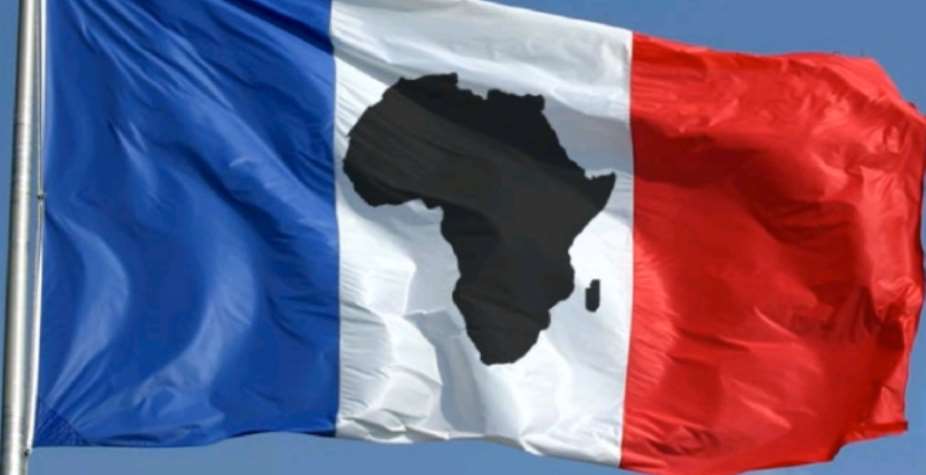
May 11–12, 2026 Nairobi, Kenya hosts a historic France-Africa Summit as Paris seeks a new chapter after being expelled from West Africa
A Historic First: English-Speaking Africa Takes Centre Stage
Kenya and France are jointly holding the "Africa Forward Summit: Africa–France Partnerships for Innovation and Growth" in Nairobi on May 11 and 12, 2026. The President of the French Republic, the President of the Republic of Kenya, and other African heads of state and government are attending. This is the first summit of its kind to be hosted and co-chaired with an English-speaking country.
The summit is co-hosted by President William Samoei Ruto of Kenya and President Emmanuel Macron of France, held at the Kenyatta International Convention Centre (KICC) and the University of Nairobi, bringing together over 1,500 business leaders, entrepreneurs, and investors alongside heads of state, the African Union, and more than 30 CEOs.
Why Kenya? France's Pivot Away From West Africa
To understand the significance of the Nairobi summit, one must understand what drove France to seek a new direction. Shorn of influence in its former colonies in West Africa, France is seeking to deepen ties elsewhere on the continent. The summit follows repeated setbacks for France in former colonies where it has for decade’s wielded influence. A series of coups in the Sahel region since 2020 brought to power military officers who expelled French troops.
Senegal, Mali, Niger, Chad, and Burkina Faso all ordered French troops to leave. Anti-French sentiment intensified across the Sahel, driven by popular pressure, demands for sovereignty, and long-held grievances over decades of perceived neo-colonial interference.
With just a year left in office, President Macron is seeking to present what an aide at the Élysée Palace described as a "renewed partnership" with Africa. France has also faced high-profile setbacks in countries where foreign investors such as China and Gulf states have used deep pockets and longstanding relationships to expand influence. Kenya's own President Ruto terminated a deal with a consortium led by France's Vinci SA for a $1.5 billion highway expansion project and awarded it to Chinese firms.
Kenya: The Strategic Choice
Kenya was chosen to host the event, marking a historic shift as the first time it is being held in a non-Francophone country. Kenya's selection highlights the country's growing diplomatic and economic influence in Africa. Nairobi is already home to major international institutions, including the United Nations Environment Programme and UN-Habitat, making it one of the continent's most important diplomatic centers.
Given Kenya's strategic location along the Indian Ocean, French calculations are equally informed by growing concerns about global supply chains and maritime security. The shift is driven as much by economic motivations as by defence and security. France has reportedly offered business deals, investments, and new partnership agreements to invitees of the summit.
Macron's government has also looked to strengthen security cooperation with non-traditional partners, including by signing a defence pact with Kenya last October to boost cooperation in intelligence sharing, maritime security, and peacekeeping.
What is on the Table?
The summit will be an opportunity to highlight the commitment of France, Kenya, and other African countries to stepping up mutual investment and building tangible solutions to common challenges, including health system strengthening, food sovereignty, digital competitiveness, energy access, and connectivity.
President Ruto confirmed the gathering will cover the reform of the international financial architecture, the energy transition, green industrialization, the blue economy and connectivity, artificial intelligence, sustainable agriculture, and health.
Investment deals, especially in clean energy, artificial intelligence, and education, are expected to be at the centre of Macron's trip, during which he will also visit Egypt and Ethiopia.
France is currently Kenya's fifth-largest provider of foreign direct investment, with over 150 French companies operating in the country.
Macron's Message: Equal Partnership, Not Dependency
In his message ahead of the summit, Macron declared: "Since 2017, we have been working on overhauling the Africa–France relationship. We wish to build partnerships on an equal footing, founded on shared interests and tangible results. For the first time, France and an English-speaking African country will co-chair this event, symbolizing an open and future-focused relationship. Our priority is clear: to step up investments and strengthen our cooperation programmes in healthcare, education, food, digital technology, energy and infrastructure."
French officials have pushed back against the narrative of continental rejection, arguing that "those are three countries out of 54" and that "the vast majority of countries are seeking" French partnerships across a range of sectors.
President Ruto's Vision for Kenya
For President Ruto's administration, the summit is more than a diplomatic gathering it is an opportunity to position Kenya as a regional economic powerhouse, attract fresh investments, and strengthen Nairobi's growing reputation as one of Africa's leading diplomatic capitals.
Under President Ruto, Kenya has emerged as a leading voice on climate action and global financial reform. Through the Nairobi Declaration, Kenya has pushed for a fairer global financial system while positioning itself at the centre of international climate discussions.
The Critics: Neo-Colonialism Repackaged?
Not everyone has welcomed the summit. Progressive movements in Kenya and across the continent argue the Nairobi summit reflects an attempt by France to reposition itself, with East Africa emerging as a new strategic frontier. In a press statement, activist organizers framed the summit as "a rebranded offensive of imperialist decolonization disguised behind the mask of environmental diplomacy and financial reform," arguing that sectors such as climate finance, green energy, and digital infrastructure are strategic areas through which foreign capital seeks to extract wealth from African economies.
The Francophone countries in West Africa rank among the 40 least developed countries in the world despite decades of close ties with Paris a reality that has strengthened arguments about France's neo-colonial system, which critics say preserved French economic and strategic interests while constraining sovereignty and limiting structural transformation in African states.
A New Chapter or the Same Story?
Analysts describe the summit as "a rebranding of how France is positioning itself on the continent." Whether this represents a genuine transformation in the France-Africa relationship, or a strategic pivot driven by necessity after rejection in the Sahel, remains the defining question.
The Africa Forward Summit is described as a milestone in relations between France and the African continent, nearly ten years after President Macron's speech in Ouagadougou a speech in which he promised to end Françafrique and build a relationship based on equals. Ten years later, that promise is being tested not in Paris, but on African soil in Nairobi, in the heart of a continent that is demanding, more loudly than ever, to write its own future.
Mustapha Bature Sallama.
Medical/ Science Communicator,
Private Investigator, Criminal investigation and Intelligence Analysis.
International Conflict Management and Peace Building.USIP
[email protected]
+233-555-275-880


 Obuasi SHTS alleged sexual abuse: Kwasi Kwarteng criticises Education Minister o...
 ECOWAS’ $250,000 flood relief donation arrives in Ghana – Ablakwa
 Kennedy Agyapong has not resigned from NPP – Kwasi Kwarteng
 State failure, not GoldBod, driving galamsey – Daryl Bosu
 A Rocha Ghana raises alarm over human rights abuses in mining communities
 ECOWAS, AfDB discuss ways to advance West Africa’s development priorities
 October 16: Cedi gains against dollar, sells at GHS12.25 on forex market, GHS11....
 Galamsey: Ghana’s rivers now run chocolate and milk colour — Sam Jonah
 A nation of job-seekers will always be poor — Sir Sam Jonah
 “If you attack us with pepper spray, we’ll fight back” — NDC Yakubu Tony Aidoo w...


