




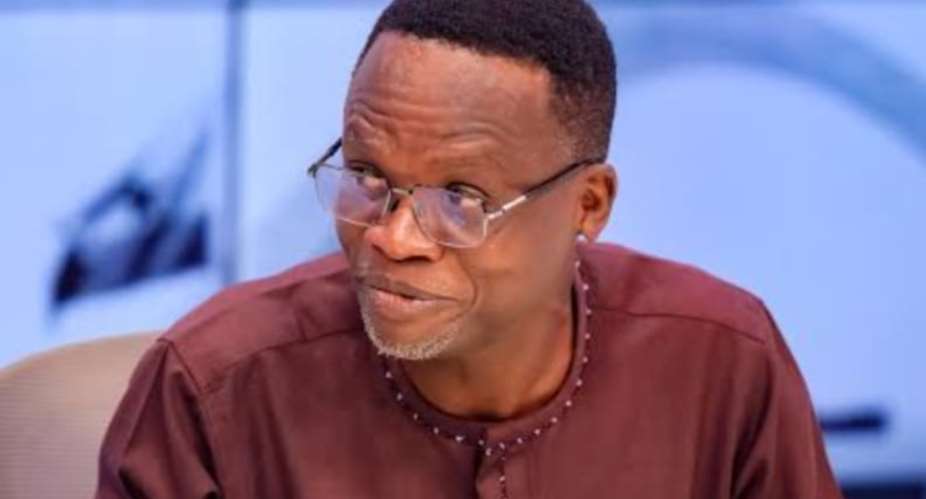
President of the Africa Policy Lens think tank, George Domfe, has stressed the need for Ghana’s public policies to be shaped by credible data and the lived experiences of citizens.
According to him, governance and economic reforms can only be effective when they reflect the realities people face in their daily lives.
Dr. Domfe made the remarks on Wednesday, May 6, during the launch of two reports; the Ghana Wellbeing Tracker and the APL Governance and Trust Barometer, in Accra.
“Africa Policy Lens was established with a clear conviction that sustainable public policy must begin with credible evidence and, critically, with the voices and experiences of citizens themselves,” he stated.
The reports assess governance quality, institutional trust, economic conditions and citizen perceptions across several indicators, including corruption, accountability, political participation and cost of living.
Dr. Domfe explained that the findings present a mixed picture of the country's democratic and economic environment.
According to him, even though Ghana’s democratic institutions remain stable, many citizens continue to express concerns about corruption, weak accountability and declining trust in government institutions.
He said the Governance and Trust Barometer revealed that institutional structures remain intact, but citizens increasingly feel disconnected from governance processes due to poor responsiveness and integrity concerns.
The Africa Policy Lens President also highlighted concerns raised in the Ghana Wellbeing Tracker, noting that economic recovery has not yet translated into improved living conditions for many households.
“The findings reveal a clear message: macroeconomic stabilisation has not yet translated into broad-based improvements in household wellbeing,” he said.
He added that despite signs of economic stabilisation, many households still struggle with high living costs, stagnant incomes and fragile business conditions.
Dr. Domfe, however, noted that citizens continue to show resilience and cautious optimism about the future, provided government policies deliver tangible improvements in livelihoods.
He further called for efforts to rebuild public trust through transparent governance, effective communication, meaningful citizen participation and policies that directly respond to the needs of ordinary Ghanaians.
According to him, the reports are intended to serve as tools for policymakers, Parliament, civil society organisations and the media in promoting evidence-based governance and inclusive national development.

 Accra Is Sinking Yet Again — Time to Be Truthful With Ourselves
 Fire guts rubber factory at Circle Odawna as flooding hampers firefighting effor...
 Flooding strands commuters on Winneba Cape Coast Highway
 Three feared dead after electrocution in Alajo flooding incident
 Nine missing after floods hit Awutu Senya East
 'Your mother, I should go to heaven and ask Nebuchadnezzar to stop the rain?' — ...
 Flood victim found dead along Alajo Railway track as rescue operations continue
 GMet warns more rain as flooding disrupts movement across Greater Accra
 'You sit on social media and talk nkwasiasem' — Nigel Gaisie blasts critics over...
 Osahen Afenyo-Markin accuses NDC of using GoldBod to promote illegal mining


