




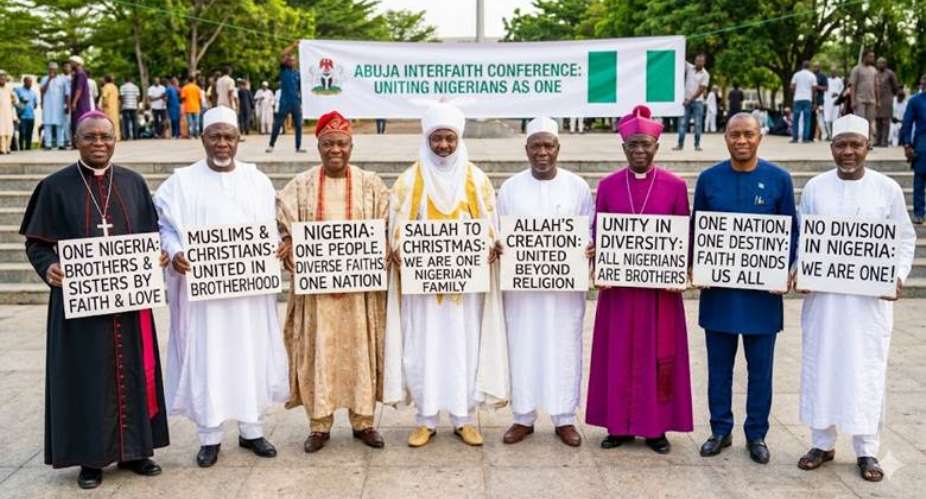
In a world that has become increasingly shaped by division, suspicion, and identity politics, the relationship between Christians and Muslims globally remains one of the most consequential fault lines of our time. But, beneath the noise of conflict and the rhetoric of difference there is a quieter, more enduring truth. That truth is that these two faith communities are far more alike than they are different, not only in doctrine, but in origin, experience, and even in the deeply personal matter of how individuals come to belong to their religious faiths.
At the heart of both Christianity and Islam is a shared spiritual ancestry. Both trace their roots to Abraham, a patriarch revered in the Bible and the Qur’an. In Genesis 17, God established a covenant with Abraham, instituting circumcision as a physical sign of belonging. Similarly, in Islamic tradition, Abraham (Ibrahim) is upheld as a model of submission to God, and circumcision is widely practised as part of that legacy. What began as a symbol of covenant identity became, over centuries, a marker of religious belonging that, in many societies, was imposed long before an individual understood its meaning or relevance. And this raises the profound question: how many Christians and how many Muslims actually chose their faith for themselves? The honest answer is uncomfortable. The vast majority did not. They were born into it, named within it, and raised under its teachings by their parents. Like circumcision that is performed in infancy, religious identity was often assigned to most people before their consciousness, before their questioning, before their consent.
A child born in Riyadh is overwhelmingly likely to be Muslim just as one born in Rome or England is likely to be Christian. Geography and parentage, not conscious consent, determined belief in most cases. And as “victims” most people had no opportunity to make their own choice of what religion they preferred to belong to, or whether they wanted to be circumcised or not.
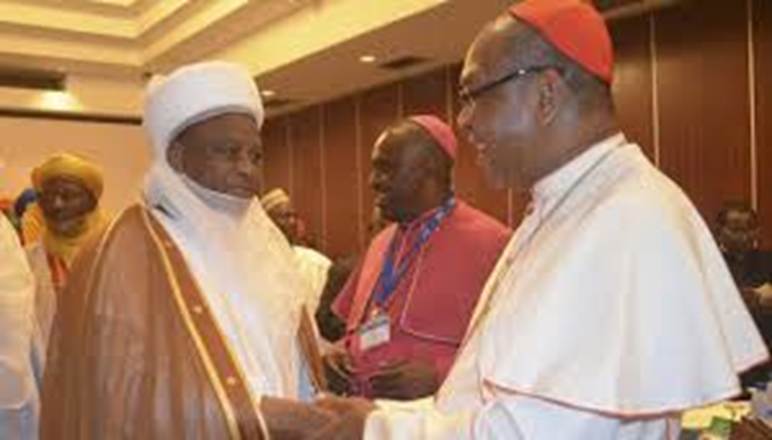
While this understanding is not an indictment of religion as it were, it is a recognition and acknowledgement of human reality. In most families, values, cultures, and beliefs are usually transmitted by elders, as part of nurturing the next generation. However, the problem arises when inherited identity hardens into unquestioned certainty, and certainty becomes a weapon against others who were simply born into a different religion or a different system.
Both the Bible and the Qur’an caution against arrogance and compulsion in matters of faith. Qur’an (2:256), even makes it clearer: “There is no compulsion in religion.” This principle, which is often overlooked in practice, affirms that faith must be a matter of conviction, not coercion. Similarly, in the New Testament, the Apostle Paul emphasizes inward transformation over outward signs: “A person is not a Jew who is one outwardly… but a person is a Jew who is one inwardly” (Romans 2:28–29). In Joshua 24:15, we read: “Choose for yourselves this day whom you will serve”.
The message is clear in both traditions: what matters is not the label one bears, but the sincerity of one’s heart. And yet, history tells us a different story of where religious identity has too often been manipulated by those in positions of authority. It tells us about unscrupulous clerics who, driven by power, politics, or prejudice, do at times exploit inherited loyalties to foment division among God’s people. By emphasizing differences and inflaming fear, they create an “us versus them” narrative that benefits their influence but damages the fabric of society.
The point we must consider is that it is easier to mobilize people around identity than around introspection. It is easier to preach superiority than to encourage self-examination. And it is far easier to inherit a belief than to question it. But maturity demands more than all of that. When individuals come of age, they are presented, whether they realize it or not, with the opportunity, not necessarily to abandon the faith of their parents, but to be in a position to interrogate it, to understand it and to own it if it works for them. This process often reveals a humbling truth: that one’s starting point in religion was not chosen by the one, but given by one’s parents or guardians. And if that is the case, then the same must be true for most people who find themselves as Christians or Muslims.
This realization can be transformative.
Christians who understand that they might have been Muslims had they been born into a different family or environment would no longer see Muslims as “different,” but as mirrors of their own circumstances. A Muslim who recognizes that a Christian did not consciously reject Islam, but simply inherited a different path, would definitely find it harder to harbour hostility. In this shared lack of initial choice lies a powerful basis for empathy which Peter Obi and Rabiu Kwankwaso recognized and decided to explore to come together against the Muslim-Muslim Presidential ticket of 2027. Like the British man who married an African wife would say: “Together, we are stronger”.
Indeed, both religions contain within their scriptures the seeds of this understanding. The Qur’an (49:13) states: “O mankind, we have created you from male and female and made you peoples and tribes that you may know one another.” The purpose of difference, according to this verse, is not division but mutual recognition. Likewise, in the Bible, Jesus teaches: “Love your neighbour as yourself” (Mark 12:31). Not love your neighbour if they share your beliefs, but love them anyway. These teachings are not abstract ideals, they are practical directives for meaningful coexistence.
The tragedy is that in Nigeria, they are often overshadowed by louder voices that preach exclusion. When religious leaders emphasize differences over commonality, when they frame coexistence as compromise, they betray the very principles they claim to uphold. And when followers accept such narratives uncritically, they become participants in a cycle of division that none of the faiths truly endorses.
Breaking this cycle of manipulated violence requires courage. It requires the courage to question inherited prejudices, to engage with those of other faiths, and to acknowledge uncomfortable truths about the origins of one’s own beliefs. It also requires humility: the recognition that no one begins life as a neutral seeker of truth. We were all, in some sense, shaped before we could make a choice, if we had to. This is not a weakness, it is a shared human condition. And it is precisely this shared condition that we must see as the foundation for brotherhood and the future political policy that Peter Obi and Rabiu Kwankwaso are applying to create a New Nigeria.
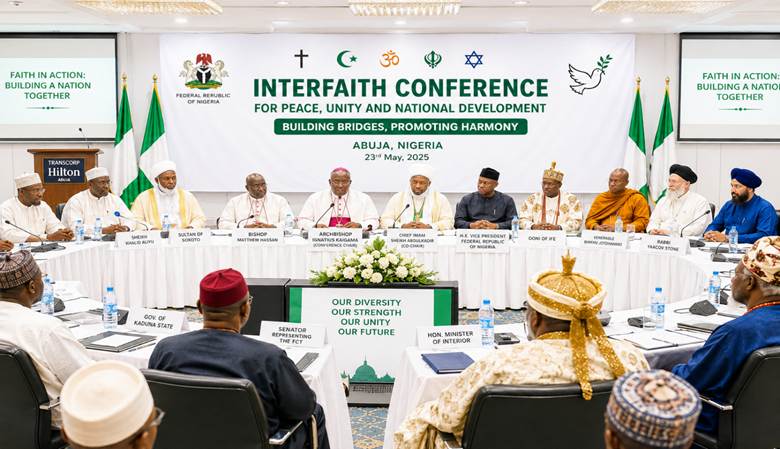
Imagine a world where Christians and Muslims openly acknowledged that their religious identities were initially given, not chosen. Such an admission would not diminish faith, it would deepen it. It would shift the focus from inherited labels to lived values, from outward conformity to inward conviction. It would also dismantle the illusion of superiority that fuels so much conflict. In such a world, dialogue would replace suspicion. Curiosity would replace fear. And brotherhood would cease to be an ideal and become a reality.
There is also a responsibility that comes with this awareness, particularly for parents. Just as they pass on their beliefs, like language and homeland, they can also pass on the story of their own journey: the questions they asked, the doubts they faced, the prejudices they overcame. By doing so, they equip their children not just with a religion, but with the tools to understand it critically and compassionately. Children who grow up to know that their parents once struggled to reconcile inherited beliefs with personal conviction are less likely to see faith as a rigid identity and more as a living, evolving relationship with truth. Such children are also more likely to respect the opinions of others who are on a different path. This is how the obnoxious cycles can be broken, not by erasing tradition, but by enriching it with a sense of honesty.
Circumcision, once a defining marker of religious identity, has largely lost its spiritual centrality in Christianity but remains a cultural and religious practice in Islam and Judaism. Yet its symbolism endures. It reminds us that many of the signs we carry, whether physical or ideological, were given to us before we could understand them. The challenge, then, is not to reject these signs outright, but to interpret them in ways that promote unity rather than division. Christians and Muslims are not destined to be rivals. They are, in many ways, siblings, children of the same Abrahamic heritage, shaped by parallel histories, and guided by scriptures that, at their best, call for compassion, justice, and humility. Therefore, to remain brothers is not merely a moral choice, it is a recognition of reality. For when all is said and done, the line between “us” and “them” is far thinner than we imagine, and often drawn not by divine command, but by human inheritance. And inheritance, unlike truth, is something we all have the power to examine, to question, and ultimately, to transcend if there is a genuine reason to do so, as in the case of the Nigeria we know today.

 Accra Is Sinking Yet Again — Time to Be Truthful With Ourselves
 Fire guts rubber factory at Circle Odawna as flooding hampers firefighting effor...
 Flooding strands commuters on Winneba Cape Coast Highway
 Three feared dead after electrocution in Alajo flooding incident
 Nine missing after floods hit Awutu Senya East
 'Your mother, I should go to heaven and ask Nebuchadnezzar to stop the rain?' — ...
 Flood victim found dead along Alajo Railway track as rescue operations continue
 GMet warns more rain as flooding disrupts movement across Greater Accra
 'You sit on social media and talk nkwasiasem' — Nigel Gaisie blasts critics over...
 Osahen Afenyo-Markin accuses NDC of using GoldBod to promote illegal mining
