




Mr Vitus Adaboo Azeem, former Executive Director of the then Ghana Integrity Initiative (GII), now Transparency International Ghana, has called for pragmatic anti-corruption reform to strengthen the fight against the exploitation of the nation’s resources for the personal gains of individuals.
He suggested that the pillars of pragmatic anti-corruption reforms must be anchored in strengthening the parameters of political will of public officials to confront corruption head-on, consolidation of the legal frameworks, enhancing institutional independence, and leveraging technology to curb the graft.
He also called for institutional independence, which would require a redesignation of dedicated anti-corruption agencies to operate independently of the executive arm of government.
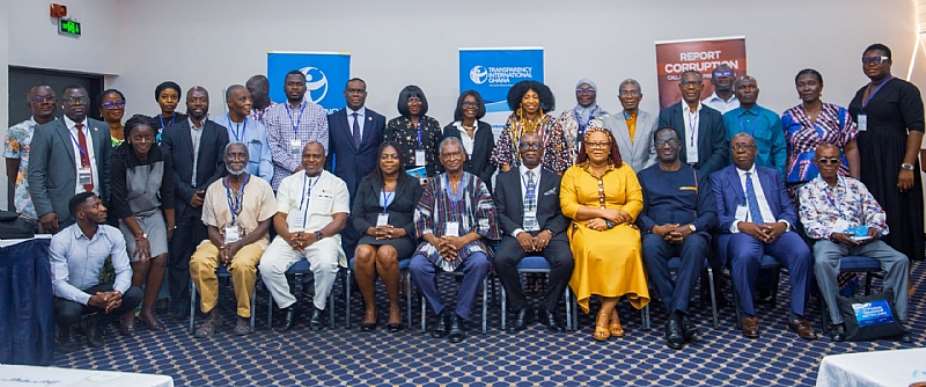
Mr Azeem stated during a presentation at the launch of a new Governance and Integrity Policy Dialogue Series (GIPDS) by TI-Ghana, which aimed at confronting systemic corruption, strengthening public accountability across key sectors, and deepening understanding of emerging governance and anti-corruption issues.
GIPDS is to serve as a holistic platform and calculated step in the nation’s collective journey to strengthen integrity, transparency, and accountability in Ghana’s governance systems.
Other pillars of the pragmatic anti-corruption reforms Mr Azeem propounded include the appointments of the heads of accountability institutions and other management staff, which must be meritorious.
The need for an independent public prosecutor to reduce the incidence of political interference in the arrest and prosecution of politically exposed personalities in corruption cases and the use of digital tools to minimise human intervention and red tapeism.
Mr Azeem, who has for decades been among the nation’s frontline anti-corruption advocates, supported the need for biometric identification systems to help to detect criminals and eliminate ghost names from the public sector payroll.
“There have also been calls for lifestyle audits which, when used alongside an effective assets and liabilities disclosure regime, will help to identify unexplained wealth.
“There is a need to work for international cooperation which will synchronise laws across borders and help tackle transnational financial crimes and simplify extradition,” Mr Azeem stressed.
He, however, admitted that a lot has been done in some of these areas, but there are still many challenges that need to be addressed.
He acknowledged that Ghana has a largely robust anti-corruption legal and institutional framework, adding that in addition to the 1992 Constitution, Ghana’s legislature has enacted several anti-corruption laws that seek to promote transparency and ensure accountability and the efficient use of public resources.
However, Mr Azeem noted the effectiveness of the existing legal and governance frameworks in delivering accountability leaves much to be desired.
The Reverend Emmanuel Ansah, TI-Ghana Board Chair who launched GIPDS in Accra, explained that the dialogue series would be anchored on policy debates within Ghana’s legal and institutional frameworks and produce credible policy inputs to strengthen TI Ghana’s advocacy agenda.
Rev Ansah explained that it would provide a platform for rigorous, evidence-based discussions to translate governance research, policy ideas and analysis into actionable reform proposals.
“These engagements will directly support TI-Ghana’s advocacy and policy engagement with the government and other stakeholders and keep members informed about emerging governance issues while drawing on their diverse expertise to generate practical, evidence-based policy alternatives for government consideration,” he said.
Rev Ansah explained that the Dialogue Series has been designed to provide a structured, evidence-based forum where diverse perspectives converge to generate practical policy solutions.
It has been designed and structured to enhance member engagement and foster stronger coordination in reform efforts.
Rev. Ansah added that the expected outcomes of the GIPDS series would include more informed membership, stronger interaction with governance experts, and evidence‑based contributions that will enhance the credibility and influence of TI Ghana’s advocacy.
The maiden presentation delivered virtually by Mr Azeem was moderated by Mr Michael Kwame Boadi, the Fundraising Manager, TI Ghana.
TI-Ghana members, civil society organisations devoted to the fight against corruption; governance institutions; faith-based organisations; and distinguished personalities, including Mr Joseph Whittal, Commissioner of CHRAJ, and Mrs Beauty Emefa Narteh, Executive Secretary of Ghana Anti-Corruption Coalition (GACC), participated in the launch.
 Accra to Toronto by Road: Wanderlust Ghana completes epic journey
 Any landlord breaching six-month rent advance limit will face prosecution — Rent...
 Bawumia visits Wireko-Brobbey as part of NPP reconciliation drive
 Goldbod Jewellery opens partnership drive for nationwide expansion
 NPP will no longer tolerate attacks on our flagbearer — Miracles Aboagye
 Be patient; Bawumia will take you out of NDC's ‘scam’ — NPP communicator to Ghan...
 NDC will have no compelling message for 2028 elections — Janet Nablah
 Attempts to scrap boarding school system will hinder inter-ethnic unity — Larry ...
 Tema Region: Upstream challenge causes power outages in Afienya, Katamanso and o...
 BECE 2026: Anyone involved in malpractice is an enemy of the state — Dr. Apaak


