




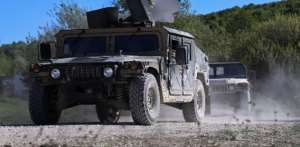
The United States announced it will withdraw about 5,000 troops from Germany over the next six to twelve months. The Pentagon confirmed the decision on Friday, fulfilling a threat President Trump had made as tensions escalated with German Chancellor Friedrich Merz over the US war with Iran.
The Trigger
The dispute was sparked after Chancellor Merz publicly stated that the US was being "humiliated" by Iranian leadership and criticized Washington's lack of a clear strategy in the war. Trump responded by threatening troop reductions, and also posted on social media that Merz should focus more on ending the Russia-Ukraine conflict and "fixing his broken country" rather than commenting on Iran.
Scale of the Withdrawal
The 5,000 troops represent about 14% of the approximately 36,000 American service members currently stationed in Germany. Pentagon spokesman Sean Parnell stated the decision followed "a thorough review of the Department's force posture in Europe" and cited "theater requirements and conditions on the ground."
Broader Strategic Context
A former US diplomat noted the withdrawal reflects shifting American military priorities and could signal a longer-term reconfiguration of Europe's security framework, with more US troops potentially being repositioned closer to China, which Washington views as a greater strategic threat than Russia.
Reports also indicated that Trump's threats to pull troops from Europe caught the military by surprise, with anonymous defense officials and a congressional aide confirming this to Politico.
Political Backlash in the US
The announcement drew swift criticism from Democrats and hawkish think tanks, who argued the move would benefit Vladimir Putin and weaken US security. Senator Jack Reed of Rhode Island, the top Democrat on the Senate Armed Services Committee, warned that the decision suggests American commitments to allies are "dependent on the president's mood."
Germany and NATO's Response
German Defence Minister Boris Pistorius said Germany had anticipated a US drawdown and that Europeans must take greater responsibility for their own security, adding that Germany is "on the right track" with its military expansion and faster equipment procurement. NATO echoed this position, with a spokesperson saying the decision "underscores the need for Europe to continue to invest more in defence," while expressing confidence in NATO's overall deterrence capabilities.
The Bigger Picture
Analysts view the troop withdrawal as part of a series of US measures targeting Germany, alongside tariffs on EU automobiles expected to cost Germany's economy billions all seen through the lens of deepening tension between the Trump administration and the Merz government.
Mustapha Bature Sallama.
Medical/ Science Communicator,
Private Investigator, Criminal investigation and Intelligence Analysis.
International Conflict Management and Peace Building.USIP
[email protected]
+233-555-275-880

 Accra Is Sinking Yet Again — Time to Be Truthful With Ourselves
 Fire guts rubber factory at Circle Odawna as flooding hampers firefighting effor...
 Flooding strands commuters on Winneba Cape Coast Highway
 Three feared dead after electrocution in Alajo flooding incident
 Nine missing after floods hit Awutu Senya East
 'Your mother, I should go to heaven and ask Nebuchadnezzar to stop the rain?' — ...
 Flood victim found dead along Alajo Railway track as rescue operations continue
 GMet warns more rain as flooding disrupts movement across Greater Accra
 'You sit on social media and talk nkwasiasem' — Nigel Gaisie blasts critics over...
 Osahen Afenyo-Markin accuses NDC of using GoldBod to promote illegal mining
