




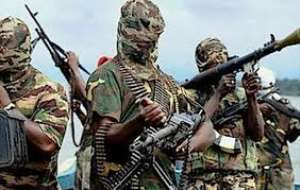
West Africa is no longer on the brink of a security crisis. It is in the middle of one. From the dry Sahelian belts of Mali and Burkina Faso to the increasingly vulnerable northern corridors of Ghana and coastal Benin, the signs are unmistakable: armed insurgencies are expanding, adapting, and embedding themselves within fragile communities. Recent security assessments indicate that thousands of lives are lost annually across the Sahel, with millions displaced. According to global security trackers, the Sahel has, in recent years, accounted for over 40% of terrorism-related deaths worldwide, a staggering statistic that underscores the gravity of the threat. Yet, despite this, the regional response remains uneven.
The ECOWAS Dilemma: Between Legacy and Limitations
The Economic Community of West African States (ECOWAS) is not a weak institution by history. It has demonstrated resolve in the past, intervening decisively in Liberia, Sierra Leone, and most recently, The Gambia. However, today’s challenge is fundamentally different. What has changed? Political fragmentation following coups in Mali, Niger, and Burkina Faso; emergence of parallel alliances among Sahelian states; declining trust between governments, and perception of external influence shaping regional decisions. A senior security analyst in Accra, speaking off record, remarked, “ECOWAS has the structure, but it no longer has the cohesion. Without trust, even the strongest institutions become slow and ineffective.” This erosion of unity has created dangerous gaps. Gaps that insurgents are exploiting with precision.
The Dangerous Myth of “It’s Not Our Problem”
One of the most troubling attitudes in the region is the belief that insecurity can be geographically contained. This is not only false, it is dangerous. Insurgents affiliated with Al-Qaeda and Islamic State, alongside groups such as Boko Haram, operate across porous borders with ease. They move through forests, exploit ungoverned spaces, and embed themselves in communities where the state presence is weak or absent. Northern Ghana has already recorded spillover warnings and attempted infiltrations. Benin and Togo have experienced cross-border attacks linked to Sahel insurgents. Nigeria continues to battle multiple insurgent fronts simultaneously. A community leader from northern Ghana, in a recent engagement forum, captured the concern succinctly, “We hear what is happening in Burkina Faso, and we know it is only a matter of time if nothing is done.”
Who Funds the Insurgency? Following the Money Trail
Understanding insurgency in West Africa requires looking beyond ideology. These groups are sustained by complex and resilient financing networks, including illegal gold mining across the Sahel, kidnapping for ransom, a multi-million-dollar enterprise, fuel and arms smuggling across borders, and taxation of local populations in controlled areas. In many ways, insurgency has become a business model. One that thrives in weak governance environments. A regional policy researcher noted, “As long as insurgency remains profitable, it will persist. Cutting off funding is as important as military action.”
A Forgotten Strength: Africa’s Tradition of Collective Security
Long before colonial boundaries divided the continent, African societies understood a fundamental truth: security is collective. Empires such as the Mali Empire and the Songhai Empire maintained stability through shared intelligence networks, mutual defense agreements, and strong leadership structures. When one territory was threatened, others responded, not as separate entities, but as a unified system. That spirit is largely absent today.
WACOM: A Bold Proposal for a New Security Order
If ECOWAS is constrained, then innovation becomes necessary. This is where the concept of a West African Community for Security (WACOM) becomes compelling. WACOM is not about replacing ECOWAS. It is about complementing it with a focused, agile, and security-driven mechanism.
What would make WACOM different?
1. A Security-Only Mandate --- No political bureaucracy. No economic distractions. Just security.
2. Rapid Deployment Force --- A standing, well-equipped regional force capable of immediate response.
3. Real-Time Intelligence Sharing --- A centralized intelligence hub accessible to all member states.
4. Joint Border Command --- Integrated border operations rather than fragmented national efforts.
5. Inclusive Participation --- All affected countries—including those currently outside ECOWAS consensus—must be engaged.
Beyond Guns: Why Military Force Alone Will Fail
While military strength is essential, it cannot win this war alone. Experience across the Sahel has shown that force without strategy can be counterproductive. A comprehensive response must include economic development in frontier regions, youth employment programs to reduce recruitment pools, partnership with religious leaders to counter extremist ideologies, education and awareness campaigns, and technological investment (drones, surveillance, data systems, etc.). A development expert in Tamale emphasized, “If a young man has no job, no education, and no hope, insurgents don’t need to convince him. They only need to offer him an alternative.”
The Cost of Inaction: A Future We Cannot Afford
If the region fails to act decisively, the consequences will be severe. Expansion of insurgent-controlled territories. Increased displacement and humanitarian crises. Collapse of border economies. Long-term political instability. The Sahel crisis is already a warning. The Gulf of Guinea must not become the next front.
My Thoughts: The Time for WACOM Is Now
West Africa stands at a defining moment. We can continue with fragmented responses, slow coordination, and reactive policies, or we can take bold, collective action rooted in our shared history and common destiny. WACOM represents more than a policy proposal. It is a call to rethink how we defend ourselves, not as isolated nations, but as a united region. The insurgents are organized. They are coordinated. They are advancing. West Africa must respond in kind. WACOM, now or never.
FUSEINI ABDULAI BRAIMAH
+233208282575 / +233550558008
[email protected]


 Gov’t renames 24-hour economy markets as District Economy Markets, targets 100% ...
 BoG, Police arrest 7 in Accra over alleged use of cedi notes for money bouquets,...
 SkyTrain trial: High Court adjourns case management conference to October 19
 Edudzi Tameklo recalls how Duffuor was slapped with GH¢100 million bail in 2020,...
 About 800 Director I and II applicants unreachable due to invalid contact number...
 'Boakye Agyarko was seen as anti-Bawumia' – Lecturer on John Boadu’s victory
 'NPP delegates made wrong choice electing John Boadu as chairman' — Political Sc...
 MTN Ghana secures new 5G spectrum in 700 MHz and 3 GHz bands
 Bawumia explains NPP hunt for winnable parliamentary candidates, not deep-pocket...
 Ghana to tap Egypt’s expertise for new capital city, housing projects – Mahama


