




There are institutions whose impact goes beyond the classroom --- institutions that shape leadership, empower communities, and redefine the future of young people. Tamale Girls Senior High School (Paɣ’naa) is one such institution. My recent participation in a PTA meeting at the school revealed a compelling paradox: a high-performing administration and a committed PTA leadership, yet constrained by critical infrastructural deficits that threaten to slow its progress. The PTA, under the able leadership of Alhaji Mohammed, demonstrated a level of organization, transparency, and vision that many institutions could emulate. The school administration, equally, has shown dedication to academic excellence and student welfare. Yet, despite these strengths, Paɣ’naa stands at a crossroads, held back not by lack of leadership, but by limited financial capacity to execute urgent development priorities.
The Essence of Girls’ Schools in Ghana: More than Just Education
To fully appreciate the urgency of investing in Tamale Girls SHS, one must understand the unique and transformative role of girls’ secondary schools in Ghana. Institutions such as Accra Girls' Senior High School, Kumasi Girls' Senior High School, Bolgatanga Girls' Senior High School, and Tamale Girls SHS have, over decades, served as incubators of female leadership, discipline, and excellence. These schools were established not merely to educate girls, but to correct historical imbalances in access to education and leadership opportunities. Their enduring contributions include producing female professionals across medicine, law, academia, and public service; creating safe learning environments where girls can thrive without societal pressures; building confidence and leadership capacity among young women; and promoting values of discipline, resilience, and community service. In many parts of Ghana, particularly in the north, girls’ schools have played a critical role in reducing early marriages, increasing female school retention rates, and empowering families through educated daughters. Aggrey, a retired educationist once remarked, “When you educate a boy, you educate an individual. When you educate a girl, you educate a nation.” This is not merely rhetoric. It is a lived reality reflected in the contributions of graduates from these institutions.
Education in Ghana: The Infrastructure Gap
Ghana’s education sector has made commendable strides over the years, particularly with the introduction of the Free SHS policy. However, this expansion has brought with it significant infrastructure challenges. Across the country, many secondary schools continue to operate under the double-track system, designed as a temporary measure, classroom congestion remains a persistent issue, and water and sanitation facilities are often inadequate, especially in northern regions. In schools like Tamale Girls SHS, these challenges are not abstract. They are lived realities that directly affect teaching and learning.
The Classroom Deficit: Ending the Double-Track System
One of the most pressing needs at Paɣ’naa is the completion of a 6-unit classroom block. The implications of this project cannot be overstated. This matters because the double-track system disrupts academic continuity, students have reduced contact hours with teachers, and extracurricular development is limited. Completing the classroom block would restore a single-track academic system, improve learning outcomes, and enhance the overall student experience. For a girls’ school, where structured learning environments are particularly impactful, this becomes even more critical.
Water as a Development Issue: The Case for the School Dam
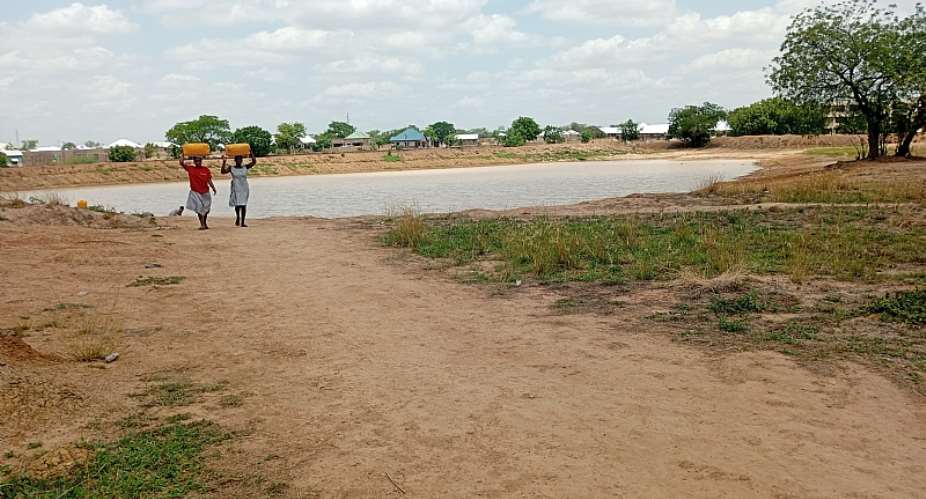
Beyond classrooms, Paɣ’naa faces a more existential challenge: water security. The eastern fringes of the Tamale metropolis continue to experience persistent water shortages, affecting both households and institutions. Within this context, the school’s dam is not merely an infrastructure project. It is a strategic lifeline. Its importance includes supporting daily water needs within the school, facilitating practical academic activities, and enhancing environmental sustainability. However, the dam requires urgent expansion to meet growing demand, afforestation to prevent environmental degradation, and pumps to draw water to prevent drowning.
Climate Change and Northern Ghana: A Policy Imperative
The water challenge must also be viewed through the lens of climate vulnerability. Northern Ghana faces irregular rainfall patterns, extended dry seasons, and increasing environmental stress. This makes water infrastructure projects like dams and harvesting systems not just necessary, but strategically critical.
Rainwater Harvesting: A Solution Within Reach
It is particularly noteworthy that a feasibility study for rainwater harvesting has already been completed for Paɣ’naa. Yet, implementation has stalled. This matters because it offers a sustainable water source, reduces dependence on external supply, and complements the dam system. This aligns with global frameworks such as the Sustainable Development Goals, particularly SDG 6: Clean Water and Sanitation. The challenge is no longer technical. It is financial and institutional.
PTAs and the Limits of Dues-Based Financing
The situation at Paɣ’naa reflects a broader structural issue. PTAs cannot fund major infrastructure through dues alone. This calls for a shift toward strategic partnerships, innovative financing models, and community-driven investment.
The Role of Alumni: Rekindling the Paɣ’naa Spirit
Across Ghana, the success of many secondary schools has been driven by active alumni engagement. Paɣ’naa must now harness this potential. Old students can fund key projects, provide expertise, and mentor current students. The legacy of girls’ schools across Ghana has always been sustained by strong alumni networks. Tamale Girls must not be an exception.
A Broader Call: Investing in Girls Is Investing in Ghana
Supporting Paɣ’naa is not just about infrastructure, it is about national development. Girls’ education has proven links to economic growth, improved health outcomes, and stronger communities. This makes Paɣ’naa a natural partner for NGOs, women’s advocacy groups, development agencies, and voices from the ground. A parent at the meeting captured the challenge, “We are committed, but the scale of the need requires more hands.” A teacher added, “These projects are not optional, they define the future of the school.”
A Call to Action: From Admiration to Commitment
The priorities are clear. Complete the classroom block, expand and sustain the dam, and implement the rainwater system.
To support, please call: +233598948255. Every contribution counts.
My Thoughts: Preserving a Legacy, Securing a Future
Tamale Girls SHS is part of a proud tradition of girls’ education in Ghana. One that has shaped generations of women leaders. To allow it to struggle due to preventable infrastructure gaps would be a disservice not only to the school, but to the nation. The time to act is now.
FUSEINI ABDULAI BRAIMAH
+233208282575 / +233550558008
[email protected]


 Thousands attend Kenya opposition rally amid anger over political violence
 Trump slams AI sceptics as Altman pauses OpenAI IPO plans over safety concerns
 WASSCE: School officials helped students cheat for years, but we now see the tru...
 Probe alleged military killing of lecturer in Bawku – Kusaug Youth demands
 ‘If we all pay GH¢1,000 each, we should be able to construct National Cathedral’...
 Mahama inspects proposed site for Upper West Regional Airport
 Mahama reiterates government's commitment to end double-track SHS system
 Police interdict officer over death of 23-year-old Ivan Baidoo on Tema Motorway
 Improved invigilation is exposing true performance of Ghanaian students — Mahama...
 There's no policy to introduce Arabic, Chinese in all public schools — Mahama


