




In an era defined by rapid technological shifts and systemic volatility, the world no longer operates in isolation. Ghana, like many nations in the 21st century, faces an increasingly complex and uncertain future. From pension sustainability and healthcare financing to climate change, public debt, youth unemployment, and financial market volatility, the challenges confronting modern societies are no longer simple or short-term. Managing these uncertainties requires more than intuition or political expediency; it demands structured, data-driven, and forward-looking thinking. At the heart of this certainty stands a professional equipped with a unique ability to quantify the future: the Actuary. This is where actuarial science becomes not only relevant, but indispensable.
Often described as the “engineering of finance,” actuarial science applies mathematics, statistics, economics, and financial theory to assess risk and uncertainty over time. While the profession is commonly associated with insurance and pensions, its scope today extends far beyond these traditional boundaries. In a rapidly changing and interconnected world, actuarial thinking provides tools for forecasting, planning, and safeguarding systems that affect millions of lives; quietly but critically.
Understanding Risk in a Developing and Globalized Economy.
Every society manages risk, whether consciously or unconsciously. In Ghana, these risks appear in many forms: rising healthcare costs, longevity risk within pension schemes, climate-related shocks to agriculture, infrastructure vulnerability, and fiscal pressures on public finances. When such risks are not properly assessed, the consequences are severe—policy failure, financial distress and social insecurity.
Actuarial science offers a disciplined, long-term approach to these challenges. By analyzing historical data and modeling future outcomes, actuaries help institutions understand not only what could happen, but how likely it is to happen and what its consequences might be. This perspective is particularly valuable in developing economies where resources are limited and decisions made today may create a liabilities for future generations
Beyond the Calculator: The Modern Actuarial Identity
Despite its importance, the profession remains relatively unknown to the general public. There is a common misconception that actuarial work is limited to "math geniuses" behind desks. Traditionally, actuarial science in Ghana has been most visible in insurance and pension administration. However, the profession has evolved rapidly. Today, actuarial skills are increasingly relevant in;
Public finance and social security sustainability
Healthcare cost forecasting and scheme design
Climate and environmental risk modeling
Banking and financial services including credit and capital management
Data analytics and technology-driven decision-making
As Ghana pursues economic growth and social stability, the demand for professionals who can model uncertainty and guide long-term decisions becomes ever more pressing.
Actuarial Science as a Global Professional Language
Actuarial science is not practiced in isolation. It is a globally regulated and professionally aligned discipline governed by internationally recognized standards. Across the world, actuaries are trained, certified, and guided by professional bodies such as the Institute and Faculty of Actuaries (IFoA), the Society of Actuaries (SOA), and the Casualty Actuarial Society (CAS). These institutions set rigorous examination systems, ethical frameworks, and continuing professional development requirements that ensure actuarial work remains credible and globally transferable. What unites actuarial professionals globally is a shared technical language—concepts such as expected value, discounting, risk pooling, longevity risk, and stochastic modeling etc. Whether an actuary works in Accra, London, India, or New York, the fundamental mission remains the same: to quantify uncertainty and advising decisions that balance risk and sustainability.
For Ghanaian actuarial students and professionals, this global alignment is significant. It means that actuarial training in Ghana is not merely local in relevance but internationally bench-marked. The skills developed—analytical thinking, probabilistic reasoning, and long-term financial modeling—are portable across borders and industries.
Interestingly, one defining feature of actuarial work is that actuaries often spend years preparing for risks they hope will never materialize. A popular saying within the profession is that “when actuaries do their job well, nothing dramatic happens.” While amusing, this captures the quiet but essential role actuaries play in maintaining financial and social stability.
Building Human Capital for the Future
The development of actuarial science is ultimately about people. A nation’s ability to manage risk effectively depends on the quality of its human capital. Across Ghanaian universities, actuarial science students are being trained to think analytically, ethically, and strategically. These students represent the future custodians of the country’s financial and social risk management systems.
However, academic training alone is not enough. Students require exposure, mentorship, professional orientation, research opportunities, and ethical grounding to translate classroom knowledge into national impact.
The Role of the Actuarial Science Students’ Association of Ghana (ASSAG)
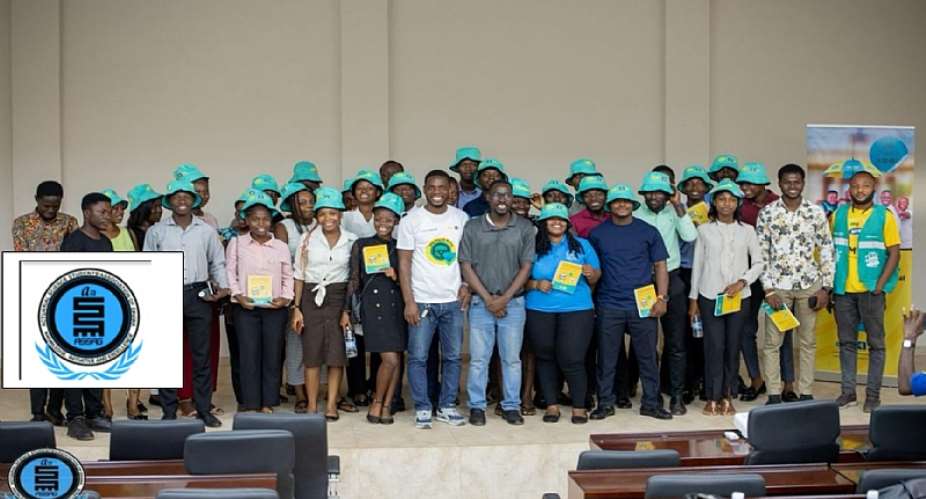
The Actuarial Science Students’ Association of Ghana exists to support this vision. As a national student body, ASSAG brings together actuarial science students from recognized tertiary institutions across the country, providing a platform for academic support, professional development, collaboration, and responsible leadership.
Guided by its constitutional mandate to “indemnify our world of uncertainty,” ASSAG seeks to promote actuarial education, enhance professional awareness, encourage research and innovation, and represent the collective interests of actuarial science students. The Association also serves as a bridge between academia, industry, and society—demystifying actuarial science and highlighting its relevance to national and global challenges.
Through research publications, workshops, and public engagement, ASSAG contributes meaningfully to Ghana’s long-term development agenda by fostering a new generation of globally competent, ethically grounded actuarial professionals.
Actuarial Thinking and Public Policy
One of the most underappreciated contributions of actuarial science is its relevance to public policy. Policies relating to pensions, healthcare, social protection, and climate resilience involve long-term commitments under uncertainty. Poorly designed policies can create unsustainable liabilities that burden future generations.
Actuarial thinking encourages policymakers to ask critical questions: What are the long-term costs? What assumptions are being made? How sensitive are outcomes to changes in demographics, economic growth, or behavior? Embedding such thinking into national discourse helps nations avoid costly mistakes and design systems that are fair, resilient, and sustainable.
A Call for Awareness and Support
Despite its importance, actuarial science remains relatively unknown to the general public. Increasing awareness is therefore essential—not only to attract talented students into the profession, but also to ensure that institutions and policymakers appreciate the value actuaries bring.
Parents, educators, policymakers, and industry leaders all have a role to play: supporting actuarial education, encouraging research, providing internships, and integrating actuarial expertise into high-level decision-making are investments in national stability.
Looking Ahead
Ghana’s future—and indeed the world’s—will be shaped by how well uncertainty is managed today. Actuarial science offers a disciplined, ethical, and forward-looking approach to navigating that uncertainty. By nurturing actuarial talent and integrating actuarial thinking into national systems, Ghana positions itself for more informed decisions and sustainable development.
The world will always be full of unknowns. But through actuarial science, those unknowns become risks we can understand, manage, and transform into the foundation for a more secure and resilient future—for Ghana and for the global community.
 Korle Bu Teaching Hospital to introduce IVF and Corporate Clinic before end of 2...
 Accra West: Sarpeiman, Medie and other areas to experience power outages on Sund...
 Accra West: Faulty transformer causes outage Pokuase Amanfrom and surrounding ar...
 Restoration of Akosombo turbines not automatic solution to current dumsor — Mira...
 We have enough capacity to meet electricity demand — Energy Minister
 May 2: Cedi maintains value, sells at GHS12.15 on forex market, GHS11.20 on BoG ...
 2024 outages not due to transformer overloads — Energy Minister defends past com...
 US to withdraw about 5,000 troops from Germany
 Rebels take key military base in Mali's north
 Middle East war's impact on shipping hitting refugee aid: UNCHR


