




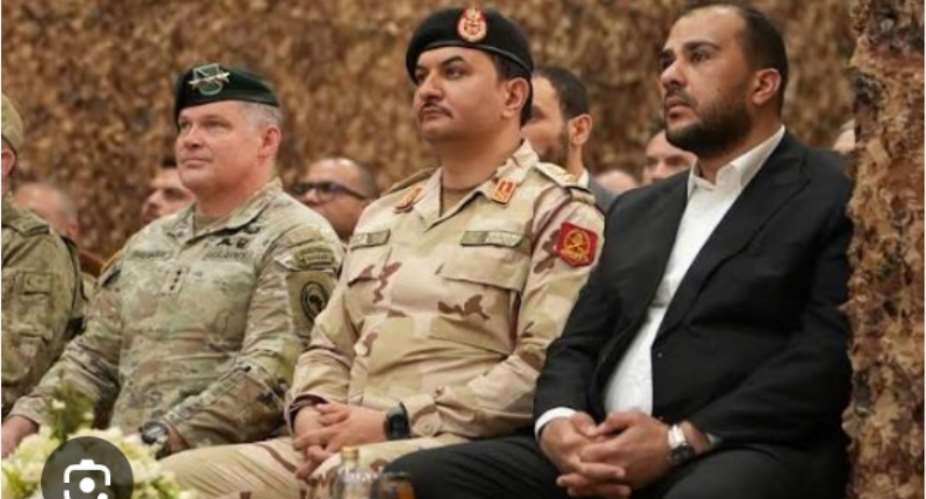
In an event that carries deep strategic and symbolic weight, Libya has for the first time co-hosted one of the world's most significant multinational military exercises bringing together forces from over 30 nations in a powerful demonstration of international commitment to security, counterterrorism, and the long-elusive goal of Libyan unity.
A Historic Milestone for Libya
Senior leaders from Libya, Italy, and the United States issued a joint announcement confirming the start of Exercise Flintlock 2026 in Libya, with the formal commencement following an opening ceremony in the coastal city of Sirte. Flintlock, U.S. Africa Command's premier annual multinational special operations exercise convenes forces from over 30 nations across Côte d'Ivoire and Libya.
It is the first time Libya has co-hosted Flintlock, reflecting growing international confidence in its role as a regional security partner. The significance of the moment was not lost on observers. Sirte remains a symbolically important point separating the west and east of the country making the choice of location a direct demonstration that external players are ready to work with both sides simultaneously.
East and West Together For the First Time
Perhaps the most extraordinary dimension of Flintlock 2026 is what it represents for Libya's internal politics. Special Forces from both the Government of National Unity in Tripoli and Haftar-aligned forces in Benghazi are participating in the exercise. Units from both eastern and western Libya arrived in Sirte, marking the first joint military drills of their kind between forces from both sides under international participation led by the United States.
The Turkish Ministry of Defense confirmed this marks the first time that eastern and western Libya are participating in a single exercise, posting on social media: "United and strong Libya, east and west."
The U.S. Embassy in Tripoli described the moment as transformative. Libya's role as co-host this year highlights the ability of Libyan security institutions from east and west to work together to contribute to and lead regional security cooperation representing an important step toward stronger, more unified Libyan military institutions and improved regional coordination on shared security challenges.
Who Is Participating?
The exercise includes Turkey, the United States, Germany, the United Kingdom, Chad, France, Italy, Libya, Hungary, Egypt, and Tunisia, among others, aiming to enhance military cooperation and raise combat effectiveness through integrated air, land, and sea scenarios.
The training features integrated air, ground, and maritime scenarios designed to enhance the combat readiness and effectiveness of all participating nations, with Italy playing a key leadership role in planning and supporting the execution of the exercise in Libya, providing essential leadership and resources.
The inauguration ceremony was attended by Italy's Ambassador to Tripoli Gianluca Alberini, the Deputy Ambassador Richard Villa, the Commander of the Bilateral Assistance and Support Mission in Libya Maurizio Settesoldi, and the Defence Attaché Massimiliano Grazioso confirming Italy's direct involvement at both the operational and political levels.
What the Exercise Focuses On
Flintlock 2026 focuses on advancing counterterrorism cooperation, border security, professional military development, and the ability of partner forces to operate together effectively in complex and high-threat environments.
According to AFRICOM, the exercise aims to strengthen counterterrorism capabilities, enhance interoperability among participating forces, and improve joint readiness to address regional and transnational security threats with drills concentrating on coordinated command operations, intelligence sharing, and advanced tactical training designed to improve response to extremist threats across the Sahel and Mediterranean regions.
The Legal and Diplomatic Foundation
The exercise did not happen by accident. The opportunity for joint training stems from modifications to the Libya arms embargo in January 2025, which enabled security cooperation including training with Libyan security forces from both west and east, specifically for the purpose of reunification.
U.S. Africa Command Deputy Commander Lt. Gen. John Brennan, who had visited Tripoli and Sirte months earlier to lay the groundwork, was clear about the broader mission. He stated: "This exercise isn't just about military training; it's about overcoming divisions, building capacity, and supporting Libya's sovereign right to determine its own future. By working alongside Libyans from the west and the east, we're directly contributing to Libyan efforts to unify their military institutions."
A Message to the Region and the World
The strategic value of the initiative was underlined by the advisor to the U.S. President for Arab and African affairs, Massad Boulos, who described Flintlock 2026 as "an important step towards military integration in Libya and regional security cooperation," adding that officials from both east and west are helping to build the foundations for unified military and security institutions calling this process "essential for a lasting peace."
Officials from the exercise stated that Flintlock contributes to the ongoing development of a unified Libyan military institution, seen as essential for achieving long-term security and stability in North Africa, reflecting a broad international commitment to supporting sovereign and secure African nations led by their own people.
Libya's Moment
For a country that has endured over a decade of division, conflict, and competing parallel governments since the fall of Muammar Gaddafi in 2011, Flintlock 2026 represents something beyond military training. The sight of Libyan soldiers from rival commands training side by side with forces from over 30 nations in Sirte, the very city that once symbolized the country's deepest fractures is a message that Libya's path to reunification, while still unfinished, is moving forward.
Whether the momentum built on the training ground can translate into lasting political and institutional unity remains the central question. But for now, in the sands of Sirte, something historic is underway.
Sources: U.S. AFRICOM, U.S. Embassy Libya, Libya Observer, Libya Review, Egypt Independent, Agenzia Nova April 2026
Mustapha Bature Sallama.
Medical/ Science Communicator,
Private Investigator, Criminal investigation and Intelligence Analysis.
International Conflict Management and Peace Building.USIP
[email protected]
+233-555-275-880


 Police restrict concrete mixer trucks on Accra, Tema roads from August 28
 Supreme Court nominee Anthony Forson Jnr. opposes proposal to cap number of just...
 Justice Bernasko Essah explains why Supreme Court may depart from its previous d...
 Two NDC MPs whose ‘secret’ marriages have shocked Ghanaians
 All you need to know about Hon. Millicent Yeboah-Amankwa, wife of Hon. Mahama Ay...
 ‘A true trailblazer and cultural icon’ – Bawumia mourns Grace Nortey
 Vetting: 'Suspects should sue police if detained beyond 48 hours' - Supreme Cour...
 Speaker Bagbin outdoors uniforms for new parliamentary security guards
 Minority NPP boycotts vetting of three Supreme Court nominees over rushed timeta...
 Styrofoam ban is long overdue – Dr. Zanetor Agyeman-Rawlings

