




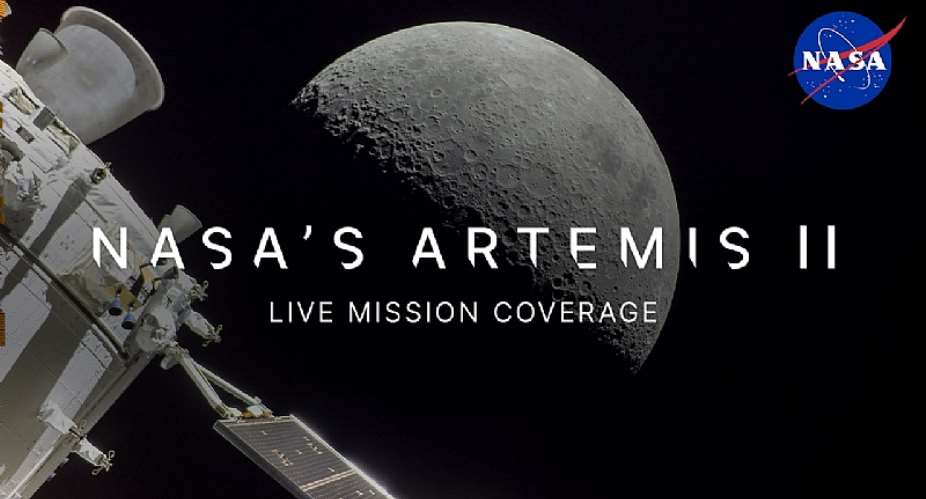
The Artemis II mission marks a historic return of humans to deep space for the first time since the Apollo era. While the mission’s primary goal is to send astronauts around the Moon, an equally critical phase is its safe return to Earth, which tests technologies essential for future lunar landings.
Mission Overview
Launched in April 2026, Artemis II carries four astronauts aboard the Orion spacecraft. After spending about a day orbiting Earth and testing onboard systems, the spacecraft performs a powerful engine burn known as translunar injection, sending it toward the Moon.
The mission lasts approximately 10 days, during which astronauts travel farther from Earth than any humans in over 50 years.
The Return Journey to Earth
After looping around the Moon in a figure-eight trajectory, Orion begins its journey back to Earth using the Moon’s gravity to guide its path this is called a gravity assist.
Key Phases of Return:
Trans-Earth Injection
After the lunar flyby, Orion fires its engines again.
This maneuver directs the spacecraft onto a return path toward Earth.
Coasting Phase
The spacecraft travels through deep space for several days.
Astronauts conduct experiments and system checks during this time.
Re-entry Preparation
Orion separates key modules before entering Earth’s atmosphere.
Heat shields are positioned to withstand extreme temperatures.
Re-entry and Splashdown
The final and most dangerous phase is re-entry into Earth’s atmosphere.
Orion re-enters at extremely high speeds potentially faster than any previous crewed spacecraft.
Temperatures can reach around 2,800°C (5,000°F) due to atmospheric friction.
The spacecraft uses a specially designed heat shield to survive.
After slowing down, a series of parachutes deploy to ensure a safe landing.
Splashdown
Orion lands in the Pacific Ocean.
Recovery teams retrieve the astronauts and spacecraft.
Why the Return Matters
The return to Earth is not just the end of the mission it is one of its most critical tests:
Heat shield validation for future lunar missions
Deep-space navigation accuracy
Crew safety systems under extreme conditions
Recovery operations in real-world conditions
These tests are essential for upcoming missions like Artemis III, which aims to eventually land humans on the Moon.
Conclusion
The Artemis II mission represents a major step forward in human space exploration. While its journey to the Moon is historic, its successful return to Earth is what proves humanity’s readiness to explore deeper into space. By mastering re-entry, navigation, and recovery, NASA is laying the foundation for sustained lunar missions and eventually, human missions to Mars.
Mustapha Bature Sallama.
Medical/ Science Communicator,
Private Investigator, Criminal investigation and Intelligence Analysis.
International Conflict Management and Peace Building.USIP
[email protected]
+233-555-275-880

 Accra Is Sinking Yet Again — Time to Be Truthful With Ourselves
 Fire guts rubber factory at Circle Odawna as flooding hampers firefighting effor...
 Flooding strands commuters on Winneba Cape Coast Highway
 Three feared dead after electrocution in Alajo flooding incident
 Nine missing after floods hit Awutu Senya East
 'Your mother, I should go to heaven and ask Nebuchadnezzar to stop the rain?' — ...
 Flood victim found dead along Alajo Railway track as rescue operations continue
 GMet warns more rain as flooding disrupts movement across Greater Accra
 'You sit on social media and talk nkwasiasem' — Nigel Gaisie blasts critics over...
 Osahen Afenyo-Markin accuses NDC of using GoldBod to promote illegal mining

Comments
And while in deep space (much farther than the Apollo astronauts ventured), extensive biomedical tests will be conducted. The data would be critical in preparing for a potential trip to Mars. Btw, one of the Artemis II astronauts, Christina Koch, was an exchange student at Legon 26 years ago.