




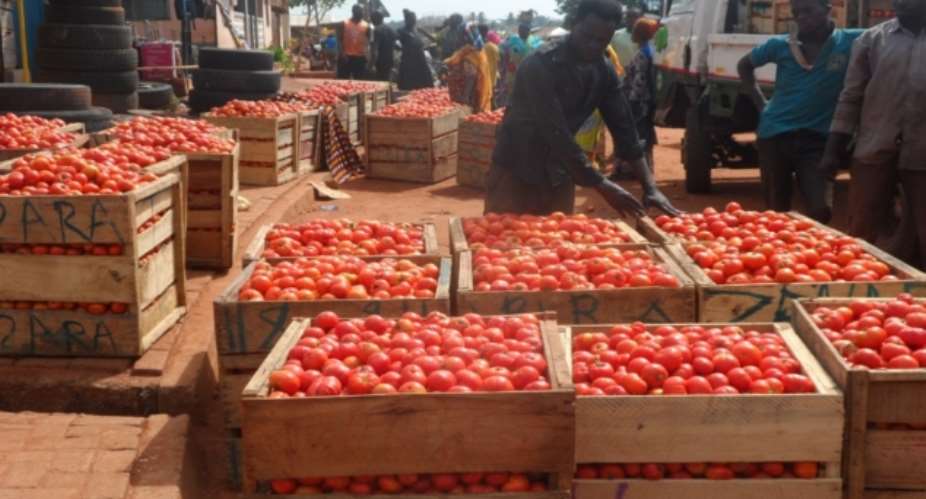
In a decisive move that is already rippling across West Africa, Burkina Faso has suspended the export of fresh tomatoes with immediate effect, a policy shift designed to protect and sustain its growing agro-processing industry. The directive, issued on March 16, 2026, forms part of a broader economic strategy under the transitional administration led by Ibrahim Traoré, which is increasingly focused on building local industries and reducing dependence on raw commodity exports.
At first glance, the decision may appear to be a purely domestic economic measure. However, in a region where food systems, markets, and livelihoods are deeply interconnected, its implications extend far beyond Burkina Faso’s borders. For Ghana, the effects are likely to be both immediate and far-reaching, touching everything from market prices to farmer livelihoods and national policy direction.
Tomatoes are more than just a staple ingredient in West African kitchens. They are a vital economic commodity that supports thousands of farmers, traders, transporters, and market women across the sub-region. In Ghana, particularly in the northern parts of the country, cross-border trade with Burkina Faso plays a critical role in stabilizing supply, especially during periods when local production falls short. With this sudden restriction, that delicate balance is now under threat.
One of the most immediate consequences Ghanaian consumers may face is a rise in tomato prices. With a key source of supply cut off, markets could experience shortages, pushing prices upward and placing additional pressure on household budgets. For many families, this is not just about the cost of tomatoes. It is about the affordability of everyday meals and the broader cost of living.
Beyond the markets, the ban also exposes deeper structural challenges within Ghana’s agricultural sector. For years, stakeholders have raised concerns about seasonal production patterns, post-harvest losses, and limited processing capacity. Large quantities of tomatoes are lost during peak seasons due to inadequate storage and weak value chains, only for the country to face shortages months later. The current situation brings these long-standing issues into sharper focus.
Yet, within this challenge lies a significant opportunity. The gap created by Burkina Faso’s withdrawal from the export market could serve as a catalyst for Ghana to re-examine and strengthen its own tomato industry. With the right investments in irrigation, storage infrastructure, and processing facilities, local farmers could increase production, reduce losses, and meet domestic demand more effectively. In the long term, this could even position Ghana as a stronger player in the regional tomato value chain.
There is also renewed hope for Ghana’s agro-processing sector, which has struggled over the years despite its potential. Tomato processing factories that once operated below capacity or shut down entirely could see a revival if consistent supply and supportive policies are put in place. For investors, this moment presents a clear signal that value addition in agriculture is no longer optional but essential.
However, the situation is not without its risks. Restrictions of this nature often lead to unintended consequences, including the rise of informal trade and smuggling across porous borders. This could undermine regulatory efforts and create tensions within the sub-region. It also raises important questions about the balance between national economic priorities and regional trade commitments, particularly within the ECOWAS framework.
For policymakers in Ghana, the message is clear. Reactive measures will not be enough. What is required is a coordinated and forward-looking strategy that supports farmers, strengthens value chains, and ensures food security. This includes investing in agricultural infrastructure, improving access to financing, and fostering partnerships between the public and private sectors.
Burkina Faso’s decision is a bold statement of intent, one that underscores a growing trend among African countries to take control of their economic destinies through industrialization and value addition. For Ghana, it is both a warning and an invitation. A warning of the vulnerabilities within its current system, and an invitation to act decisively in building a more resilient and self-sufficient agricultural economy.
As the effects of this policy continue to unfold, one thing is certain. The humble tomato has once again taken center stage, not just as a food item, but as a symbol of the complex interplay between policy, economics, and everyday life in West Africa.


 Protests against cost of living expected in Italy under heavy security
 Lula, Bolsonaro clash on living costs, corruption in final Brazil election debat...
 Ebola vaccine trial begins in DR Congo
 Trump says US may launch ‘another little Epic Fury’ attack on Iran
 ‘Too arrogant, too sure of itself’ France confronts its legacy in Africa
 Nigeria's unwritten power-sharing rule looms over presidential race
 Several killed, dozens wounded in Jordan church shooting
 ‘I killed lots of terrorists, but it didn’t make me feel better’: The trauma hau...
 Casualties feared as multi-storey building collapses in Nairobi
 Adwoa Safo's Dome-Kwabenya comeback bid must push Elikplim Akurugu to deliver mo...


