




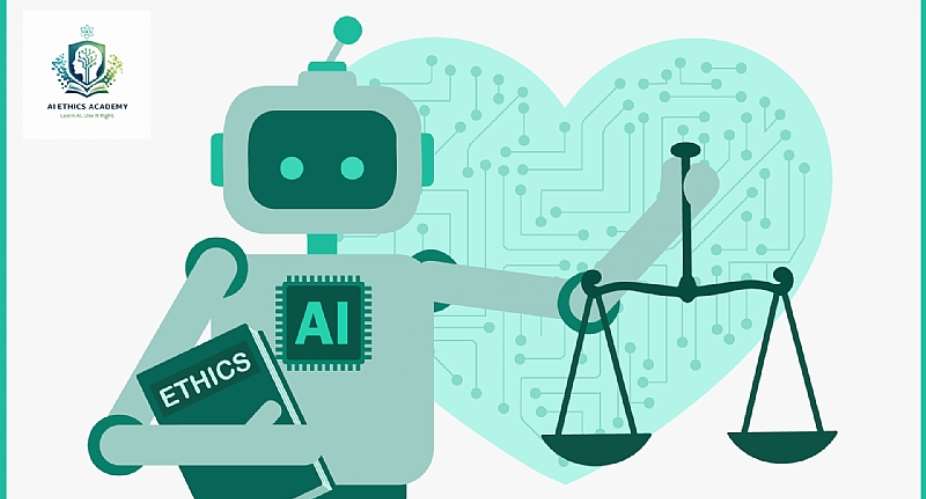
Introduction: What Is Ethics in AI?
Ethics in Artificial Intelligence refers to the moral principles and values that guide how AI systems are designed, developed, deployed, and used. At its simplest level, ethics in AI asks a fundamental question: just because we can build intelligent systems, should we always do so without limits? Ethics brings human judgment into technological progress and ensures that innovation serves society rather than undermines it.
AI is increasingly shaping decisions in education, employment, healthcare, finance, governance, and media. These systems influence who gets opportunities, who is excluded, what information is amplified, and what is ignored. Ethics in AI, therefore, goes beyond technical performance. It focuses on fairness, accountability, transparency, privacy, and respect for human dignity. AI is not value-free. It reflects the intentions, assumptions, and limitations of those who create and use it.
Inherent Sources of Bias and Unfairness from Developers
One of the most critical ethical challenges in AI is bias. AI systems learn from data, and data is a product of human history and social structures. When historical data contains inequality, discrimination, or exclusion, AI systems can reproduce and amplify these patterns on a scale.
Bias may arise from unbalanced datasets that underrepresent certain populations, from design choices that prioritize efficiency over fairness, or from development teams that lack social, cultural, or gender diversity. Even highly skilled and well-intentioned developers can unintentionally embed bias into algorithms through assumptions about what outcomes matter or what behaviors are considered normal.
The danger lies not only in biased outcomes but in the illusion of objectivity. When AI decisions appear scientific or neutral, they may escape scrutiny, making unfairness harder to detect and challenge. Ethical AI development, therefore, requires continuous testing, reflection, and correction.
Ethical Responsibilities of Developers and Users
Ethical responsibility in AI does not rest solely with programmers or technology companies. It is shared between developers, organizations, institutions, and users.
Developers have a responsibility to design AI systems that are transparent, explainable, and accountable. They must test for bias, clearly communicate limitations, and resist deploying systems that may cause harm simply because they are technically feasible or commercially attractive.
Users also carry ethical responsibility. Using AI tools without understanding their limitations can lead to misuse and overreliance. Users must question AI outputs, avoid treating them as absolute truth, and recognize when human judgment, empathy, and context are irreplaceable. Ethical AI use means knowing when not to use AI at all.
Privacy Concerns in AI Applications
AI systems depend heavily on data, much of which is personal and sensitive. From facial recognition and voice assistants to health monitoring and financial profiling, AI can infer intimate details about individuals, often without their full awareness.
Key privacy concerns include excessive data collection, unclear consent mechanisms, secondary use of data beyond its original purpose, long-term data storage, and vulnerability to data breaches. Once personal data is exposed or misused, the consequences can be lasting and difficult to reverse.
Ethical AI requires strong data protection principles, including data minimization, informed consent, transparency, and user control. Privacy should not be treated as an obstacle to innovation but as a foundation for trust and legitimacy.
Why Ethics in AI Are So Crucial
AI systems operate at unprecedented speed and scale. A single flawed algorithm can affect millions of people across borders within seconds. Ethical failures in AI, therefore, do not remain isolated incidents. They can reshape societies, reinforce inequality, distort public discourse, and weaken democratic institutions.
Ethics in AI are crucial because they protect vulnerable groups, preserve public trust, and ensure that technological power does not outpace moral responsibility. Without ethical grounding, AI risks becoming efficient but unjust, powerful but harmful.
The Role of Regulation in Ensuring Ethical AI
While ethical guidelines and voluntary commitments are important, they are not sufficient on their own. Regulation provides enforceable standards that protect society and clarify responsibilities.
In regions such as Europe, regulatory approaches led by institutions like the European Union aim to ensure that AI systems respect fundamental rights, promote transparency, and manage risk in line with the potential impact of different applications. Such frameworks help prevent misuse, create accountability, and build public confidence.
For countries and regions still shaping their AI ecosystems, proactive regulation is essential. Waiting until harm occurs is not a strategy. Ethical governance must grow alongside technological adoption.
Conclusion: Ethical AI as a Shared Responsibility
Artificial Intelligence is ultimately a reflection of human values. It mirrors our priorities, our blind spots, and our willingness to take responsibility for the tools we create. Ethics in AI is not about slowing innovation but about guiding it toward outcomes that benefit society as a whole.
As recommendations for moving forward, AI developers and users should slow down and ask critical questions before deployment, embed ethical reflection throughout the AI lifecycle, document design decisions clearly, and welcome independent scrutiny. AI systems should be explainable, contestable, and adjustable when harm or bias is detected. Education in ethical AI literacy should be prioritized for both technical and non-technical users.
The future of AI will not be shaped by algorithms alone. It will be shaped by the ethical choices we make today. Responsible AI is not optional. It is a collective duty.

 BECE papers must be reduced to just four subjects; ten is a torture — Kofi Asare
 Mahama, appointees donate GH¢6.1m to Medical Trust Fund
 Leading member of NPP says President Mahama is genuine
 Nkwanta South two BECE candidates involved in accident recovering well — Educati...
 Teachers of Adiewoso Basic School whipped in military operation against galamsey...
 It’s not true that ex-Buffer Stock CEO was denied access to his lawyers — Deputy...
 Greater Accra Regional Minister is not performing — Kwame Owusu Danso
 Gov’t weaponising state agencies against political foes — NPP’s Kamal-Deen
 Parliament should pass procedural safeguards limiting immediate rearrest after j...
 Police arrest six men accused of impersonating security operatives in Agona Swed...


