




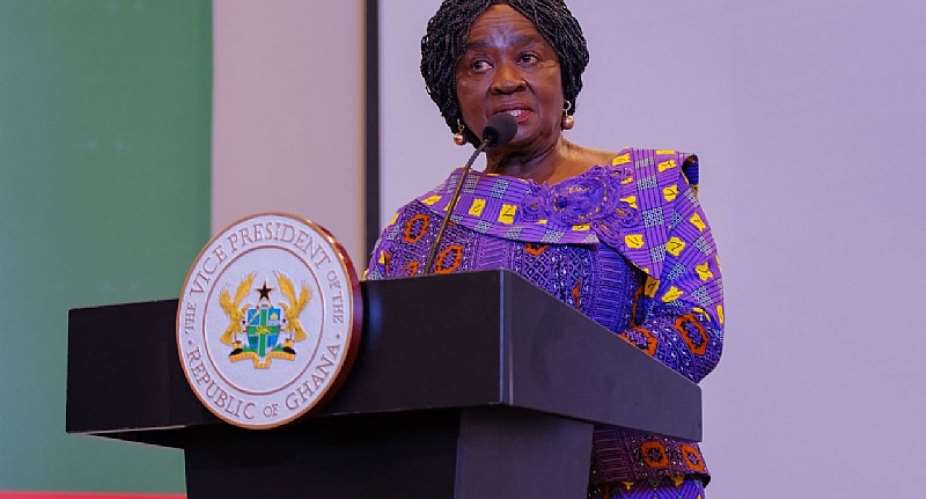
The government has revealed that more than 60,000 children are currently living and working on the streets, mainly in major urban centres across the country, exposing them to severe vulnerability, exploitation and abuse.
Vice President Professor Jane Naana Opoku-Agyemang disclosed this at a Strategic Planning Retreat organised by the National Development Planning Commission at the Royal Senchi Hotel in Akosombo, Eastern Region. The retreat focused on identifying obstacles and solutions to achieving child-centred Sustainable Development Goal targets in Ghana by 2030.
Addressing participants, the Vice President said the growing number of street children has contributed to low birth registration rates and denied thousands of children access to basic services such as healthcare, shelter and education.
“There are over 60,000 children living and working on the streets, mainly in our major urban centres. These children are highly vulnerable to exploitation and abuse. I find it deeply troubling that about 30 per cent of children in Ghana still lack the basic means of establishing a legal identity through birth registration,” she said.
Professor Opoku-Agyemang described the situation as a national emergency, noting that child deprivation in Ghana is widespread and deeply entrenched. She revealed that about three out of every four children in the country are multidimensionally poor.
“This means nearly 10 million children are experiencing overlapping deprivations in health, education, nutrition, water, sanitation, housing and protection. Child poverty damages nutrition, health and learning outcomes, leading to stunting, poor cognitive development and increased exposure to violence and exploitation,” she stated.
She warned that the long term consequences include weaker job prospects, shorter life expectancy and heightened mental health risks, stressing that the crisis threatens Ghana’s demographic dividend and prospects for inclusive growth.
“If we fail our children today, we fail Ghana tomorrow,” the Vice President cautioned.
She called for urgent, coordinated and collective action, insisting that the challenge is not about lack of resources but misplaced priorities. According to her, the root causes of child deprivation are interconnected, requiring stronger collaboration among state and non-state actors.
“No single institution can solve these problems alone. Government, civil society, the private sector, development partners and communities must work together to ensure every child grows up safe, healthy, educated and empowered,” she said.
Professor Opoku-Agyemang described the protection of children not only as a legal obligation under the Children’s Act and the United Nations Convention on the Rights of the Child, but also as a moral duty and a strategic investment in Ghana’s future.
She also acknowledged Ghana’s progress in childhood immunisation, with coverage standing at about 97 per cent, but stressed the need to close the remaining three per cent gap to guarantee full immunisation for every child.

 Don't use freedom of speech to encourage religious violence - Police warn
 Gideon Boako warns NPP members against dragging Bawumia into regional elections
 Iran faces growing isolation and uncertain future amid 'dire' economic situation
 Ablakwa commends Church of Pentecost for sheltering stranded Ghanaians during xe...
 Broken high-tension poles plunge parts of Accra West into darkness
 Cyber Security Authority fines ORC GH¢240,000 for engaging unlicensed cybersecur...
 Ghana has talent to build globally competitive FinTechs – Sam George
 Speaker Bagbin recalls Parliament for consideration of urgent parliamentary busi...
 International Youth Day: NDC will continue to prioritise investment in Ghanaian ...

