




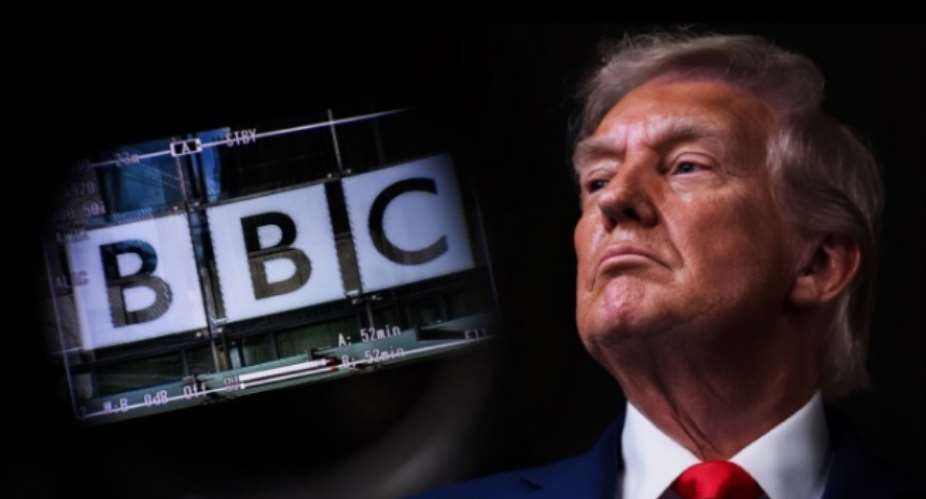
The Scandal
In 2025, the BBC found itself embroiled in a major crisis. Internal documents revealed that its Panorama programme had edited together two separate parts of Donald Trump’s January 6, 2021, speech segments that were about 50 minutes apart in a way that made it sound like a single, continuous call to violent action. Critics say this misrepresentation was serious enough that it misled viewers.
The fallout was swift: BBC Chair Samir Shah issued a public apology, calling the edit an “error of judgment.” Most strikingly, two top BBC executives Director-General Tim Davie and News CEO Deborah Turness resigned.
Trump threatened to sue the BBC for US$1 billion, accusing the broadcaster of defamation. The BBC, while apologetic, denied that the editing constituted defamation, though it acknowledged the misleading nature of the montage.
Further scrutiny followed: there are now allegations that other BBC programs, such as News night, may have similarly misedited Trump’s words.
Why the Scandal Raises Questions About Diversity in Journalism
At first glance, this controversy is about journalistic standards: accuracy, impartiality, and trust. But there's a deeper, structural conversation to be had about diversity not just in the people working in newsrooms, but in perspectives, power dynamics, and editorial cultures.
Here are several dimensions to consider:
Institutional Bias vs. Representation
Critics of the BBC argues there's a pattern of bias: the leaked internal memo didn't just focus on Trump it included accusations of bias in coverage of Gaza, transgender issues, and more. Some commentators suggest that without a more ideologically, socially, and culturally diverse set of voices in decision-making roles, media institutions might unconsciously lean toward a particular worldview.
Editorial Standards and Impartiality
The BBC’s own editorial standards emphasize impartiality: journalists are expected to “put their own political views to one side” and “identify all significant views” to give audiences a fair picture. However, even with such structures, the Trump episode suggests that errors (or misjudgments) can have massive reputational consequences raising the question: do existing editorial frameworks sufficiently guard against institutional blind spots?
Who is Doing the Covering?
The people on the ground doing the reporting matter. For instance, Gary O'Donoghue, the BBC’s Chief North America Political Correspondent, is blind. These points to physical diversity in the newsroom, but what about diversity of experience, ideology, or socioeconomic background?
Scholarship in media studies shows that many newsrooms lack diversity along race, class, gender, and ideological lines.
When journalists come from narrow demographics, they may miss or mis-frame aspects of political movements, especially ones as polarizing as Trump's.
Narrative Control and Power Dynamics
Research suggests that media institutions often exercise “narrative control” deciding which stories to elevate, how to connect them, and how to frame their significance. If a newsroom lacks representational diversity, that control can skew toward certain dominant narratives, potentially sidelining dissenting or marginalized perspectives.
Diversity Beyond Visibility DEI in Sourcing
Diversity in journalism isn't just about who is on staff; it’s also about who is quoted, who gets airtime, whose voices are centered. Tools like DEI (Diversity, Equity, Inclusion) audit frameworks are increasingly being proposed and used to evaluate how media organizations source their stories.
The question, then, is: in controversial coverage (like a Trump speech), were alternative voices (supporters, critics, non-elite actors) adequately represented and if not, why?
Implications and Broader Significance
- Credibility at Stake: For a globally respected public broadcaster like the BBC, errors like this are not just mistakes they threaten institutional trust. If audiences believe reporting is being manipulated, even unintentionally, it undermines the public-service mission.
- Polarization Risks: In an era of “fake news” accusations, selective editing or perceived bias can feed into wider political polarization. People may see media institutions not as neutral watchdogs, but as partisan actors.
- Need for Structural Reform: This scandal could catalyze calls for deeper reforms: not just in editorial oversight, but in who runs the newsroom, which makes key production decisions, and how stories are framed and sourced.
- Global Repercussions: The BBC is not just a UK institution it’s globally influential. Its handling of this controversy could influence how other media outlets think about diversity, representation, and accountability.
Conclusion
The BBC–Trump controversy is more than a glitch in editing: it’s a flashpoint for discussing how journalistic institutions manage power, perspective, and trust. It reveals that even the most venerable news organizations must continually interrogate their internal cultures and structural dynamics especially in how they represent and interpret major political figures. Diversity in journalism isn’t just a morale or fairness issue; it’s essential for robust, credible, and meaningful reporting.
Mustapha Bature Sallama
Medical Science communicator.
Private Investigator and Criminal
Investigation and Intelligence Analysis,
International Conflict Management and Peace Building. Alumni Gandhi Global Academy United States Institute of Peace.
[email protected]
+233-555-275-880


 Ghana, Panama sign MoU to deepen bilateral political consultations
 Founder’s Day: NAPO urges Ghanaians to uphold Kwame Nkrumah’s legacy
 Founder’s Day: Mahama urges Ghanaians to draw inspiration from Nkrumah’s vision
 Mahama to build 400-bed Mother and Child Block at Korle Bu – Kwakye Ofosu
 GES threatens sanctions against SHS heads imposing unauthorised charges
 Betting could destroy future of Ghana’s youth in 3–5 years – Akim Swedru MP
 Zimbabwe Suspends Journalist for One Year Over ‘Unethical’ Reporting on Chinese ...
 Third Drug Mule in 3 Weeks: R2m Heroin Found in SA Man’s Luggage at OR Tambo
 NACOC Debunks MP’s Claim as France’s €225m Cocaine Case Deepens
 Putin party retains majority in first vote since 2022 invasion of Ukraine


