




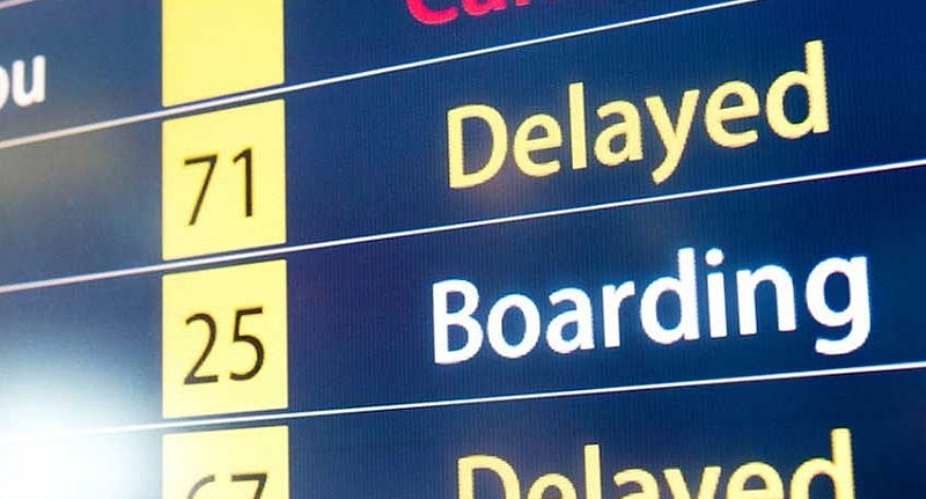
In Nigeria, flying domestically increasingly resembles the experience of waiting at a busy motor park: long holds, confusion, limited information, uncertain outcomes. While the statistics tell one side of the story, the lived reality for passengers often reveals deeper systemic issues. Here’s a breakdown of what’s going on, why it happens, and what it feels like.
The scale of the problem
According to data from the Nigeria Civil Aviation Authority (NCAA), in one recent year domestic Nigerian flights operated by local carriers totaled around 70,543 trips; of these, 33,235 flights (roughly 47 %) were delayed and 1,189 (1.7 %) were cancelled.
Another report puts the figure for 2023 at 40,512 delays and over 400 cancellations. In their investigation, THISDAY found inadequate infrastructure (including terminal space, check in counters) as foundational causes of delay.
These numbers show that delay isn’t occasional it’s frequent enough that many travelers plan for something to go wrong.
Why airports feel like motor parks: the root causes
Infrastructure bottlenecks
At major hubs like Murtala Muhammed International Airport (Lagos) and Nnamdi Azikiwe International Airport (Abuja), terminal space, check in counters, screening and exit points are under strain. For example: Federal Airports Authority of Nigeria (FAAN) has been called upon to increase check in counters because airlines cited counter deficits and congestion as causes of delay.
According to THISDAY: “since it became indicative that more people travel by air the terminal space has become inadequate for travelers.”
Fleet, operational & regulatory challenges
Many domestic airlines are operating with fewer aircraft, have weak schedule integrity (62 % versus industry standard 75 %) and face foreign exchange pressures, high fuel costs and maintenance constraints. Some airports are classified as “sunset airports” (operating only 7 am to 7 pm) because of the absence of night flying facilities. When delays push operations later, cancellations or disruptions follow.
Communication, passenger welfare and regulatory enforcement gaps
The NCAA reports many airlines fail to abide by the requirement to provide accommodation for passengers stranded between 10 pm–4 am, or to provide timely refunds or explanations. Infrastructure deficits, combined with lack of clear communication, contribute to angry passengers, scenes of frustration and sometimes destructive behavior. For instance: reports of vandalism of counters after long delays.
How the passenger experience plays out the “motor park” analogy
Arrival & check in
You may arrive early, but the check in counters are few, queues grow long, and staff may be overwhelmed. A passenger comment from Reddit:
“The incompetence this Air Peace has shown …A family member flew … I waited a total of 8‑12 hours in the airport.”
Even before boarding, the experience often feels informal: “Wait your turn”, “No guarantee when you’ll leave”.
Waiting & delays
Once delays begin:
Updates may be inconsistent or non‑existent.
Seating may be uncomfortable, services minimal.
Food, charging points, toilets may be inadequate or over‑crowded.
Passengers compare the atmosphere to waiting in a busy bus park (Motor Park) rather than a modern airport lounge.
Cancellation or late departure
When flights are cancelled or leave many hours late:
Some airports lack overnight facilities for stranded passengers.
Airlines may not always provide alternate flights, accommodations or reimbursements as expected. Frustration grows, resulting in angry behavior, fuss, sometimes damage. For example: an April 2022 incident where passengers of one carrier “went berserk” at the Abuja airport over delays.
Why this matters beyond inconvenience
Economic impacts: Delay of flights disrupts business travel, cargo movements, tourism, affecting productivity and revenue. For example one study estimated yearly losses of over US$52.7 million from domestic flight delays in Nigeria.
Safety & reputation: When airports and airlines build reputations for unreliability, passengers may avoid flying, affecting demand and growth of the sector.
Passenger rights & welfare: Frequent delays/cancellations without prompt remedies erode consumer trust. As reported, regulatory provisions exist but enforcement is weak.
Spill‑over effects: Overcrowded terminals, lack of services, frustration can lead to unruly behavior, damaging facilities and leading to further costs.
What could and should change
Short term fixes
Increase check in counters, screening lanes and staffing especially during peak seasons. Improve real time communication to passengers: digital boards, mobile alerts, airline apps. Untold story of flight delays in Nigeria.
A closer look at the airport-as-motor-park experience Have contingency plans: alternate flights, accommodation, refreshments for stranded passengers.
Ensure night capable airports or extend operations to reduce sunset airport cancellations. (For example, the NCAA has extended operational hours to 10pm for some airports. )
Long term structural reforms
Invest in terminal expansion, improved apron and aircraft parking space, night operations capability. Encourage airlines to maintain healthier fleets, better schedule integrity, and proactive maintenance.
Strengthen the regulatory enforcement: ensure airlines comply with consumer protection rules, have reporting transparency. Upgrade passenger welfare infrastructure: lounges, food services, clean toilets, good information dissemination.
Final thoughts
At present, many travelers flying within Nigeria face experiences reminiscent of waiting at a busy inter‑city bus park: uncertainty, delays, minimal comfort, and the need to factor in buffer time. But unlike a bus ride, when flights go wrong the cost (time lost, money wasted, opportunities missed) is higher, and expectations (for safety, service, reliability) should be stronger.
The statistics make clear: delays are frequent and systemic. The deeper story is one of infrastructure gaps, operational constraints, and mismatch between passenger expectations and service realities. Unless addressed, domestic air travel may continue to be seen as an “option of last resort” rather than a premium convenience.
By Mustapha Bature Sallama
Medical /Science communicator
International Conflicts management and Peace building
Alumni Gandhi- King Global Academy, United State Institute of Peace USIP
[email protected]
+233-555-275-880

 PURC increases electricity and water tariffs effective July 1
 GWL charges customer over GH¢74,000 for illegal reconnection
 Interior Ministry suspends Kantanka Security Services licence over Adwoa Safo sh...
 Torrential rains wreak havoc in Central Region as 18 killed, hundreds affected, ...
 Police invite Nana Kwadwo Safo Akofena over Kwabenya shooting incident
 Biakoye NPP Vice Chairman commends Agbodza, demands urgent fixing of deteriorati...
 Pregnant mother of three hospitalised after alleged assault by husband
 Senior student allegedly slaps Junior repeatedly over missing mobile phone at Nc...
 There was no gun in Adwoa Safo’s car, I saw more than 30 bullet holes on her car...
 NPP Bantama Chairman, Vice Chairman arrested after clash over constituency album...


