




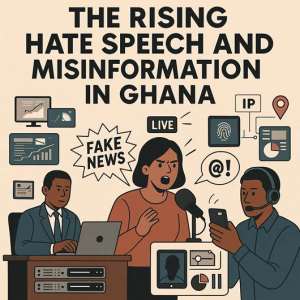
President John Dramani Mahama recently announced that individuals who engage in hate speech and misinformation, particularly radio presenters, television hosts, politicians, and social media bloggers, would be tracked through their IP addresses and prosecuted under existing laws. This proposal has sparked national debate about the boundaries of free expression, the tools available to trace digital footprints, and the institutions that must be empowered to handle such sensitive investigations.
Freedom of Speech in Ghana
Ghana’s 1992 Constitution guarantees freedom of speech and expression under Article 21. This right extends to the press and other media, which is one of the foundations of Ghana’s democratic development. However, like in most democratic societies, freedom of speech in Ghana is not absolute. The Constitution allows restrictions when speech threatens public order, morality, or public health. The Criminal Code criminalizes defamation, incitement to violence, and the spread of harmful misinformation. The Criminal Offences (Amendment) Act of 2012 also deals with cyber-related offences. Discussions on proposed National Misinformation and Disinformation Bill highlight government interest in regulating harmful digital content. These legal frameworks confirm that free speech in Ghana is broad, but not unlimited, especially when it threatens peace and security.
Human Rights Protecting
The challenge is how to enforce restrictions without undermining democracy. Enforcement must begin with clear definitions of what constitutes hate speech and what qualifies as harmful misinformation so that ordinary citizens, politicians, and media professionals are not confused about what is acceptable. Measures must be proportional to target only content that clearly incites violence, spreads falsehoods, or disrupts social cohesion. Due process is essential to ensure that individuals accused of publishing hate speech or misinformation are allowed to defend themselves and contest the evidence presented against them. Judicial oversight and independent monitoring bodies are critical for accountability. Privacy protections must be respected, particularly when state institutions are granted authority to track IP addresses and mobile communications.
Technology and Forensic Tools for Tracking
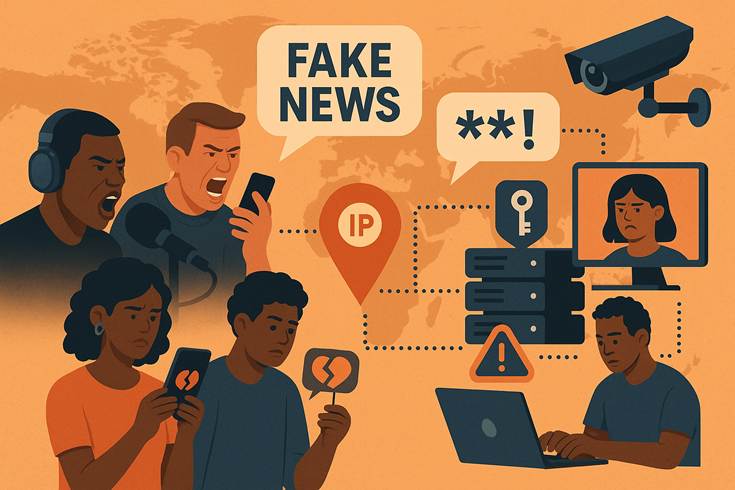
Technological methods can support investigations into online hate speech and misinformation. Every device connected to the internet uses an IP address, which can be logged whenever content is uploaded to websites or social media. If offensive or false material is reported, investigators can retrieve server logs and match the IP address to a subscriber through cooperation with internet service providers. In mobile networks, telecom companies maintain records of which subscriber was assigned a particular IP at a given time. These records, when combined with cell tower data, allow investigators to estimate the physical location of a user.
Geolocation technology plays an important role by mapping IP addresses to approximate regions and analyzing signals from mobile towers. Forensic investigators use tools such as EnCase and FTK to preserve and analyze digital evidence. Log analysis systems like Elasticsearch and Kibana process large volumes of internet data, while metadata checks confirm timestamps and integrity. Investigators can also account for attempts to mask identity through VPNs or anonymizing networks. When handled properly, these processes produce evidence that can be admissible in court.
Challenges in Implementation
Despite these possibilities, Ghana faces several challenges in applying such methods. The widespread use of dynamic IP addresses and carrier-grade NAT in mobile networks complicates attribution of online actions to specific individuals. VPNs and proxy servers can further obscure identity. Log retention policies differ across ISPs and social media platforms, meaning that evidence of hate speech or misinformation may not always be available when required. Addressing these gaps requires investment in forensic laboratories, training for investigators, and regulatory frameworks compelling service providers to cooperate while protecting customer privacy.
Institutional Capacity in Ghana
For such a policy to be effective, several institutions in Ghana must be strengthened. The Ghana Police Service, particularly the CID Cybercrime Unit, has a central role in digital investigations. The National Cybersecurity Authority provides policy direction and can enforce log retention rules. The judiciary and the Office of the Attorney General must be adequately prepared to prosecute cases that rely on digital evidence. The National Communications Authority can regulate telecom companies and internet providers to ensure compliance with lawful data requests. The National Signals Bureau has the technical expertise and mandates in intelligence gathering, making it one of the institutions that could support tracking and monitoring operations if resourced appropriately. Civil society and media watchdogs also have a role in providing oversight to ensure freedom of expression is not unduly abused.
Internet penetration in Ghana stood at more than 68% in 2023, with over 22 million active users. Social media platforms are now central to political debate and civic activism. At the same time, surveys reveal growing concern that hate speech and misinformation online could destabilize Ghana’s peace, especially during election periods when politicians and opinion leaders wield enormous influence. International organizations such as Freedom House still rate Ghana relatively high on internet freedom, but caution that laws restricting speech must be narrowly tailored. The lessons of Rwanda’s 1994 genocide remain a stark reminder of how unchecked hate speech in the media can fuel violence, while misinformation in today’s digital world can trigger public panic, undermine trust in institutions, or disrupt elections. This underlines the importance of finding the right balance.
A balanced strategy requires legislation that defines hate speech and misinformation precisely and ensures surveillance powers are exercised only with judicial approval. Law enforcement agencies need capacity building through training and equipment for digital forensics. Telecoms and internet providers should be regulated to retain data for limited periods and assist investigations lawfully, while upholding strict privacy protections. Oversight mechanisms must be built into the process, so innocent individuals are not wrongly accused. Finally, public consultations with politicians, media houses, academics, and civil society should be held to build trust and awareness of the rules.
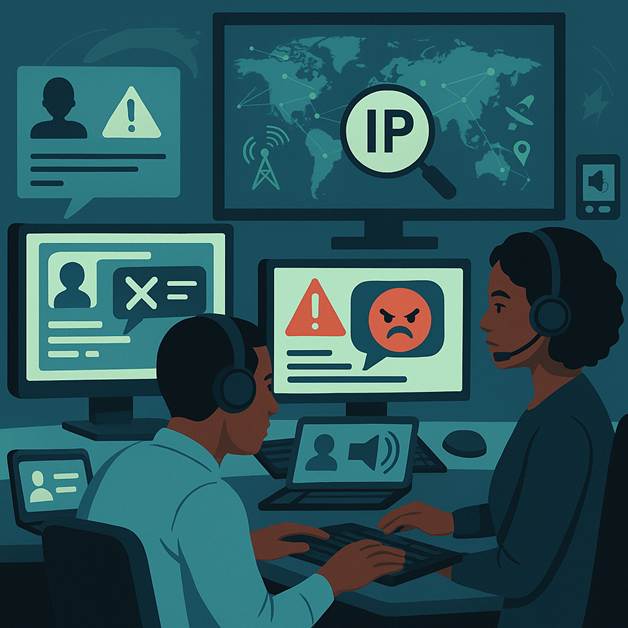
The president’s call to track hate speech and misinformation using IP addresses is an important initiative, but one that must be carefully managed. The Constitution protects freedom of speech, and any attempt to regulate harmful content must respect due process and privacy rights. Technology makes tracking possible, but institutions such as the Ghana Police Service, the Cybercrime Unit, the National Cybersecurity Authority, the judiciary, the National Communications Authority, and potentially the National Signals Bureau must all be resourced to do this effectively. Ghana can draw on science, forensics, and engineering to hold perpetrators accountable, while remaining a beacon of democracy in Africa by ensuring that rights are never sacrificed for security.
Written by:
Owusu Nyarko-Boateng (PhD)
[email protected]

 Mysterious illness leaves children struggling to walk, hear in Mafi Kope
 ‘We’ve come back to make sure our father's ideas never die’ – Nkrumah family
 Ghana Jollof: Akosua Manu appeals to Naana Jane to use her influence to free Sal...
 Yellow fever confirmed in Sissala East after 21 mysterious deaths
 Kenyasi man allegedly attacked by prison officers and inmates over yam theft cla...
 Germany’s far-right AfD makes strong gains in two state elections
 Savannah Regional Minister, IGP Yohuno visit Gbindabuor following lynching of po...
 Jehovah's Witnesses make blood component decisions a matter of personal conscien...
 Road contractors fed on contracts for years without completing projects – Alhass...
 Ghana Jollof saga: ‘She has no right to do what she’s doing’ – Inusah Fuseini


