




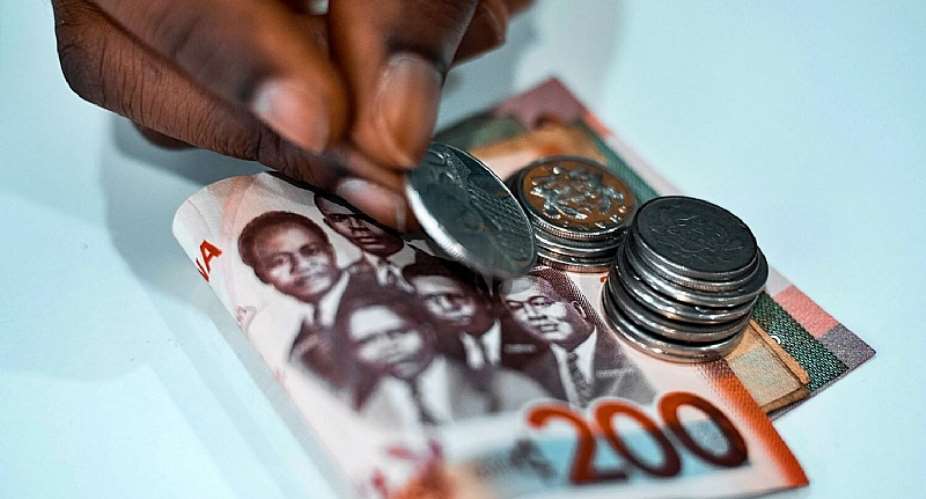
Currency wars—sometimes called "competitive devaluations"—are not new. From the 1930s Great Depression to the post-2008 financial crisis, nations have often sought to weaken their currencies to boost exports, reduce trade deficits, and gain economic advantage. While these policies may provide short-term relief for larger economies, for developing nations like Ghana, the ripple effects are far more destabilizing.
A Brief Historical Context
The concept of currency wars was popularized in 2010 when Brazilian Finance Minister Guido Mantega warned of a global race to the bottom in exchange rates. Advanced economies like the U.S., China, and members of the Eurozone engaged in policies—quantitative easing, interest rate cuts, and currency interventions—to protect their domestic industries.
These moves created volatility in global capital flows, commodity prices, and exchange rates—factors that small, open economies like Ghana rely on heavily.
How Currency Wars Affect Ghana
According to Accra Street Journal’s 2025 Insight Report, Ghana’s economy is highly vulnerable to external shocks because it is dependent on imports, commodities (gold, cocoa, and oil), and foreign currency inflows (remittances and FDI). Whenever the U.S. Federal Reserve raises interest rates or China adjusts its monetary policy, Ghana’s cedi experiences rapid depreciation.
SKB Journal’s editorial research highlights that since 2020, Ghana’s cedi has been among the worst-performing African currencies against the U.S. dollar, largely due to global capital flight toward “safe haven” currencies like the dollar during crises.
This depreciation translates directly into higher costs of imported goods—fuel, machinery, medicine—thus fueling inflation. Businesses pass on these costs to consumers, eroding purchasing power and increasing the cost of living.
Local Insights from Economic Observers
, founder of SamBoad Business Group Ltd., notes that Ghana’s currency crisis is not just a financial issue but also a psychological one. “When confidence in the cedi is shaken, it creates a self-fulfilling cycle where people rush to hold dollars, worsening the depreciation. Currency wars make this cycle even harsher because the cedi is not backed by the kind of reserves or monetary muscle that global currencies enjoy,” he explains.
Staff insights from SamBoad Business Group’s research unit further suggest that Ghanaian SMEs, which are already grappling with high interest rates and inflation, face added pressure when the cedi depreciates. Imported raw materials become more expensive, profit margins shrink, and long-term planning becomes uncertain.
What Can Be Done?
Strengthening Local Production – Ghana must reduce its over-reliance on imports by building strong local industries in agriculture, pharmaceuticals, and technology.
Foreign Reserve Buffers – The Bank of Ghana should continue efforts to build stronger reserves, especially through gold-for-oil initiatives and boosting exports.
Regional Currency Cooperation – As suggests, ECOWAS could revive discussions on a common currency (“Eco”) to reduce overdependence on the U.S. dollar.
Financial Literacy – Citizens and businesses need education on hedging, saving in diverse assets, and avoiding panic behaviors that fuel depreciation.
Conclusion
Currency wars may seem like battles fought in Washington, Beijing, or Brussels, but their casualties are often felt on the streets of Accra, Kumasi, and Takoradi. Ghana cannot control the policies of major economies, but it can adapt strategically—by boosting self-reliance, building resilient policies, and instilling confidence in its people.
As puts it: “Ghana’s real war is not just with currencies abroad, but with our ability to manage what happens when those wars reach our shores.”
"Stay ahead of the markets with Accra Street Journal — your trusted source for business insights, financial analysis, and the stories shaping Ghana’s economy."

 Credit Godfred Dame for Ghana's US$393 million tax arbitration victory against T...
 How can EOCO be accused of wanting to kidnap Baffour Awuah in full glare of the ...
 'She is not party operative' – Kwakye Ofosu defends EOCO officer
 Baffour Awuah wanted over alleged financial loss, dissipation of public funds an...
 Brazil is the main source of cocaine in Ghana by sea concealed in sugar containe...
 'The cacophony of noises surrounding my comments were pure mischief' — Chief Jus...
 ‘Judges must not abandon their humanity because of their judicial office’ – Chie...
 GTEC flags over 100 tertiary institutions as unrecognised
 Political protection may be behind decline in visible cocaine trafficking in Gha...
 Ghana identified as source of explosives used in Sahel conflicts — Crime Index r...


