




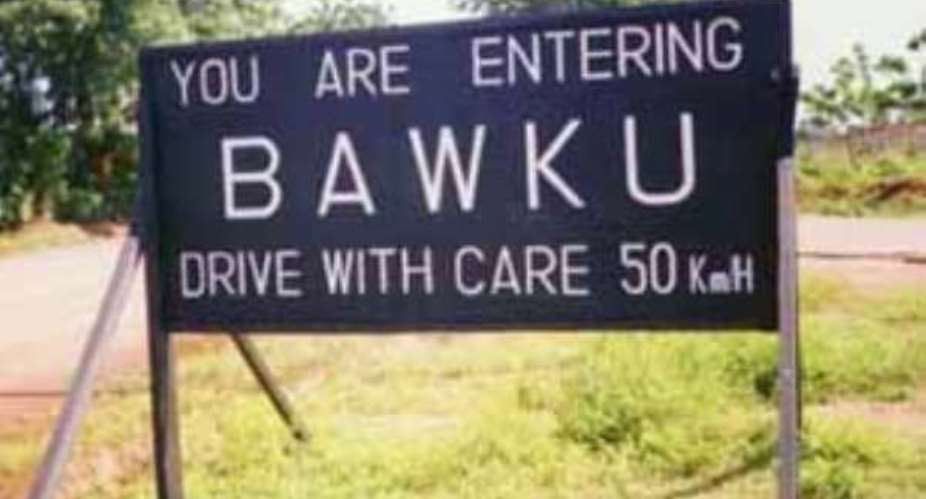
Since the resurgence of the Bawku conflict in recent years, the silence has been deafening, and the consequences devastating. Lives have been lost, families displaced, and economic activities halted in one of Ghana's most historically vibrant and culturally rich towns. The once-thriving border community now bears the scars of a protracted conflict that few dare to speak openly about, for fear of backlash from either the Kusasi or Mamprusi communities. But speak we must, and loudly too!
Historical Wounds That Still Bleed
The Bawku conflict traces its roots to chieftaincy and ethnic disagreements dating back to the colonial era. In 1957, the newly independent Ghana government, through a legislative instrument, recognized the Kusasi chief, the Bawku Naba, as the legitimate occupant of the Bawku skin. This decision, however, was strongly contested by the Mamprusis, who believed that their lineage had historically held the skin.* This disagreement simmered for decades, occasionally flaring into violence --- in 1980, 1983, 1989, and most notably in 2001, when another violent wave led to several deaths and destruction of property. Despite commissions of inquiry and peace efforts, the deep-seated mistrust and competing historical narratives have made reconciliation elusive.
Dr. Emmanuel Akwetey of the Institute for Democratic Governance (IDEG) once observed, “Ethnic conflicts like Bawku’s are not just about tradition or history, they are about power, identity, and legitimacy in a contested space. Unless all parties feel seen and respected, peace remains fragile”.
When Civilians Face the Ghana Army
One of the more troubling signs in the recent escalation is the boldness with which armed civilians now confront the Ghana Armed Forces. The military has openly stated that they have encountered "highly sophisticated weapons", a situation that raises disturbing questions. How are these weapons entering the country? Who is funding or facilitating their acquisition? This is no longer a localized ethnic conflict. When civilians arm themselves well enough to resist or engage national security forces, we must recognize it as a national security emergency.
Professor Kwesi Aning of the Kofi Annan International Peacekeeping Training Centre warns, “A state loses its legitimacy the moment it cannot enforce the monopoly on violence. In Bawku, we are dangerously close to that tipping point”.
Regional Lessons and the ECOWAS Opportunity
Across West Africa, we have seen that conflicts of this nature, if left unresolved, have the potential of spiraling into insurgencies. Northern Nigeria’s early clashes between ethnic groups and local authorities helped fuel the rise of Boko Haram. In Côte d’Ivoire and Liberia, unresolved identity-based grievances exploded into civil wars that lasted years. Yet peace is possible!
The case of Northern Ireland stands out. For over 30 years, Catholics and Protestants were embroiled in a deadly conflict, until the 1998 Good Friday Agreement, which came through painstaking negotiations involving the UK, Ireland, and the US. The core of that peace was the understanding that neither side could have it all --- compromise and coexistence were the only way forward. ECOWAS has played roles in peace building across West Africa, from mediating in Liberia to de-escalating tensions in Guinea-Bissau. It is time the Ghanaian government formally invites ECOWAS or the Government of Burkina Faso, to help mediate the Bawku conflict, especially now that the local mechanisms have stalled.
Former UN Secretary-General Kofi Annan, who has handled peace efforts around the globe once said, “Peace is not just the absence of war. It is the presence of conditions that allow communities to live in dignity and justice”.
The Real Danger of Normalizing Violence
In Bawku today, children are growing up knowing more about guns than games. Women are forced to flee with babies in hand. Schools and hospitals are under threat. As the violence drags on, there is a risk of normalizing this as a way of life. That is a recipe for intergenerational trauma and regional instability. If Bawku fails, Bolgatanga, Garu, Pusiga, and even northern Togo and southern Burkina Faso may feel the tremors. Ghana’s image as a peaceful, democratic state is also on the line.
What Must Be Done, and Urgently Too
- High-level national dialogue, not driven by political actors, but by traditional leaders, youth representatives, religious bodies, and independent mediators;
- De-politicization of the conflict. Both major parties (NDC and NPP) must commit publicly to staying neutral and supporting only peaceful solutions;
- Disarmament and intelligence-led security. The state must uncover and dismantle the arms supply chains; and,
- Truth and reconciliation process: a long-term healing mechanism where both sides can tell their stories, acknowledge wrongs, and work toward coexistence.
The Final Word --- Peace Is a Choice
The good people of Bawku --- Kusasi, Mamprusi, Bissa, Hausa, and others, --- have lived together before. They have intermarried, traded, and prayed side by side. It is possible again. We must demand more from our politicians, our chiefs, and ourselves. We must break the silence. Not with hatred. Not with blame. But with the conviction that every human life matters, and that peace is not weakness, but wisdom.
As Ghanaian peace advocate Emmanuel Bombande puts it, “You don’t wait for peace to be easy. You work for it because the alternative is worse”. Let us work for it! Let us talk! Let us heal!
FUSEINI ABDULAI BRAIMAH
+233550558008 / +233208282575
[email protected]

 Nana Kwadwo Safo Akofena I installed as new leader of Kristo Asafo Mission
 Kristo Asafo Mission rejects claims of shooting Adwoa Safo, calls for independen...
 Six arrested over Kwabenya shooting incident involving Adwoa Safo
 Details emerges as Kristo Asafo Lawyer gives mission’s account of Adwoa Safo sho...
 "Ghana will lift the 2026 World Cup trophy, it will shock the world" – Prophet P...
 NADMO issues final evacuation order for occupants of dilapidated buildings in Ce...
 Two dead, two rescued alive after building collapse at Gyegyeano in Cape Coast
 Ghana vrs England: "I saw both countries sharing 3 goals with Ghana leading" — P...
 Gov’t suspends SHS graduation ceremonies over rising extravagant celebrations
 Two pilgrims arrested over alleged assault on PAOG communications team member


