




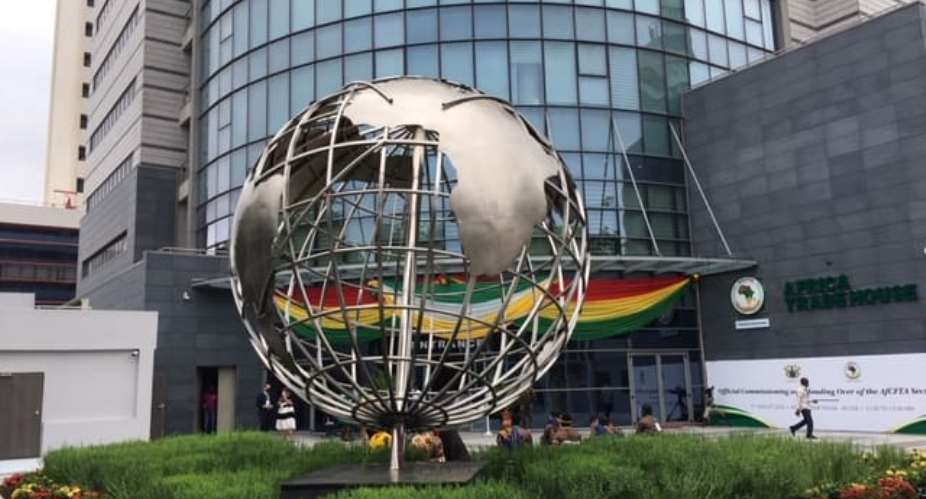
The African Continental Free Trade Area (AfCFTA), launched in January 2021, is the world’s largest free trade agreement by the number of participating countries. With a combined market of 1.3 billion people and a projected GDP of $3.4 trillion, AfCFTA seeks to eliminate trade barriers, boost intra-African trade, and accelerate industrialization (African Union, 2023). As the host country of the AfCFTA Secretariat, Ghana is strategically positioned to benefit from this transformative initiative. However, to fully leverage its advantages, Ghana must transition to a 24-hour economy that ensures continuous production, trade facilitation, and global competitiveness.
A 24-hour economy is an economic model where businesses, industries, and services operate around the clock, fostering increased productivity, job creation, and global competitiveness. Countries such as China, the United States, and the United Kingdom have leveraged this system to accelerate economic growth and boost GDP (World Bank, 2023). For Ghana, transitioning into a 24-hour economy presents an opportunity to enhance employment, trade, and industrial output. However, a well-prepared workforce is crucial to sustaining this shift.
Ghana’s economic structure, heavily reliant on agriculture, manufacturing, and services, requires operational efficiency to maximize AfCFTA’s benefits. According to the Ghana Statistical Service (2023), the country’s economy grows at an annual rate of 3.2%, but experts suggest that a 24-hour economic framework could increase GDP by at least 10% over the next decade (World Bank, 2023). Transitioning to a 24-hour economy will enhance Ghana’s export capacity, improve logistics and supply chain management, and create more employment opportunities. This article explores the intersection between AfCFTA and Ghana’s economic transformation, highlighting opportunities, challenges, and policy recommendations for successful integration.
AFCFTA AS A CATALYST FOR GHANA’S 24-HOUR ECONOMY
1. Expanding Trade and Industrial Competitiveness
AfCFTA provides Ghanaian businesses with access to larger markets, necessitating a 24-hour production cycle to meet demand. According to the United Nations Economic Commission for Africa (UNECA, 2023), intra-African trade could increase by over 50% by 2040 if countries adopt efficient production systems. Key sectors such as manufacturing, agribusiness, and logistics must operate round-the-clock to remain competitive.
A case study from South Africa’s automotive industry demonstrates that extended operational hours enhance productivity and increase export capacity (UNCTAD, 2022). Ghana’s free zones and industrial parks must adopt similar strategies to ensure seamless trade under AfCFTA.
2. Strengthening Logistics and Supply Chain Efficiency
One of AfCFTA’s primary goals is to reduce delays at borders and enhance supply chain efficiency. The Ghana Ports and Harbours Authority (2023) has identified port congestion and limited working hours as major trade bottlenecks. Implementing a 24-hour economy will improve customs operations, warehouse management, and transportation services, aligning Ghana’s trade policies with AfCFTA’s objectives.
Kenya’s adoption of 24-hour port operations at Mombasa significantly reduced clearance times and increased trade volumes by 35% (World Trade Organization, 2023). Ghana can replicate this model by digitizing customs processes and enforcing 24-hour port services.
3. Job Creation and Workforce Adaptation
The transition to a 24-hour economy will create thousands of jobs across multiple industries. According to the International Labour Organization (ILO, 2023), economies with extended working hours experience an average employment growth of 20% within five years. Ghana’s retail, hospitality, and financial services sectors stand to benefit from this expansion.
However, workforce preparedness remains a critical factor. A report by McKinsey & Company (2023) highlights that skill development, flexible labor policies, and technological adaptation are essential for sustaining a round-the-clock economy. Ghana must invest in vocational training, digital literacy, and labor law reforms to support this transition.
4. Policy and Infrastructure Development
To successfully integrate AfCFTA with a 24-hour economy, Ghana must implement robust policies and infrastructure improvements. The government’s One District One Factory (1D1F) initiative can be enhanced to facilitate 24-hour production cycles. Additionally, energy stability remains a key requirement. The Energy Commission of Ghana (2023) suggests that uninterrupted power supply is crucial for businesses operating beyond traditional hours.
A strategic investment in renewable energy, smart grids, and industrial automation will support Ghana’s transition to a fully operational 24-hour economy under AfCFTA. Countries like Egypt and Morocco have successfully integrated renewable energy into industrial growth, providing reliable power for trade expansion (International Renewable Energy Agency, 2023).
CHALLENGES IN IMPLEMENTING A 24-HOUR ECONOMY UNDER AFCFTA
- Labor and Workforce Readiness: Shift work policies, labor rights, and worker compensation require careful structuring.
- Security and Infrastructure: Round-the-clock business operations demand enhanced security, transport, and ICT infrastructure.
- Power Supply Stability: Energy reliability is a major factor in sustaining industrial activities beyond normal working hours.
- Access to Capital: SMEs need financial support to scale up operations for AfCFTA trade demands.
RECOMMENDATIONS FOR GHANA’S SUCCESSFUL TRANSITION
- Enhance Technical and Vocational Education: Upskill the workforce for night-shift operations and technology-driven jobs.
- Implement Trade and Customs Digitization: Reduce delays in trade processing to align with 24-hour operational standards.
- Strengthen Public-Private Partnerships (PPPs): Collaborate with businesses to finance infrastructure improvements.
- Develop Special Economic Zones (SEZs): Establish 24-hour industrial hubs with tax incentives for businesses.
- Ensure Energy Security: Invest in renewable energy solutions to sustain non-stop economic activities.
CONCLUSION
The African Continental Free Trade Area presents a transformative opportunity for Ghana, but its full potential can only be realized through a shift to a 24-hour economy. By enhancing trade efficiency, improving supply chains, creating jobs, and implementing robust policies, Ghana can position itself as a leader in intra-African trade. However, this transition requires a strategic approach, including workforce development, infrastructure investment, and energy sustainability. If successfully implemented, Ghana’s 24-hour economy will not only drive national growth but also strengthen its role as a key player in AfCFTA’s success.
Dr. Nana Okogyedom Adoofi I, © 2025 | Email: [email protected] | Tel: 0245 082 660
REFERENCES
- African Union. (2023). AfCFTA: The Future of Africa’s Economic Integration. Addis Ababa, Ethiopia.
- Energy Commission of Ghana. (2023). Annual Energy Report: Stability and Future Prospects. Accra, Ghana.
- Ghana Ports and Harbours Authority. (2023). Trade and Logistics Report. Accra, Ghana.
- Ghana Statistical Service. (2023). Economic Performance and Growth Trends. Accra, Ghana.
- International Labour Organization. (2023). Employment Trends in a 24-Hour Economy. Geneva, Switzerland.
- International Renewable Energy Agency. (2023). Africa’s Renewable Energy Transition: Industrial Growth Strategies. Abu Dhabi, UAE.
- McKinsey & Company. (2023). Skill Development for Emerging Markets. McKinsey Insights.
- United Nations Economic Commission for Africa. (2023). Trade Expansion and Industrialization in Africa. Addis Ababa, Ethiopia.
- UNCTAD. (2022). The Impact of Extended Working Hours on Export Capacity: Case Studies from South Africa. Geneva, Switzerland.
- World Bank. (2023). GDP Growth Projections for Ghana Under AfCFTA. Washington, D.C.
- World Trade Organization. (2023). Trade Facilitation and Port Efficiency in Africa. Geneva, Switzerland.


 NACOC Boss reveals how 'smart' suspected drug traffickers are diverting proceeds...
 Minerals Commission defends termination of Northern Ashanti Mines lease over US$...
 Northern Ashanti Mines says moves to reassign disputed concession began before l...
 'Was I facing union problems everyday when I was in charge, compare and contrast...
 Ablakwa will be prosecuted in 2029 under Bawumia – Kwadwo Poku warns
 Ghana deports South Korean man wanted over $3.6bn cocaine haul
 Minority threatens vote of censure on Ablakwa if fails to resign over South Afri...
 Ghana targets 70% local fuel supply by 2028 — MD
 UEW students express shock as SRC spending reveals over GH¢574,000 blown on camp...
 Judicial independence does not shield judges from scrutiny, accountability — Jus...


