




The ongoing war between Russia and Ukraine, which began in February 2022, has evolved into a complex and multifaceted conflict with far-reaching implications not only for the two nations involved but also for global stability. As we move into 2025, the situation remains fluid, with key developments in Ukraine's counteroffensives, the critical role of Western support for Ukraine, and the domestic instability within Russia that is reshaping the battlefield and the international order. This piece will explore these dynamics, particularly focusing on the military aspects of Ukraine's counteroffensive operations, Western aid, the impact of Russian domestic instability and the broader consequences of sanctions on Russia.
Ukraine’s Counteroffensives
One of the most significant elements of the war has been Ukraine's determined efforts to reclaim territory occupied by Russian forces, particularly in the eastern and southern parts of the country. After months of strategic preparation, Ukraine launched its long-anticipated counteroffensive in the summer of 2023. These operations focused on recapturing areas in the Donbas region and pushing towards the southern city of Melitopol, which would disrupt Russia’s land bridge to Crimea, a critical strategic area for Moscow.
The counteroffensive has had mixed success, with significant advances in some areas but slower-than-expected progress in others. The Ukrainian military has made strides in reclaiming villages and towns, but Russian forces have put up stiff resistance, often employing heavily fortified positions and minefields. Ukraine’s forces, while well-prepared and motivated, have faced challenges in terms of heavy Russian artillery bombardments, aerial superiority and logistical difficulties. Still, Ukrainian forces have gained ground, particularly in the south, where they have recaptured strategic positions along the Dnieper River.
Ukraine's reliance on Western-supplied weapons has been central to these counteroffensives. Systems such as advanced artillery, anti-tank missiles like the Javelin and more recently, Western tanks and fighter jets, have bolstered Ukraine's ability to challenge Russian forces. The battle for Bakhmut, which became a symbol of Ukrainian resilience, demonstrated Ukraine's tactical proficiency, despite the immense toll it took on its forces.
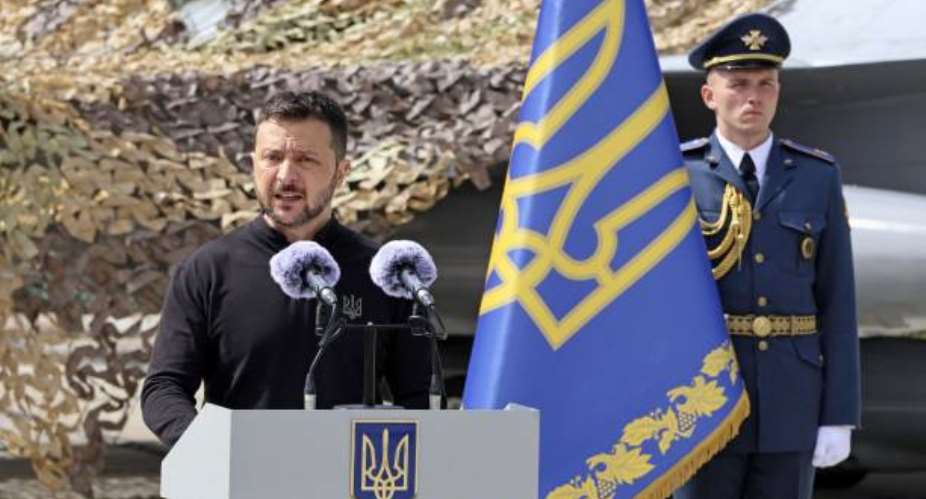
As the counteroffensive continues into 2025, the military situation remains fluid. Ukrainian President Volodymyr Zelenskyy has emphasized that while there are no guarantees of victory in the near term, Ukraine’s resolve remains unshaken. The longer the war drags on, however, the more the focus has shifted to Ukraine’s strategic goals of retaking Crimea and asserting its sovereignty over all occupied territories.
Western Support and Its Impact
Western support has been instrumental in Ukraine’s ability to sustain its military efforts. From the beginning of the conflict, the United States, European Union members, and NATO allies have pledged varying forms of support, ranging from financial assistance and weapons supplies to humanitarian aid. The scale of Western military aid has increased significantly over the past year, with the United States committing tens of billions of dollars in military and economic support to Ukraine.
Western nations have supplied advanced weaponry, including the M1 Abrams and Leopard tanks, HIMARS rocket systems, and sophisticated air-defense systems such as the Patriot missile defense system. Besides, NATO countries have provided military training, intelligence sharing, and strategic planning assistance, which has greatly enhanced Ukraine’s combat capabilities. These supplies have not only bolstered Ukraine’s military capacity but also served as a deterrent to further Russian advances.
In addition to direct military aid, Western nations have provided significant economic support to Ukraine. This has helped Ukraine maintain its functioning government, rebuild critical infrastructure and continue to pay its soldiers and public employees. The financial backing from the West has ensured that Ukraine remains operational in the face of Russia's economic blockade and continued assaults on its infrastructure.
However, Western support has not been without controversy. Some critics argue that the scale of the military aid has contributed to an escalating arms race and a prolongation of the conflict, rather than facilitating a peaceful resolution. The US and European powers have also had to balance their support for Ukraine with the risks of escalating tensions with Russia, particularly when it comes to the supply of advanced weaponry such as fighter jets and long-range missiles, which Russia views as a direct threat to its security.
The political dynamics of Western support are also significant. The Biden administration’s commitment to Ukraine has been one of the cornerstones of US foreign policy since 2022, and this has been mirrored by European leaders such as German Chancellor Olaf Scholz and French President Emmanuel Macron. However, support is not universal. Populist leaders in parts of Europe and the US Republican Party have raised concerns about the long-term sustainability of this support, especially as inflation rises and Western economies grapple with the costs of the war. The war's economic impact, coupled with the global energy crisis exacerbated by Russian actions, has led to some calls for a reevaluation of the level of support provided.
Russian Domestic Instability
The state of Russia's domestic political and economic stability has profound implications for the war effort. From the outset of the conflict, Russian President Vladimir Putin’s grip on power has been largely unchallenged. However, as the war has dragged on, Russia has faced growing internal unrest, economic pressure and a widening rift within its political elite.
Russia’s military setbacks and high casualty figures have strained the population's patience. There has been increasing criticism of the government’s handling of the war from opposition groups, and some elite figures have begun to express doubts about Putin’s leadership. The growing dissatisfaction among ordinary Russians, particularly in major cities like Moscow and St. Petersburg, has led to protests, though the Russian authorities have cracked down hard on dissent.
Economic instability is another factor that could influence Russia’s position. Western sanctions, which have targeted key sectors such as banking, energy and defense, have severely crippled the Russian economy. These sanctions have led to inflation, a decrease in living standards and the loss of access to key technologies and goods. Despite Russia’s efforts to pivot towards China and other nations, the economic cost of the war has been significant.
The situation is further complicated by the personal consequences for Russian elites. Some have begun to distance themselves from Putin’s regime, recognizing the long-term consequences of a war that could end in defeat. There have been reports of tensions within the Russian military command as well, with some generals publicly criticizing the handling of the war. The infamous Wagner Group’s leader, Yevgeny Prigozhin, played a significant role in this instability, though his death in a mysterious plane crash in 2023 has not resolved the internal conflicts within the Russian military.
The domestic instability in Russia has the potential to weaken Putin’s ability to effectively prosecute the war. If the war drags on without clear victories, it is possible that internal pressures could force a shift in leadership, potentially leading to negotiations or a shift in Russian foreign policy.
Sanctions and Global Economic Impact
One of the most significant tools used by the West against Russia has been economic sanctions. These sanctions have targeted Russia’s banking system, oil exports and access to advanced technologies, among other sectors. The goal of these sanctions is to weaken Russia’s economy and limit its ability to fund the war effort. While sanctions have had a clear impact on Russia’s economic health, their broader impact on the global economy is more nuanced.
The energy sector, in particular, has been a focal point of sanctions. Russia is one of the world’s largest producers of oil and natural gas, and European nations have been heavily reliant on Russian energy exports. However, as the war has progressed, Western nations have sought to reduce their dependence on Russian energy, with the EU committing to a gradual phase-out of Russian fossil fuels. This has led to increased energy prices globally, contributing to inflationary pressures in both developed and developing nations.
The sanctions have also had a ripple effect on global supply chains. Russian exports of metals, grain and other essential commodities have been disrupted, leading to shortages and price increases. Countries in Africa, the Middle East and Asia that are dependent on Russian exports have been particularly hard-hit. The war has intensified global food insecurity, with Ukrainian and Russian agricultural exports reduced and with the Black Sea as a key flashpoint for global shipping.
Moreover, the war and the sanctions have highlighted the shifting alliances in the international system. Countries such as China, India and Turkey have sought to maintain trade relations with Russia, offering an alternative market for Russian oil and gas. These nations have also attempted to bypass sanctions, creating a complex web of international economic relationships that challenge the Western-led sanctions regime.
Conclusion
As the war between Russia and Ukraine continues into 2025, the conflict remains a high-stakes contest with global ramifications. Ukraine’s counteroffensive efforts, supported by the West, have succeeded in recapturing significant territories, though challenges remain. Western support for Ukraine, while crucial, faces political and economic challenges and its long-term sustainability is uncertain.
On the Russian side, the domestic instability and growing internal dissent pose a threat to Putin’s ability to continue the war at its current intensity. The economic impact of sanctions has been severe for Russia but has also led to a more fragmented global economy, with shifting alliances and economic vulnerabilities. The full impact of these sanctions will continue to unfold in the years ahead, as the global community grapples with the consequences of the war.
The broader implications of the war, including its effect on global security, economic stability and geopolitical dynamics, are only beginning to be fully realized. The coming months will likely bring new challenges and opportunities for both sides, as well as for the international community, as they navigate this increasingly complex and divisive conflict.
The writer is a journalist and columnist specializing in international affairs, a PR expert, and a journalism lecturer with a PhD in Journalism and expertise in global diplomacy and foreign policy. Contact: [email protected]


 BoG Drafts New Directive to Regulate AI Use in Ghana’s Financial Sector
 Ghana Ready to Evacuate More Citizens from South Africa if Situation Worsens — A...
 SSNIT Moves to Reintegrate Labadi Beachfront Traders, Promises African Market Be...
 Kpebu Warns Newly Called Ministers and MPs to Put Legal Ethics Above Party Loyal...
 At least 109 migrants dead, more than 100 missing after boat capsizes off Djibou...
 India court orders release of 'cockroach' movement leaders after detention
 Riyadh airport strike kills 12, Saudi Arabia threatens 'decisive' response
 Trump, Zelensky clash over diesel deal as Russian strikes on Ukraine kill 21, in...
 Surrogacy: Supreme Court judge warns of citizenship and inheritance challenges f...
 Ghana has a surrogacy law, but… - Supreme Court Justice


