




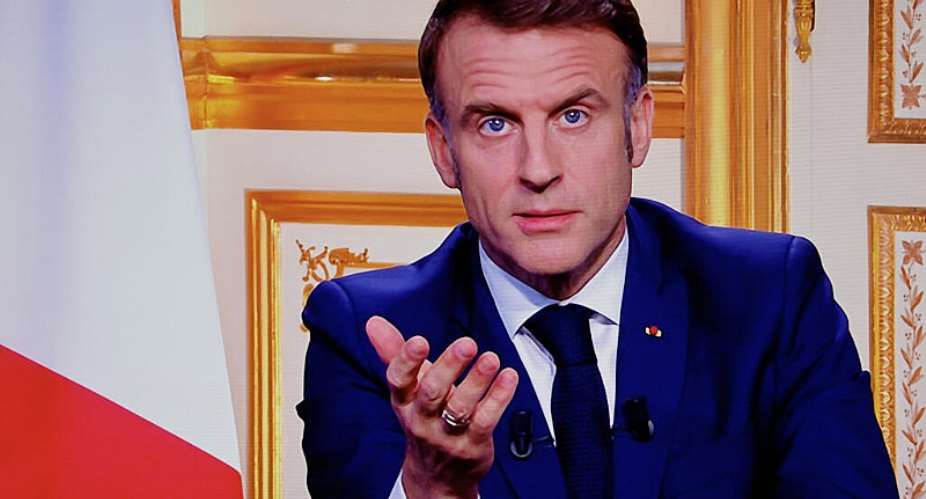
French party leaders will gather at President Emmanuel Macron's Elysee Palace office Tuesday in a bid to chart a route towards a new government, days after Prime Minister Michel Barnier was toppled in a confidence vote.
Shutting out the far-right National Rally (RN) and hard-left France Unbowed (LFI), the effort to find a way forward comes as caretaker ministers scramble to clarify France's 2025 finances, after the previous administration fell over its cost-cutting budget plans.
"The aim is to move forward with a deal about a method" to build a new government on the unstable foundations of a hung parliament, people close to Macron said late Monday of the 2:00 pm (1300 GMT) gathering.
Barnier had been supported by conservative Republicans and Macron's centrist camp, but the shaky alliance was far short of an overall majority in a National Assembly split three ways with the NFP left alliance and the RN.
It is unclear how leaders could build a broader base of support for any new government.
Most are unwilling to compromise on pet issues such as last year's unpopular pension reform, or to tarnish their image with voters by giving ground ahead of potential new elections next year.
"We will not participate in a government of 'national interest' with the Republicans or Macronists or whoever," Greens party leader Marine Tondelier said Monday -- a position mirrored by Republicans chief Laurent Wauqiez.
In a letter late Monday, Socialist leaders told Macron they were open to "dialogue and pitting points of view against one another" to "find an exit from this deadlock situation that's harmful to the French public".
But they added that they would not join a technocratic government or one run by a prime minister from the right, and called for "a true change of political course" on "pensions, purchasing power and tax justice".
Outside the talks, the RN turned to a traditional strategy of capitalising on its outsider position.
Far-right chief Jordan Bardella accused those attending the talks of belonging to a "single party" -- and said Macron displayed "disrespect and lack of elegance" by refusing to invite him.
Taxes and borrowing
Bringing so many parties together around one table marked progress from Macron's first attempt to reach consensus after July's snap election, commentator Guillaume Tabard wrote in conservative daily Le Figaro.
"But if even a minimal deal is to be found ranging from the Republicans to the Communists, it will require an enormous labour of negotiation that will take days or weeks," he added.
"The promise to quickly replace Barnier, yet again issued with confidence, will once again be betrayed."
In an apparent acknowledgement that progress will be slow, Macron's office said that a special budget law to allow the French state to keep functioning would be presented to caretaker ministers Wednesday.
MPs will then debate the bill on December 16, a parliamentary source said, with most parties saying they will back it in the name of stability.
Its three measures include authorising the government to continue collecting existing taxes until a new budget is passed by MPs, a ministerial source told AFP.
The state and the social security system will also be allowed to continue borrowing on financial markets to avoid any interruption of payments, the same source added.
burs-tgb/js
 Police arrest two as search intensifies for missing couple
 Three Akosombo units restored after fire incident — Energy Ministry
 'Weep not for rude CEOs, weep for your dying nation' – Kwesi Yankah tells Julius...
 UCC lecturer, TA die in accident
 Malaria deaths fall by 98% since 2011 – GHS
 Two-month salary arrears for newly recruited nurses paid — Health Ministry
 'We'll complete all Big Push projects on schedule' — Roads Minister assures
 Voltaian Basin Project: GNPC Explorco engages Yaa Naa, stakeholders ahead of dri...
 Senyo Hosi praises Ayine’s role in OSP creation, urges broader policy approach t...
 PUWU condemns ECG staff transfers, reassignment


