




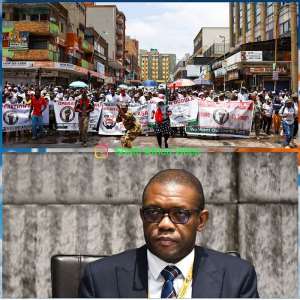
In recent weeks, South Africa’s already volatile immigration debate has taken a sharper and more politically charged turn following remarks by Rise Mzansi leader Songezo Zibi. His warning is stark: some political actors and activist groups are intensifying anti-immigration sentiment in ways that could ignite real-world violence while distancing themselves from any consequences when tensions boil over.
At the center of this storm lies a difficult question South Africans are increasingly forced to confront: who benefits when immigration becomes a national flashpoint, and who pays the price when rhetoric turns into unrest?
A Warning About Escalation or a Political Reality Check?
Zibi’s argument is not simply about immigration itself, but about how the conversation is being shaped. He suggests that segments of political and civic leadership are amplifying public frustration over unemployment, crime, and strained public services, channeling it toward migrants particularly undocumented African migrants.
His concern is less about whether citizens have legitimate grievances, and more about what happens when those grievances are politicized without responsibility for outcomes.
This raises a deeper issue often ignored in public debate:
When political messaging fuels anger, who owns the consequences when communities act on that anger?
The Uncomfortable Question Nobody Wants to Answer
South Africa’s migration debate is no longer just about borders it has become a mirror reflecting deeper structural failures.
But beneath the surface lies a more sensitive question many analysts avoid stating directly:
Are some politicians and interest groups using immigration as a pressure valve for economic frustration rather than solving the root causes of unemployment and inequality?
This does not require assuming conspiracy. Instead, it points to a known political pattern globally:
Migration becomes a scapegoat issue during economic hardship
Political actors gain traction by promising “quick fixes” like deportations or crackdowns
Public frustration is redirected away from structural economic reform
Communities become polarized along national or ethnic lines
However, proving deliberate coordination is far more complex than social media narratives suggest. Most political analysts argue it is less about a hidden network and more about incentive-driven politics, where fear and urgency are politically effective tools.
South Africa’s Core Pressure Points
The immigration debate cannot be separated from South Africa’s broader socio-economic reality:
High youth unemployment
Weak economic growth
Strained public healthcare and housing systems
Persistent inequality rooted in historical injustice
Rising informal settlement pressure
In such an environment, migrants especially undocumented ones often become visible symbols of invisible systemic strain.
But here lies another critical question:
If migrants were removed from the equation tomorrow, would the underlying economic pressure actually disappear?
Most economic studies suggest it would not because the structural drivers are domestic, not external.
Political Risk: When Words Become Catalysts
Zibi’s warning touches on a politically sensitive reality: rhetoric does not stay in speeches.
Across South Africa’s history, moments of heightened anti-immigration sentiment have occasionally coincided with outbreaks of violence against foreign nationals, raising fears that inflammatory messaging intentional or not can create volatile conditions.
The risk is not only violence, but also:
Breakdown of community trust
Retaliatory tensions between groups
International reputational damage
Strain on regional diplomatic relations
And most importantly:
The normalization of blaming vulnerable populations for systemic failure
How African Countries Are Watching and Reacting
Across the continent, South Africa’s immigration debate is closely monitored by neighboring states and regional blocs.
Countries within the Southern African Development Community (SADC) and broader African Union frameworks are particularly attentive because:
Millions of Africans migrate to South Africa for work and safety
South Africa is a key economic hub for the region
Any instability affects regional trade and labor movement
Potential responses from African governments typically fall into three categories:
1. Diplomatic Engagement
Governments may increase dialogue with Pretoria to protect their citizens abroad and avoid diplomatic escalation.
2. Consular Protection Measures
Embassies may issue travel advisories or strengthen support for nationals living in South Africa.
3. Regional Political Pressure
Through the African Union or SADC, collective pressure may be applied to encourage rights-based migration governance.
But beneath diplomacy lies another uncomfortable truth:
If South Africa tightens immigration aggressively, regional labor economies could feel immediate shockwaves.
The Deep Political Tension: Governance vs. Popular Pressure
The migration debate in South Africa is now caught between two competing forces:
Public demand for stricter control and security
Human rights and regional integration commitments
Politicians like Songezo Zibi are essentially warning that failing to manage this tension responsibly could push society toward instability.
But critics argue something else:
Governments and opposition groups alike may be responding more to public anger than to long-term policy thinking.
The Questions No One Is Asking Loudly Enough
Beyond the headlines, several critical questions remain underexplored:
Who benefits politically from keeping immigration a permanent crisis issue?
Why do economic reform debates receive less attention than migration debates?
Are media and political platforms amplifying fear-driven narratives because they generate engagement?
What responsibility do leaders have when their messaging overlaps with real-world violence risks?
Can South Africa reform its migration system without deep economic restructuring?
And most importantly: Is migration being treated as a cause or as a symptom?
Conclusion: A Country at a Policy and Moral Crossroads
South Africa’s immigration debate is no longer just a policy discussion it is a stress test of political responsibility, social cohesion, and leadership accountability.
The warning from Songezo Zibi forces an uncomfortable reflection: in moments of national pressure, rhetoric can become combustible, and once released, its consequences are no longer controlled by those who started it.
The real challenge ahead is not simply border enforcement or protest management it is whether South Africa can confront its economic and governance challenges without turning migrants into permanent political currency.
Because the final question remains the most difficult one of all:
Is South Africa debating migration or is migration becoming the language through which deeper national frustrations are expressed?
By:
Patrick Belebang Yagsori
+233240292413
[email protected]
 Partey refused entry to Canada for Ghana's World Cup opener
 BTU in Turmoil: GTEC rejects finance director appointment amid degree verificati...
 Twifo Praso Pra River commuters appeal for govt intervention to stop galamsey
 “Brown is not Ghanaian colour” — Alagumgube criticises Black Stars' World Cup ar...
 Politics Has No Permanent Loyalty: Razak Kojo Opoku warns young politicians amid...
 Mahama will never pardon former MASLOC CEO Sedina Tamakloe — NDC MP
 Attack on forest officers undermines fight against environmental crimes — A Roch...
 Gov't settles bonus arrears, releases over GH¢76 million for Black Stars' World ...
 AI being exploited by criminals to launch more sophisticated operations — CID Bo...
 Nii Lante Vanderpuye resigns as DRIP Coordinator to pursue NDC National Executiv...


