




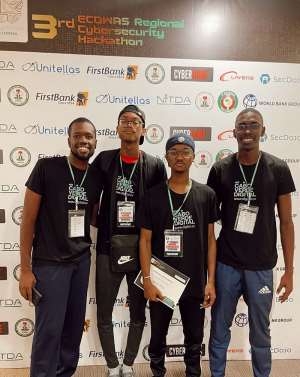
Across West Africa, a powerful transformation is unfolding one that is not defined by natural resources or political headlines, but by code, creativity, and collaboration. The 2026 ECOWAS Regional Hackathon, recently won by Nigeria’s team Error, represents more than a technological contest. It is a clear signal that the region is entering a new era where innovation is becoming a central pillar of economic and social development.
⚙️ From Resource Wealth to Knowledge Power: A Historical Turning Point
For much of the 20th century, West Africa’s global identity was shaped by extraction economies gold from Ghana, oil from Nigeria, cocoa from Côte d’Ivoire, and minerals from across the subregion. While these industries built national revenues, they also entrenched dependence on raw commodity exports and limited value retention within local economies.
The 21st century, however, has begun to reshape this narrative.
Driven by expanding internet access, mobile technology adoption, and a young, increasingly educated population, West Africa is witnessing a gradual shift toward a knowledge-based economy. The rise of innovation ecosystems such as tech hubs, coding bootcamps, and startup accelerators has redefined what it means to build wealth and opportunity.
Organizations and platforms like CcHub (Co-Creation Hub), MEST Africa (Meltwater Entrepreneurial School of Technology), and Andela played foundational roles in this shift turning software development into a viable and aspirational career path for thousands of young Africans.
What was once considered a niche skill is now becoming a regional language of economic participation.
💡 The ECOWAS Hackathon: More Than a Competition
The ECOWAS Regional Hackathon, organized under the umbrella of the Economic Community of West African States (ECOWAS), is designed to bring together young innovators from across member states to solve shared regional challenges through technology.
The recognition by Mr. Divine Slease Agbeti, Director-General of Ghana’s Cyber Security Authority, of participants’ “exceptional technical capabilities” reflects a broader reality: West Africa is no longer just consuming technology it is increasingly building it.
Hackathons like this serve as innovation laboratories where ideas are tested rapidly, refined collaboratively, and often transformed into scalable solutions. More importantly, they promote cross-border cooperation in addressing issues such as:
Cybersecurity threats and digital fraud
Agricultural productivity and climate resilience
Financial inclusion through fintech
Digital governance and public service delivery
In essence, they are helping shape a shared digital identity for West Africa.
🌍 A Catalyst for Regional Unity and Shared Progress
One of the most significant impacts of initiatives like the ECOWAS Hackathon is their ability to strengthen regional integration beyond politics and trade.
When young developers from Nigeria, Ghana, Senegal, and other member states collaborate, they are not only building applications they are building trust networks and shared problem-solving cultures.
This kind of cooperation lays the foundation for:
A unified digital market across ECOWAS
Cross-border innovation pipelines
Standardized cybersecurity frameworks
A stronger collective bargaining position in global tech ecosystems
In a world increasingly defined by digital power, regional unity becomes an economic necessity rather than just a diplomatic ideal.
🔍 Critical Questions That Must Be Addressed
Despite the optimism, several important questions remain unresolved and they will determine whether this revolution is truly transformative or uneven in its outcomes:
1. Who controls African innovation?
As foreign investors and global tech firms increase their presence in African ecosystems, will local innovators retain ownership of their intellectual property, or risk becoming subcontractors in their own digital economy?
2. Can regional unity outpace national competition?
While ECOWAS promotes collaboration, individual countries often prioritize national tech agendas. Balancing competition and cooperation remains a delicate challenge.
3. Is the digital revolution inclusive?
Most innovation hubs are concentrated in urban centers, leaving rural youth at risk of being excluded from the digital economy due to lack of infrastructure and mentorship.
4. Are institutions prepared to protect innovation?
Without strong cybersecurity frameworks and enforceable intellectual property laws, innovation can easily be exploited or undervalued.
⚖️ Addressing the Concern: Will This Become a “Foreign-Dominated” Space?
A valid concern in emerging tech ecosystems is the risk of external dominance where funding, influence, or control shifts away from local innovators.
However, framing this as a “white tournament” risks oversimplifying a more complex issue. The real challenge is not ethnicity or geography, but ownership, equity, and control of value creation.
To ensure fairness and sustainability, West Africa must prioritize:
Local ownership of startups and intellectual property
Transparent investment frameworks
Strong regional funding mechanisms
Policies that protect African-built solutions from premature acquisition or displacement
The goal is not exclusion it is balanced participation and fair value retention within the region.
🌐 The Ripple Effect: What This Means for Nations and Individuals
The impact of this technological shift is already visible across ECOWAS member states:
Nigeria is consolidating its position as a continental digital powerhouse, exporting talent and scalable startups.
Ghana is strengthening its role in cybersecurity education and ethical technology development.
Senegal and Côte d’Ivoire are advancing fintech systems that expand financial access to underserved populations.
Smaller ECOWAS nations are gaining access to shared digital infrastructure that reduces inequality and expands opportunity.
For individuals, the benefits are even more direct:
Access to global remote work opportunities
New entrepreneurial pathways
Skills that transcend national borders
The ability to solve local challenges using global tools
🚀 The Future: A Digitally Sovereign West Africa
The ECOWAS Regional Hackathon symbolizes more than technological progress it represents a shift in identity.
West Africa is no longer waiting to be included in the global digital economy; it is actively building its own version of it.
If properly supported by policy, education, and investment, this movement could redefine the region’s global position not as a supplier of raw materials, but as a producer of ideas, systems, and digital solutions that shape the future.
The revolution is not loud. It is coded, collaborative, and quietly powerful.
And it is only just beginning.
By:
Patrick Belebang Yagsori
+233240292413
[email protected]
 Samreboi case: AG files objection to stop Appiah Kubi from withdrawing services ...
 Mahama will never pardon former MASLOC CEO Sedina Tamakloe — NDC MP
 Attack on forest officers undermines fight against environmental crimes — A Roch...
 Gov't settles bonus arrears, releases over GH¢76 million for Black Stars' World ...
 AI being exploited by criminals to launch more sophisticated operations — CID Bo...
 Nii Lante Vanderpuye resigns as DRIP Coordinator to pursue NDC National Executiv...
 Stay focused and be faithful — Bishop Dr. Dogbe advises Bawumia
 'Bawumia is a person of great integrity' — Bishop Dr. Hilliard Dogbe
 2026 FIFA World Cup: 'Let’s stop rooting against South Africa' — Michael Blackso...
 NAIMOS hands over 141 seized firearms, nearly 2,000 rounds of ammunition for des...


