




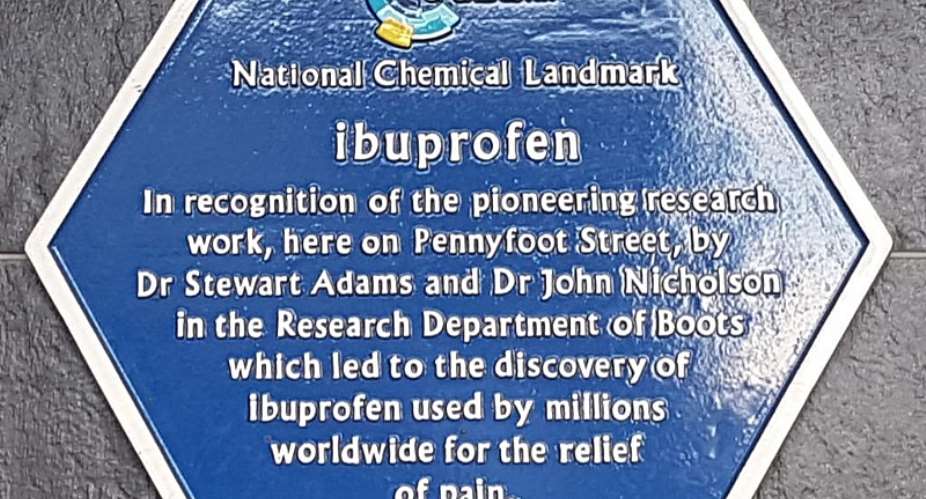
The man behind the creation of ibuprofen has died at the age of 95. Dr Stewart Adams is credited with discovering the new generation of painkiller by testing it on himself to cure his own hangover, before it was sent off for 10 years of trials.
Called Brufren, the new painkiller entered the British market in 1964 as a prescription only medication and by 1983 it was available over the counter.
It made its entry into the American market in 1974.
New generation
Graduating with a degree in pharmacy at Nottingham University, Adams later earned his doctorate in pharmacology while working at the British Boots Pure Drug Company Ltd in the early 1950s.
At the time, he was researching a new way to treat rheumatoid arthritis with no side effects.
In the early 1960s, carboxylic acid was identified as the agent that gave aspirin its anti-inflammatory property.
Along with his researchers at Boots, they investigated other carboxylic acids and found one that was twice as strong as aspirin and looked into more than 600 compounds created from these acids.
The most active of these acids was propionic acid and was chosen for further development in clinical trials, which proved useless since it was ineffective in treating rheumatoid arthritis.
But one of the compounds, phenylalkanoic acids, appeared to offer broader anti-inflammatory effects.
From this was born ibuprofen.
Effectiveness
Because of its anti-inflammatory properties, ibuprofen belongs to a class of drugs called non-steroidal anti-inflammatory drugs, or NSAIDS, such as acetaminophen and acetylsalicylic acid (aspirin).
They all work by slowing-down the activity of a class of enzymes called cyclooxygenases, or COX.
It is believed that humans have at least two, if not three COX enzymes.
Aspirin and ibuprofen work by inhibiting COX-1 and COX-2.
For his work, the Royal Society of Chemistry blue plaque was placed at the Boots' Beeston Factory site where the original research was conducted by Adams and his team.
Adams was appointed an Officer of the Order of the British Empire (OBE) in the 1987 New Year Honours.

 S.african Police Probe Killing Of Foreigner In Xenophobic Unrest
 Tension at Bantama NPP office as chairman accuses Asenso Boakye of political mac...
 Korle Bu succesfully performs first two off-pump heart bypass surgeries
 Disability Act lacks teeth, must be strengthened — Annoh-Dompreh
 Mental health, drug tests now mandatory for firearm licences — Interior Minister
 GoldBod directs licensed buyers to report gold purchases within five minutes
 Action will be taken on viral video showing SHS student assaulting a junior — Dr...
 NDC promised to ease cost of living yet increasing utility tariff — Kofi Tonto
 NDC is a useless govt – Miracles Aboagye fumes
 Govt eyes 1,012km rail corridor to boost trade, transform cargo transport from T...


