




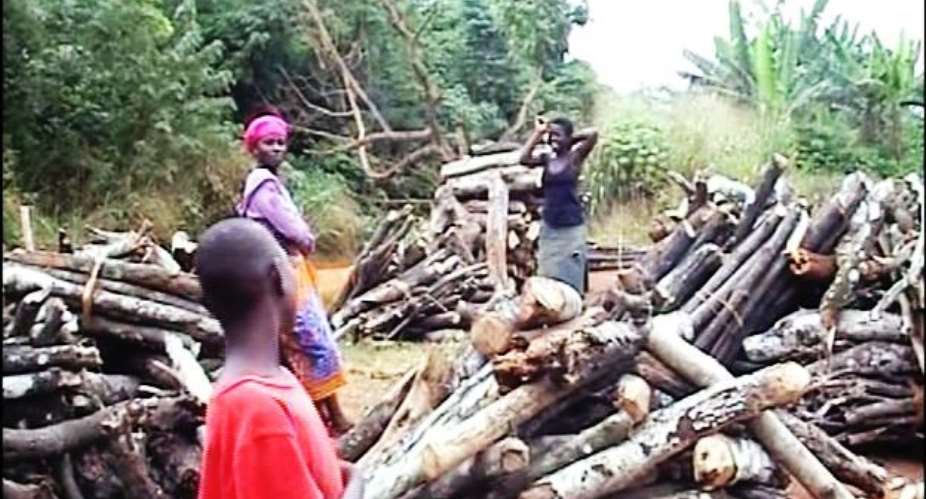
Wood remains the sole source of energy for millions of Ghanaians, who lack access to modern sources of power. It also doubles as a gainful employment for people in rural areas.
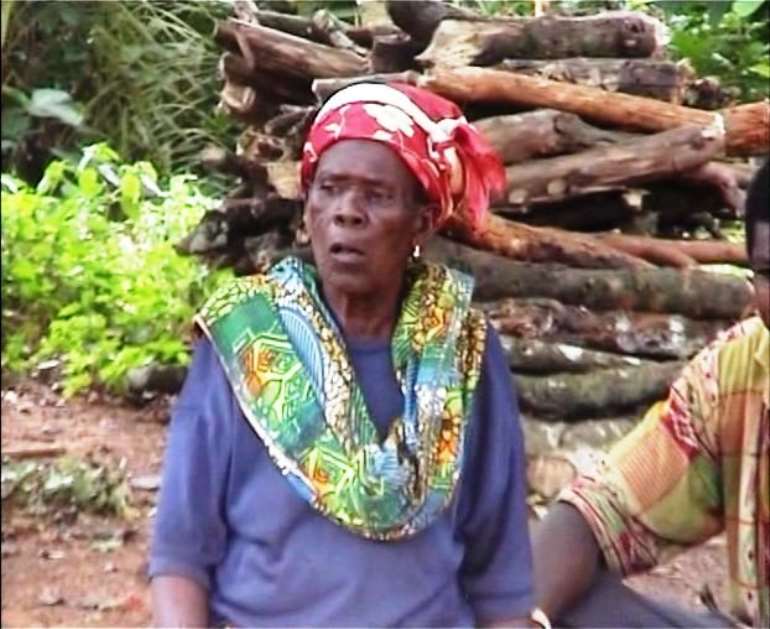
“When we cultivate the farm, there are trees in them so we fell them, burn, cut them into sizeable logs and sell,” says Fati Kusasi, an octogenarian in Kwadwokrom, a community in the Offinso South District of the Ashanti region.
Like Kwadwokrom, fuel wood is a source of income for many people, especially women in rural Ghana.
Though this economic activity sustains many families, the damage to the environment is enormous.
Fati has been running her small business for years, selling firewood to keep her family afloat. Her customers are both from within and outside the community.
According to her, she is into this business because of poverty. “It’s because of poverty that is why I cut trees and sell,” she claims.
Her husband is dead, and she is supposed to take care of their child who is currently in the senior high school.
“There are no jobs here; I don’t come from this place too. So I have to do this to cater for my child’s education. It is very difficult,” she lamented.
Five pieces of logs tied up together goes for 50 pesewas; a fee that can buy only two sachets of water.
Firewood, in some parts of Ghana and other places across the globe, is an essential commodity.
In Kenya for instance, firewood sellers seek loans from World Vision to expand their business.
Back in the Offinso South District of Ghana, all rural folks need is to enter the forest to puck any dried piece of wood, sometimes they actually fell the trees in order to get what they want.
Fati says she makes money, at least, to be able to cater for Issaka Fuseini, her child.
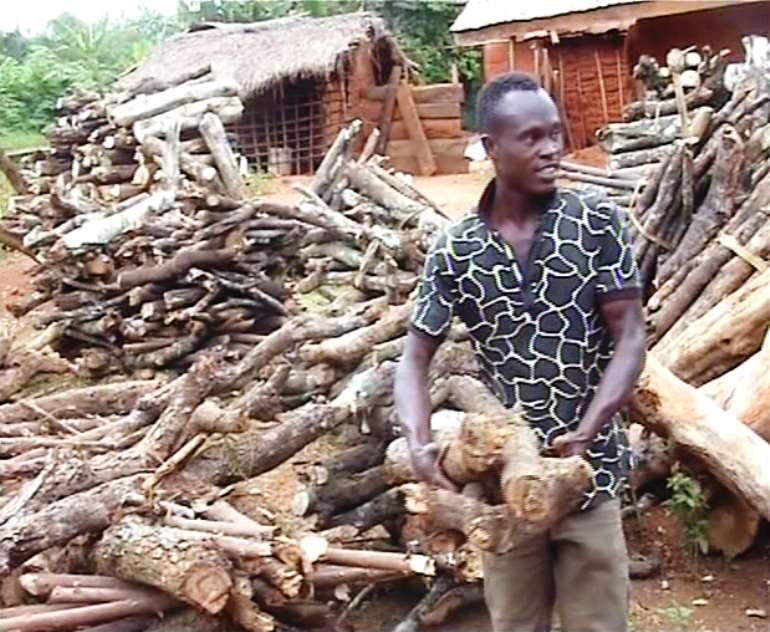
“This business is not easy; imagine contributing 50 pesewas for a bunch of firewood before it will get to my school fees, which is 250 Ghana Cedis. As I am home, it is this job she is doing so I have to help her to raise that money,” he explained.
He is one of the many children who due to poverty have been introduced to this practice of felling trees at early age.
Vida, a 15-year old Junior high school student, is also into the business.
“I will be in JHS three when school reopens. I cut the trees myself with the help of my sisters. This tray full that I am carrying is one Ghana Cedis,” she said whilst on her way from the farm, carrying a tray full of logs.
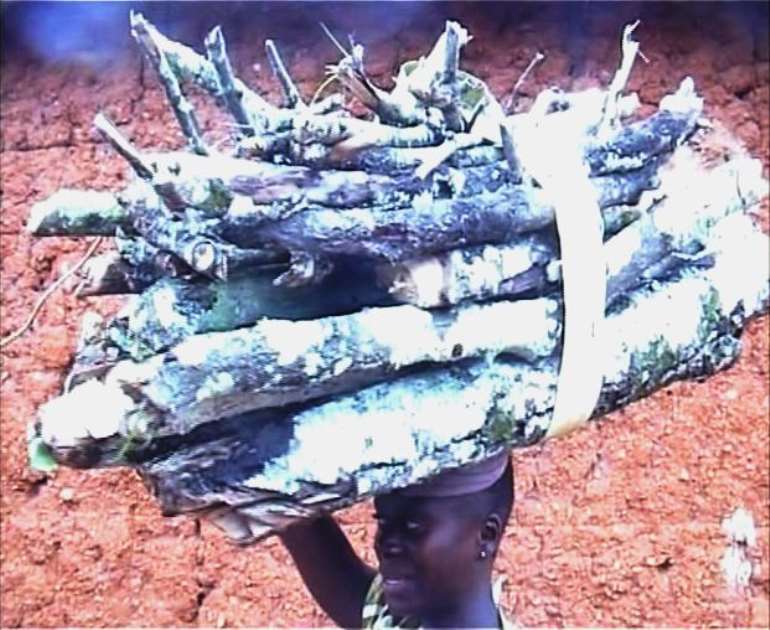
Many of Fati’s colleagues in this community survive by selling firewood. From interactions with these rural dwellers, their motivation is in unison, “If we don’t do this, children won’t go to school”.
Ironically, these women and other loggers appear oblivious of the alarming impact their activities have on the forest and the rest of the environment.
For them, trees are natural and abundant resource, always available for their use.
Ghana Environmental Protection Agency (EPA) has the mandate to protect and ensure trees are replaced when cut down but this obviously is being flouted.
Yaw Oppong-Boadi Kyekyeku, the Acting Director of EPA says more education is needed to address the practice in these rural areas.
“We are enforcing the laws, but that is not enough, we need the media to assist with education,” he said.
But Fati and her rural folks have little or no idea about degradation and global warming, and planting trees, at least, to replace the ones they fell is completely out of their scheme of affairs.
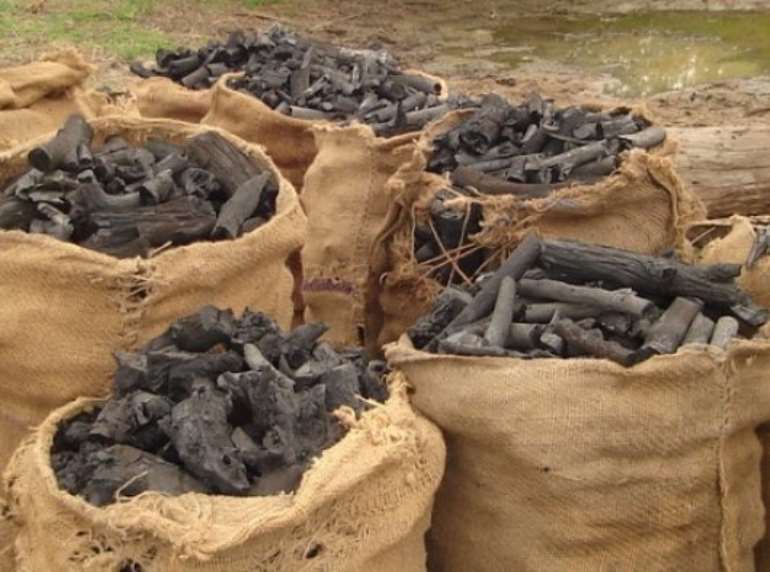
He noted that such alternatives must lucrative enough to prevent people from going back to the practice.
Experts say existing laws, regulations and policies to deter the use of fuel wood in Ghana and Africa are not making the desired effect.
The introduction and use of Liquefied Petroleum Gas, though increasing, is yet to address the challenge.
Until laws are enforced, illegal logging will continue to devastate the country’s shrinking rainforest and woodland.
 Parliament to reconvene on May 21 following Easter break
 Passengers isolating on cruise after Cape Verde ban over suspected virus deaths
 Stop blaming Akosombo inferno for current dumsor — Okoe Boye tells Energy Minist...
 President Mahama to host global leaders for high-level reparations conference
 Refrain from cheating — United Party advises 2026 BECE candidates
 Support us to serve you better — Fire Service urges public
 BECE 2026: Minority urges candidates to stay focused
 Prisons Service warns public over fake social media accounts soliciting money in...
 Fighting racism 'must be at heart of presidential debate', French mayor tells RF...
 From this year, persons indicted in the Auditor General’s reports will be prosec...


