




Ghana's mineral wealth has long been a defining pillar of its economic identity, attracting international investment, generating public revenue and shaping the country's development ambitions. From gold and manganese to bauxite and emerging critical minerals, the resources beneath the country's soil present enormous opportunities. Yet, the real measure of a nation's mineral wealth lies not simply in what it extracts, but in how effectively it transforms those resources into sustainable prosperity for its people.
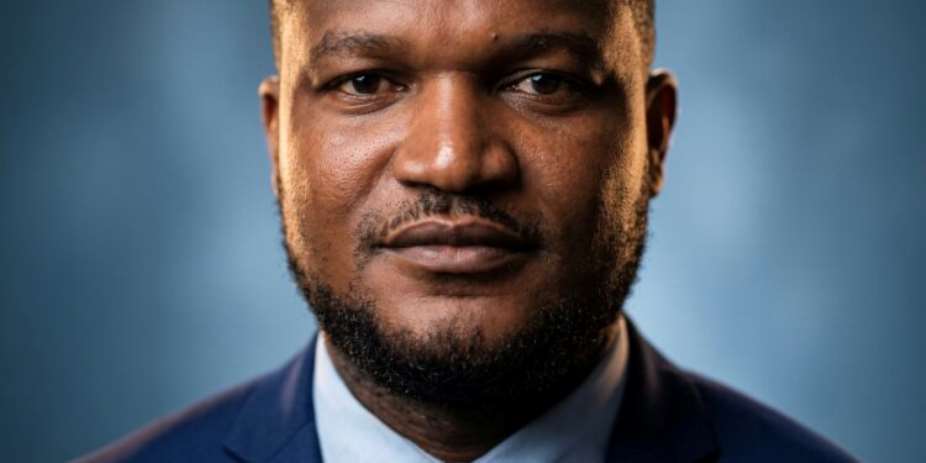
His appointment as Acting Chief Executive Officer in August 2025, ahead of his expected formal assumption of office on September 15, 2025, marked a significant transition in his career. Bringing more than 23 years of experience across mining engineering, open-pit operations, project management, strategic planning, operational oversight and regulatory compliance, Mr Tandoh assumed responsibility for an institution whose decisions have far reaching implications for investment, public revenue, environmental protection and the livelihoods of mining communities.
Mr Tandoh's academic preparation reflects a combination of engineering expertise and managerial development. He holds a Bachelor of Science degree in Mining Engineering from the University of Mines and Technology, Tarkwa, an MBA in Corporate Finance from Walden University in the United States, and a Master of Science degree in Mining Engineering and Management from the South Dakota School of Mines and Technology. His professional credentials also include a Mine Manager's Certificate of Competency and internationally recognised mining and commercial management certifications.
"Employment is not the same as ownership. Labour is not the same as control."
Before joining the Minerals Commission's leadership, he accumulated extensive professional experience through engagements with some of the mining industry's established international and domestic operators, including Gold Fields Ghana Limited, Newmont Corporation, AngloGold Ashanti and ASARCO Group LLC in the United States. His responsibilities at Gold Fields included serving as Mining Manager at Tarkwa Mine and Acting General Manager, positions that exposed him to the demands of production management, mine development, operational efficiency and contractor supervision.
That experience extended beyond the technical aspects of mining. Managing large-scale operations requires an appreciation of capital investment, equipment procurement, contractual obligations, workplace safety, production targets, regulatory compliance and relationships with local suppliers. These responsibilities have helped shape his understanding of the mining value chain and the importance of creating an operating environment in which commercial success is accompanied by institutional accountability and national benefit.
"Africa should define critical minerals in Africa's own terms, anchored in our development objectives, our people's needs, and our continent's sustainable future."
However, the transition from corporate mining management to public regulatory leadership demands a broader understanding of governance. It requires independence, transparency, policy consistency, stakeholder consultation and the ability to make decisions in the national interest, even where commercial and regulatory priorities may differ. Mr Tandoh's industry background gives him an opportunity to approach these responsibilities with practical knowledge of the sector, while his public office places an obligation on him to ensure that the interests of Ghana remain paramount.
In articulating his leadership direction in September 2025, he indicated his intention to build on the institutional foundations established by his predecessor while aligning the Commission's strategic priorities with government policy and improved industry productivity. This approach places emphasis on institutional continuity, operational efficiency and the need to strengthen the regulatory framework governing the country's mineral resources.
"True local content and indigenisation means local companies and Ghanaian people are not only supplying goods and services but progressively owning critical segments of the industry."
One of the most significant areas of his public advocacy has been the expansion of Ghanaian participation and ownership in the mining industry. At the maiden Mining Local Content Summit in Takoradi in February 2026, Mr Tandoh advanced the argument that local content should move beyond employment opportunities and the supply of goods and services to encompass genuine Ghanaian ownership, equity participation and control of strategic segments of the mining value chain.
His position speaks to a longstanding national development concern. Although Ghanaian workers and businesses contribute to mining operations, the country must build greater domestic capacity to own mining-related enterprises, manufacture equipment and consumables, provide specialised technical services and retain a larger proportion of the economic value generated from its natural resources. The ultimate objective is to ensure that Ghanaian participation is measured not only by the number of people employed in the industry, but also by the extent of ownership, enterprise development and economic value retained within the country.
Among the regulatory measures announced during the summit was the revocation of more than 300 small-scale mining licences reportedly obtained through irregular processes. He also highlighted the strengthened involvement of District Mining Committees in reviewing licence applications, measures to address illegal foreign participation through Ghanaian nominees, and the introduction of a medium-scale mining licence category intended to bridge the gap between small-scale and large-scale mining operations.
These measures form part of a wider reform agenda aimed at improving mineral rights administration, strengthening regulatory accountability and creating more structured opportunities for indigenous participation. Their effectiveness, however, will depend on transparent implementation, respect for due process, consistent enforcement and the ability of Ghanaian businesses to convert the opportunities created into viable and sustainable enterprises.
Digital transformation has also emerged as an important component of his governance priorities. Speaking at the Revenue Development Foundation's 2026 Governance Systems Workshop in Accra in February, Mr Tandoh highlighted the importance of the automated Mineral Cadastre Administration System (MCAS), which became operational in October 2021, in improving mineral rights administration, transparency and investor confidence. His emphasis has been on strengthening the use of an existing digital framework to improve the integrity of licensing records, minimise administrative bottlenecks and support more accountable decision-making. The system represents an important foundation for modernising the management of Ghana's mineral resources.
His leadership agenda also extends to the broader African and international mining landscape, where the future of mineral development is increasingly linked to responsible investment, geological information, technology transfer and domestic value addition. At the 2026 Investing in African Mining Indaba in Cape Town, Ghana's participation provided an opportunity to advance discussions on investment partnerships and the country's ambition to strengthen its position in the global minerals economy. For Mr Tandoh, the larger challenge remains ensuring that mineral extraction translates into stronger local industries, meaningful Ghanaian ownership, environmental protection and sustainable economic opportunities. Illegal mining, water pollution, land degradation and the restoration of affected communities remain critical tests of regulatory effectiveness. Ultimately, his legacy will be judged not by announcements alone, but by measurable improvements in enforcement, institutional transparency, responsible investment and the economic benefits retained by Ghanaians. His journey from the mines to the Minerals Commission therefore represents both professional progression and a significant national responsibility: helping Ghana move beyond the extraction of mineral resources towards an industry that creates lasting prosperity for present and future generations.


 NDC's parliamentary seats projected to drop to 154 as NPP rises to 100 in 2028 f...
 NPP to pursue Ablakwa’s removal through Parliament – Jinapor
 I will name and shame anyone who obstructs passage of anti-LGBTQI+ bill – Speake...
 Mahama's government is doing way better than NPP's administration 8 years – Fifi...
 Two bail applications fail as Asante Akyem North MP remains in Dutch custody – D...
 Government imposes 11-hour curfew on Hamile and surrounding communities
 ‘It was a free port under Akufo-Addo; the drugs were coming in’ – Larry Dogbey
 Mahama is displaying weak leadership, pampering corruption and illicit drugs – N...
 Ablakwa is running from accountability despite being an apostle of it in opposit...
 VALCO introduces 1:4:4 shift system to drive 24-hour operations, expand workforc...


