




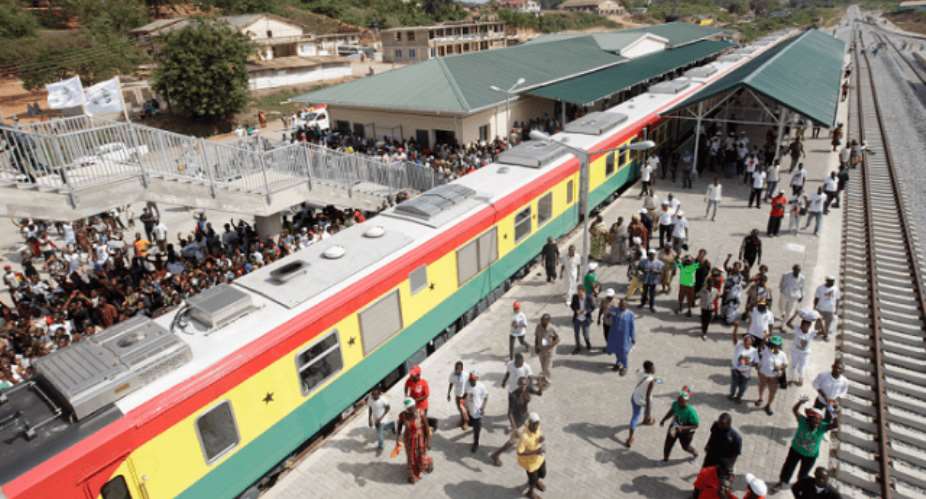
Ghana's railway network has spent most of this century as a cautionary tale — colonial-era tracks laid for cocoa and minerals, decades of underinvestment, and a national conversation that treats every announcement of “railway revival” with a mixture of hope and exhaustion. The renewed push to digitize railway operations and bring in private capital to rebuild lines such as the Western Railway and the Accra–Tema corridor deserves support. But support is not the same as an open cheque, and Ghana's history with privatized public infrastructure means this modernization drive needs governance built in from the start, not bolted on after something goes wrong.
Why Modernization Is Overdue
The case for digitization and private investment in Ghana's railways is not difficult to make. A rail network still run on manual signalling, paper-based ticketing, and infrastructure decades past its design life cannot support the freight and passenger volumes a growing economy needs. Digitized systems — electronic ticketing, real-time train tracking, automated signalling, predictive maintenance — are not luxuries; they are the baseline for a railway that is safe, reliable, and financially sustainable.
Private capital matters for the same reason. Rebuilding and modernizing rail infrastructure at the scale Ghana needs requires investment far beyond what the national budget can absorb alongside its other obligations. Public-private partnerships, structured well, bring in capital, technical expertise, and operational discipline that the sector has lacked. There is a legitimate case for cautious support of this direction, and I make it without reservation.
The Part of the History Worth Remembering
The reservation is not about direction — it is about governance. Ghana, like much of the continent, has been here before. Utility and infrastructure privatizations elsewhere have too often followed a familiar pattern: an underperforming public asset is handed to a private operator with insufficient oversight, service improves for the routes and customers that are profitable, and the routes and communities that are not profitable are quietly deprioritized or abandoned. Contracts negotiated with limited public disclosure have, in more than one sector, left the state carrying the financial risk while private partners captured the returns.
None of this means privatization or private participation is wrong in principle. It means that the quality of the contract, the strength of the oversight, and the transparency of the process determine whether modernization serves the public or extracts from it. The railway sector, given its strategic importance to freight movement, regional trade corridors, and the communities along its routes, cannot afford to relearn this lesson the hard way.
What Good Governance of This Process Looks Like
If Ghana is to bring digitization and private investment into its railways responsibly, several safeguards should be non-negotiable.
First, the state should retain ownership of core rail infrastructure and strategic control, structuring private participation as concessions or operating partnerships rather than outright transfers of a national asset. Ownership and operation are different questions, and conflating them is where many privatizations lose public trust from the outset.
Second, contracts should be competitively bid and publicly disclosed. The terms of any concession — including tariff structures, service obligations, and the government's exposure if the private partner underperforms or exits — should be available for parliamentary and public scrutiny, not treated as commercially confidential in ways that shield them from accountability.
Third, service obligations must protect the routes and passengers that a purely profit-driven operator would deprioritize. Performance contracts should specify minimum service levels on socially necessary routes, with penalties for non-compliance, so that modernization does not quietly become a rationalization of service down to only what is profitable.
Fourth, affordability safeguards need to be built into fare structures from the start. Digitization that improves efficiency should not become the justification for fare increases that price out the commuters who depend on rail the most.
Fifth, an independent regulator — separate from both the operator and the ministry negotiating the concession — should have real authority to monitor performance, enforce penalties, and report publicly. Oversight that exists only on paper is not oversight; it is the same failure mode as CSR reports that describe practices no one is actually enforcing.
Sixth, workforce transition must be handled deliberately. Digitization changes the skills a railway workforce needs, and privatization changes who employs that workforce. Ghana owes its existing railway workers a transparent, negotiated transition — retraining and redeployment where roles change, not silent attrition.
Why the Governance Question Is the Whole Question
The debate Ghana should be having is not “digitization and private investment, yes or no.” That question has a fairly clear answer: yes, because the alternative is continued decline. The debate that actually matters is which government, at which level of transparency, with which enforcement mechanisms, gets to structure that investment.
A digitized, partially privatized railway built on a competitively bid, transparently disclosed, independently regulated contract could be a genuine national asset — a freight and passenger network that finally matches the ambitions Ghana has stated for it for decades. The same digitization and privatization, built on an opaque contract with weak oversight, could just as easily become another case study in how modernization on paper becomes extraction in practice.
Ghana has the opportunity to get this right at the design stage, before contracts are signed and before the public is asked, once again, to trust that this time will be different. Cautious support for railway modernization means insisting that the caution comes first — in the governance structure — and the support follows once that structure is in place.
Rexford Adjei Darko is a Public Relations Practitioner, Governance & AI Advocate and CSR Researcher.


 ‘We have turned the tide’ – Ato Forson says Ghana is ready to take off
 Sammy Gyamfi refuses to file defence, hides behind technicalities — Lawyers
 Osahen Afenyo-Markin vows to pursue case against Sammy Gyamfi despite high court...
 Let us all be mentors to our younger generation - Mahama
 Court stops Osenase homecoming over security concerns
 Supreme Court dismisses Solomon Asamoah's bid to stop Sky Train trial
 GRA denies imposing new 20% tax on Netflix, Google and Amazon subscriptions
 Police arrest 16 suspects, seize 209 rounds of ammunition at Gbane mining site
 ‘Mahama has lost his moral high ground’ – Dr Zaato on Affi Agbenyo’s EC appointm...
 Cassava, hemp could offer alternatives to plastics – Zanetor challenges scientis...


