




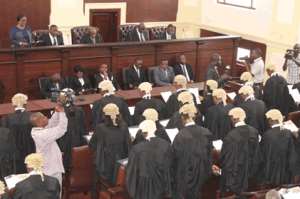
For decades, legal practice in Ghana has operated under strict rules that ban lawyers and law firms from advertising their services to the public. The Legal Profession (Professional Conduct and Etiquette) Rules, 1969, still treat advertising as "unprofessional conduct." Meanwhile, across the Atlantic, the UK has allowed solicitors and barristers to market themselves openly since the 1980s. It’s time Ghana had the same conversation.
This article articulates why opening up advertising could help lawyers, clients, and the justice system.
Advertising legal services will lead to improved access to justice. In the current situation, most Ghanaians only find a lawyer through word of mouth, family commendation, or by walking into a court and asking around. That leaves a huge information gap.
In the UK, you can compare firms online, read about areas of practice, check fees, and even book consultations. Advertising didn’t make law commercial. It made it visible.
In Ghana, where many people don’t know what a "conveyancer" does or which firm handles labour disputes, clear advertising would help people match their problem to the right lawyer faster.
Moreover, when law firms can’t advertise, reputation spreads slowly and mostly within elite circles. New firms, young lawyers, and those outside Accra struggle to break in.
The UK model didn’t create billboards on every corner. It created websites, legal directories, and transparent info about expertise and areas of specialities. That competition pushed firms to specialize, improve client service, and explain legal fees upfront.
For Ghana, that could mean more firms investing in client education, pro bono pages, and clear pricing instead of relying only on old networks.
The biggest fear is that advertising will lead to misleading claims and unethical behaviour. The UK faced that too. Their solution wasn’t a ban. It was regulation.
The Solicitors Regulation Authority now has clear rules: no false claims, no pressure tactics, all fees and complaints processes must be disclosed. Breach it and you lose your license.
Ghana’s General Legal Council could do the same. Allow advertising, but within a code. For example:
Allowed: Firm name, areas of practice, office locations, languages spoken, fees ranges, client testimonials with consent
Not allowed: Guarantees of winning cases, direct solicitation of accident victims, misleading comparisons
In Ghana, the legal market has already changed, but the appropriate authorities are refusing to admit
Clients are already "advertising" themselves on social media looking for lawyers. Young lawyers are already on LinkedIn and TikTok explaining law. The rulebook just hasn’t caught up.
Keeping the ban only pushes marketing underground, where there’s zero oversight. Regulating it brings it into the light.
We don’t need to copy the UK word-for-word. Ghana’s context is different.
Digital first: Permit websites, Google listings, and educational content. Ban loud TV ads during the 8pm news.
Public interest focus: Require firms to list pro bono services alongside paid ones.
Enforcement: Let the General Legal Council run a complaints portal, similar to the UK’s Legal Ombudsman.
Banning advertising was meant to protect the dignity of the law profession. But dignity shouldn’t mean invisibility. In 2026, people Google before they ask. If Ghanaian law firms can’t show up in that search, clients lose and justice gets slower.
Regulated advertising won’t fix every problem in our justice system. But it will make the law less mysterious and more reachable for the teacher in Kumasi, the farmer in Ejura, the trader in Tamale, and the start-up founder in Accra.


 Bechem poultry factory 50% complete, to be ready in March 2027 – Kwakye Ofosu
 Can’t Ghana find non-partisan people for EC positions? – Kwesi Pratt on Affi Agb...
 Emelia Agbenyo’s alleged NDC ties will not affect EC work – Apanga
 Balancing the scale will dilute extreme partisanship – Hamza on new Deputy EC Ch...
 October 13: Cedi sells at GHS12.30 on forex market, GHS11.78 on BoG interbank
 ECOWAS begins implementation of 2026–2031 communication strategy
 IMF upgrades 2026 global growth forecast but war and debt threaten outlook
 Ghana needs comprehensive surrogacy law to address complex legal disputes — Afri...
 Value For Money: Govt to audit rural telephony project inherited from previous a...


