




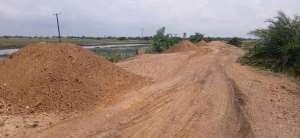
Every rainy season, the same question returns: Why do some newly constructed roads in Ghana develop potholes and fail within months, while roads built decades ago remain serviceable?
The answer is complex, involving funding constraints, poor maintenance, weak supervision, and procurement challenges. However, anti-corruption advocates, engineers, and governance experts argue that corruption within the construction process is also a major contributor to poor road quality.
Corruption and Compromised Quality
One of the persistent allegations in Ghana's road sector is that unofficial payments are demanded before contractors receive Interim Payment Certificate (IPC) approvals or contract payments.
Although such allegations are difficult to verify in individual cases, governance experts warn that any diversion of project funds inevitably affects construction quality.
Political scientist Dr. Asah Asante has argued that when contractors are forced to part with portions of project funds through corrupt practices, the quality of work suffers.
"When you take money from a contractor, you weaken the quality of the work. You cannot properly inspect the work because you have already compromised yourself," he has said.
Industry observers note that when contractors lose part of their legitimate project funding to corruption, they may respond by reducing material quality, cutting corners during construction, or limiting supervision to recover losses.
The ultimate victims are taxpayers and road users.
The High Cost of Weak Oversight
Ghana has invested billions of cedis in road infrastructure over the years, yet many projects require rehabilitation far sooner than expected.
The Ministry of Roads and Highways has itself acknowledged weaknesses in project management. One widely publicized case involved approximately US$30 million reportedly paid to a contractor under an Indian Exim Bank-funded project where little or no work was completed. Government has pledged to recover the funds and pursue accountability.
Meanwhile, the country's road sector debt has grown to tens of billions of cedis, placing enormous pressure on contractors, government finances, and future infrastructure investment.
Delayed payment of certified work has also created financial hardship for many contractors, affecting payroll, tax obligations, and project completion schedules.
Government Tightens Quality Controls
The current administration has announced stricter measures to improve accountability.
President John Dramani Mahama has directed that road payments be tied to verified construction quality and actual completion milestones.
The President has emphasized that government will not pay for substandard work and that taxpayers deserve value for money.
Roads and Highways Minister Kwame Governs Agbodza has also warned that poor workmanship will no longer be tolerated.
Under the new approach:
Payments will depend on verified quality inspections.
Performance bonds may be enforced against defaulting contractors.
Consultants will be required to carry professional indemnity insurance.
Officials who approve defective work may face disciplinary action or financial surcharge.
Strengthening Accountability
Experts believe meaningful reform requires accountability across the entire construction chain.
Among the proposals receiving support are:
Recover public funds lost through fraudulent or abandoned contracts.
Prosecute contractors who deliberately deliver substandard work.
Sanction consultants who certify defective projects.
Hold public officials personally responsible for approving poor-quality work.
Strengthen independent engineering audits before payments are authorized.
Digitize contract management to improve transparency and reduce opportunities for corruption.
Recent government audits have already identified inflated and inaccurate payment claims running into billions of cedis, highlighting the importance of independent verification before public funds are released.
Building Roads That Last
Many Ghanaians often point to infrastructure such as the Tema Motorway, sections of which have served the country for decades, as evidence that durable roads are achievable when projects are properly designed, supervised, and executed.
Modern engineering standards are capable of producing roads with similar longevity. What is required is strict adherence to specifications, quality materials, effective supervision, and uncompromising integrity throughout the construction process.
The Way Forward
Improving Ghana's roads is not simply a matter of increasing budgets. It is about ensuring that every cedi allocated delivers lasting infrastructure.
When contracts are awarded transparently, work is independently inspected, and payments are released only after quality is verified, both government and citizens receive better value for money.
As Ghana embarks on major infrastructure programmes under its development agenda, one principle should guide every road project:
No verified quality, no payment.
That single standard could help reduce waste, discourage corruption, restore public confidence, and ensure that Ghana builds roads that serve generations rather than requiring reconstruction after every rainy season.

 Thousands of foreign nationals leave South Africa ahead of June 30 'deadline'
 Court defers judgement in Wontumi's Samreboi case to July 20, grants lawyer more...
 Bawumia sympathises with Ghanaians amid flood and heavy downpour
 Accra floods: GAF, police and other security agencies deployed for rescue missio...
 Remain where you are until conditions improve — Interior Minister advises Ghanai...
 Court hears Wontumi's bid to defer July 3 judgment in Samreboi case today
 Alan Kyerematen offers better alternative to troubled NPP — United Party
 T‑Bill Demand Surges as Government Raises GH¢6bn, Oversubscribes Auction by 31%
 GCAA Launches Probe Into Alleged Passenger Mistreatment on KLM Amsterdam–Accra F...
 Torrential Rains Flood Accra: Major Roads Submerged, Commuters Stranded in Monda...


