




The Chief Executive Officer of SkyFox Limited, Mr. Patrick Apoya, has called for a fundamental shift in Ghana's approach to sanitation, urging government to place Metropolitan, Municipal, and District Chief Executives (MMDCEs) at the centre of accountability if the country is to eliminate open defecation by 2030.
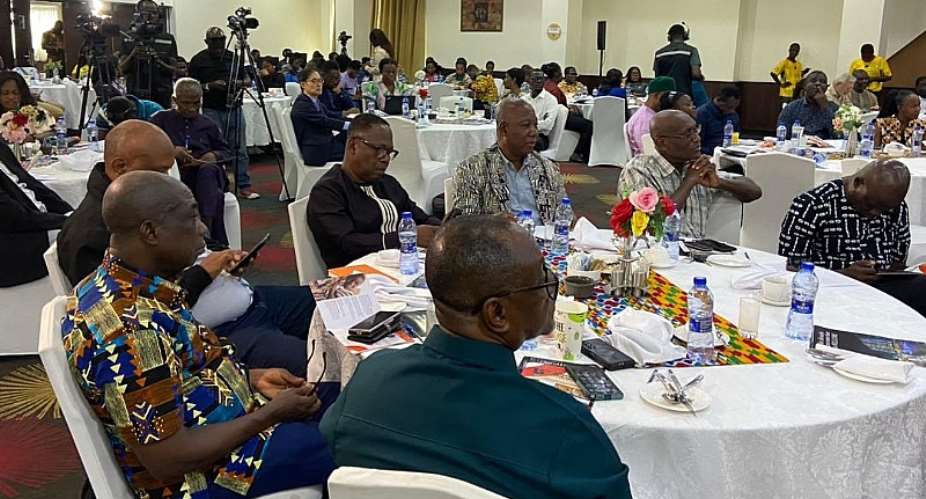
Speaking at the 5th Executive Breakfast Conversation held in Accra on June 23, 2026, Mr. Apoya said although Ghana has made significant progress in expanding access to water and sanitation facilities, open defecation remains a major public health and development challenge.
According to him, an estimated 15.5 percent of the population still practises open defecation, with rural communities recording the highest prevalence.
“That statistic is not just a health figure. It is an economic, social, and migration signal. If Ghana is to meet Sustainable Development Goals (SDG) 6.2 and declare itself Open Defecation Free (ODF) by 2030, it must abandon fragmented, project-by-project responses.
“The path forward is integrated, financed, enforced, and measured with Metropolitan, Municipal, and District Chief Executives (MMDCEs) at the center of accountability,” he stated.
The Executive Breakfast Conversation was held on the theme, "Sanitation as a Key Performance Indicator for MMDCEs and the Role of Relevant Ministries, Departments, and Agencies: Prospects, Opportunities, and Constraints."
The programme sought to secure stronger political commitment and multi stakeholder collaboration towards using sanitation as a catalyst for improved public health, job creation, and economic development.
It was organised by the Ministry of Local Government, Chieftaincy, and Religious Affairs in collaboration with sector agencies, World Vision Ghana, the Media Coalition Against Open Defecation (M CODe), and the Ghana WASH Journalists Network.
The Director General of the National Development Planning Commission, Dr. Audrey Smock Amoah, chaired the event, while the Minister for Labour, Jobs, and Employment, Dr. Rachid Pelpuo, attended as the special guest.
Delivering a presentation on the theme, Mr. Apoya stressed that the consequences of open defecation extend far beyond rural communities.
He noted that poor sanitation contributes to diarrhoeal diseases, stunting, parasitic infections, and reduced productivity, while exposing women and girls to increased risks of assault and school dropout due to the absence of safe and private sanitation facilities.
“Sick children mean lost school days and lost adult productivity,” he said.
He added that communities with high levels of open defecation often struggle to attract teachers, health professionals, and investors, further widening development inequalities.
Mr. Apoya warned that the lack of basic sanitation in rural areas also fuels migration to urban centres, where many migrants eventually settle in informal communities facing similar sanitation challenges.
“We are not solving the problem; we are relocating it,” he observed.
He said breaking this cycle requires sustained investment to make rural communities healthier and more attractive places to live.
The SkyFox CEO further noted that while most Metropolitan, Municipal, and District Assemblies have sanitation bylaws, weak enforcement remains a major obstacle.
“When enforcement is weak, OD becomes the default. People will not invest in a household latrine if the neighbor's behaviour carries no consequence and if there is no affordable option to buy,” he said.
Mr. Apoya also pointed to inadequate logistics for Environmental Health Officers, limited personnel, political interference, and inconsistent sanctions against offenders as key barriers to effective enforcement.
He urged government to treat sanitation as a strategic national investment rather than a social welfare issue, citing World Health Organization estimates that every $1 invested in sanitation generates returns of up to $5.50 through lower healthcare costs and increased productivity.
He further noted that poor faecal sludge management contributes significantly to flooding and cholera outbreaks in Accra and called for sanitation and WASH infrastructure to receive the same level of priority as roads, electricity, and digital infrastructure through sustained funding and long term planning.
“Open defecation is a drag on Ghana’s health, education, gender equity, and urban planning goals. It also fuels the very rural-urban migration that overwhelms Accra’s services,” Mr. Apoya stated.
Meanwhile, the 7th School Sanitation Solutions Challenge (Triple S) was officially launched during the event to encourage schoolchildren to become sanitation conscious ambassadors and develop innovative solutions to sanitation challenges in schools, communities, and public spaces.
This year's essay competition asks participants: "Ghana's sanitation situation is generally poor. Meanwhile, sustained behaviour change among citizens has been identified as the ingredient required to address the country's poor sanitation situation. As the Child Sanitation Diplomat, what practical recommendations will you make to achieve behaviour change towards improved sanitation in Ghana?"
The competition is organised by World Vision Ghana and Kings Hall Media in partnership with the Ghana Education Service, the Zoomlion Foundation, and other stakeholders.
Launching the challenge, the Deputy Minister for Local Government, Chieftaincy, and Religious Affairs, Mrs. Rita Naa Odoley Sowah, praised previous participants for their creativity and innovative ideas in addressing sanitation challenges.
She encouraged parents and teachers to support pupils throughout the competition.
She urged them to “take interest in the ideas their children develop, and to our pupils, I say never underestimate the value of your ideas and never assume that you are too young to make a difference.”
World Vision Ghana's WASH Technical Specialist, Mr. Yaw Attah Arhin, explained that the competition is open to pupils from Primary Six to Junior High School Two across all 16 regions.
He said contestants will compete within four geographical zones namely the Cocoa, Shea, Tilapia, and Coconut zones. Following the essay stage, five contestants from each zone will advance to the Masters Encounter, with the overall winners progressing to the Battle of Champions Grand Finale.
 Accra floods: GAF, police and other security agencies deployed for rescue missio...
 Remain where you are until conditions improve — Interior Minister advises Ghanai...
 Court hears Wontumi's bid to defer July 3 judgment in Samreboi case today
 Alan Kyerematen offers better alternative to troubled NPP — United Party
 T‑Bill Demand Surges as Government Raises GH¢6bn, Oversubscribes Auction by 31%
 Arthur Kennedy Blasts NPP for “Baseless” Disciplinary Action Against Agyapong
 GCAA Launches Probe Into Alleged Passenger Mistreatment on KLM Amsterdam–Accra F...
 Torrential Rains Flood Accra: Major Roads Submerged, Commuters Stranded in Monda...
 'Don't drive or walk through floods' -- NADMO advises Accra, Tema and Kasoa resi...
 South Africa coach Broos urges squad to savour achievements at 2026 World Cup


