




The Minister of Labour, Jobs and Employment, Dr Rashid Pelpuo, has said sanitation must be treated as a labour and employment issue, as it has the potential to create thousands of decent and skilled jobs for Ghanaians.
He said a full analysis of the sanitation value chain shows extensive opportunities for employment from construction and manufacturing to service delivery, operations, finance and data management.
“Sanitation is also a labour and employment issue. From masons and plumbers to faecal sludge operators, waste collectors, manufacturers, fintech agents and environmental health officers, the chain is long, labour-intensive, and already employing Ghanaians. The task now is to formalise it, skill it, and scale it,” Dr. Pelpuo stated.
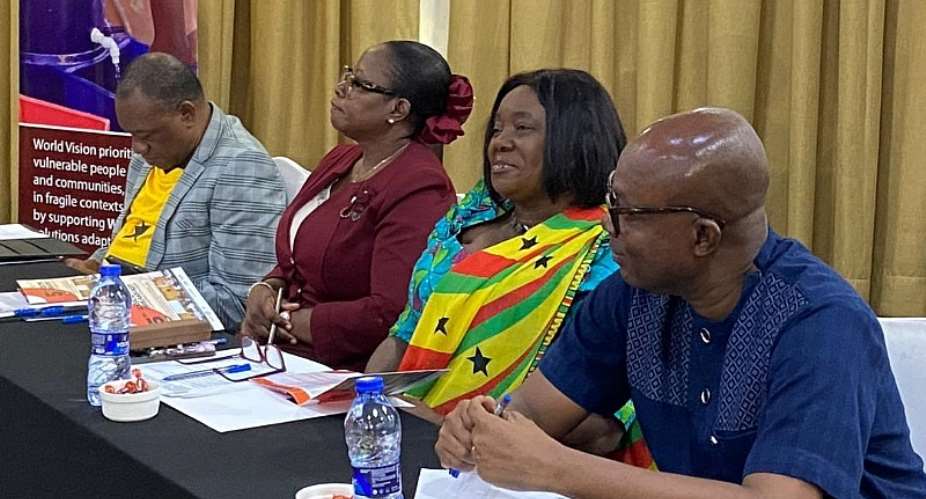
Dr Pelpuo stated during the 5th Executive Breakfast Conversation in Accra, on June 23rd, 2026 which was on the theme "Sanitation as a Key Performance Indicator for MMDCEs and the Role of Relevant Ministries, Departments, and Agencies—Prospects, Opportunities, and Constraints."
It aimed at securing the highest socio-political prioritisation and multi-stakeholder commitment towards the realisation of sanitation as a catalyst for health, job creation, and economic well-being.
Organised by the Ministry of Local Government, Chieftaincy, and Religious Affairs, in collaboration with sector agencies, World Vision Ghana, and the Media Coalition Against Open Defecation (M-CODe) and Ghana WASH Journalists Network serving as the main media partners.
Dr Audrey Smock Amoah, Director-General of the National Development Planning Commission, chaired the event.
Dr Pelpuo noted that every district target to build household latrines, operate treatment plants, or manage faecal sludge creates direct and indirect jobs for artisans, suppliers, transporters, technicians and young entrepreneurs.
“Every functional treatment plant is a facility with permanent technicians. Every district that builds thousands of latrines is creating months of work for local masons and manufacturers,” he said.
Dr Pelpuo identified informality, skills gaps and weak investment as key challenges holding back the sector and expressed concern that most sanitation workers operate without contracts, personal protective equipment, insurance or social security, while technical training for faecal sludge management and plant operations remains limited in TVET institutions.
“These are not just sanitation problems. There are labour market problems. And they require collective resources across Labour, Sanitation, Local Government, Finance, Education and the private sector,” he stated.
The Minister reiterated that the Ministry of Labour remains committed to decent jobs and is pursuing a three-pillar approach.
This includes formalising and protecting sanitation workers through safety standards and contracts, certifying skills in partnership with COTVET and TVET institutions, and stimulating demand through microloans, output-based aid and incentives for local manufacturers.
He added that making sanitation a viable local industry will also reduce rural-urban migration, as young people will have dignified work opportunities in their districts.
“Government cannot do this alone. District assemblies, traditional leaders, banks, manufacturers, NGOs and the workers themselves must sit at the same table,” Dr Pelpuo said.
Dr Tinah Mukunda, National Director, World Vision Ghana, in her welcome address commended President John Dramani Mahama and the government for making environmental sanitation a national development priority and tagging it as a Key Performance Indicator for Metropolitan, Municipal, and District Chief Executives (MMDCEs).
“Such an initiative has the potential to trigger a national consciousness and reawaken the nation’s sanitation conscience,” Dr. Mukunda stated.
Dr. Mukunda noted that it was refreshing that recommendations of previous conversations have found favour with the government in taking steps to implement two major policy initiatives—sanitation as KPIs for MMDCEs and the 10 percent allocation of District Assemblies’ Common Fund towards improved environmental sanitation.
“As we interrogate the prospects, opportunities, and constraints of this bold declaration, we should be interested in only one outcome—greater prioritization and increased investment for improved environmental sanitation,” the World Vision Ghana, National Director stated.
Dr Mukunda noted that the Executive Breakfast Conversation has evolved into a key platform for reviewing progress, addressing bottlenecks, and securing political prioritization for basic sanitation and waste management.
She stressed that Ghana’s drive toward sustainable development is reaching a decisive moment, and sanitation has emerged as the central metric that can determine whether MMDCEs deliver real transformation, which must be enforced.

 September 29: Cedi finishes day selling at GHS12.20 on forex market, GHS11.67 on...
 ‘We’ll explore another constitutional option for narcotics probe’ – Minority on ...
 Speaker Bagbin adjourns Parliament indefinitely after rejecting narcotics probe ...
 Food Buffer Stock seeks stronger liquidity buffer despite record GH¢91.7 million...
 Ex NAFCO Boss trial: Court adjourns trial to hear application for return of seiz...
 Bagbin backs Mahama’s call for national dialogue on social media insults
 National conversation should not become an exercise in suppressing dissent — Bag...
 ‘Don’t reward only bitter tongues, it encourages others to copy’ – Bagbin tells ...
 We have cut cost of capital by more than half since Mahama took office – Ato For...


