




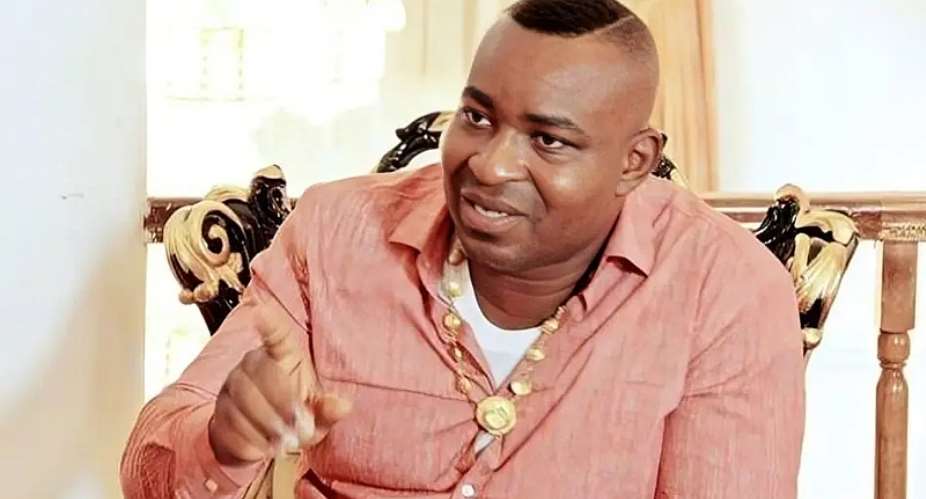
There are moments in the life of every nation when a single court case grows beyond the individual standing in the dock. It becomes a defining moment that tests the strength of the country's institutions, its commitment to justice and its willingness to protect future generations. The ongoing Samreboi case involving Chairman Bernard Antwi Boasiako, popularly known as Wontumi, is one such moment for Ghana.
This case is not merely about one politician or one mining company. It is about whether Ghana has finally reached the point where environmental destruction will no longer be protected by wealth, political influence, or powerful connections. It is about whether the rule of law will prevail over the rule of impunity.
When the current Mahama administration assumed office in 2025, it inherited an environmental crisis that had grown into alarming proportions. During the previous Akufo-Addo and Bawumia administration, what was once largely traditional illegal mining evolved into what many Ghanaians now describe as High-Tech Galamsey, HTG. Heavy excavators, sophisticated machinery, organized financiers and powerful networks transformed illegal mining into an industrial-scale assault on Ghana's forests, rivers and biodiversity.
This dangerous evolution did not happen overnight. It happened because enforcement was inconsistent, accountability was selective and some influential actors appeared beyond the reach of the law. That perception must now come to an end if Ghana is to restore public confidence in the fight against illegal mining.
Chairman Wontumi has, for years, remained one of the most prominent public figures associated with the national conversation on galamsey. Allegations surrounding mining activities connected to his company have attracted enormous public attention. Beyond the Samreboi proceedings, he is also facing legal processes relating to alleged activities within the Tano Nimiri Forest Reserve. As with every accused person, he is entitled to the full protection of due process and the presumption of innocence until the courts determine otherwise. Yet the broader national importance of these proceedings cannot be overstated.
The environmental consequences of High-Tech Galamsey are painfully evident across many parts of Ghana. Rivers that once supplied clean drinking water have become heavily polluted. Forest reserves that protected biodiversity and regulated local climates have been degraded. Productive farmlands have been abandoned while entire communities continue to worry about contaminated water, declining agricultural productivity and increasing health risks.
The Pra, Ankobra, Birim and several other rivers continue to bear the scars of irresponsible mining activities. The destruction extends across parts of the Western, Eastern, Ashanti and other mining regions. Every polluted river increases the cost of water treatment. Every destroyed forest weakens Ghana's resilience against climate change. Every degraded landscape reduces opportunities for future economic development.
This is precisely why Ghana must confront the kingpins behind illegal mining rather than focusing only on the labourers found on mining sites. The financiers, concession holders, equipment owners and influential facilitators who make these operations possible must equally face justice. Arresting only the operators while leaving the masterminds untouched is neither justice nor an effective strategy against organized environmental crime.
The Samreboi case, therefore, represents something much larger than an individual prosecution. It presents an opportunity for Ghana to demonstrate that environmental laws apply equally to everyone regardless of political affiliation, economic status, or public influence.
If judgment is delivered on July 3, 2026, as currently scheduled, unless postponed by the court, it should reinforce one important national principle. Where the evidence establishes liability, the sanctions imposed should be sufficiently strong to deter others who continue to destroy Ghana's natural heritage. Strong enforcement does not represent political persecution. It represents respect for the rule of law.
Equally important is the application of the internationally recognised Polluter Pays Principle. Those found responsible for environmental destruction should not merely receive fines or custodial sentences where applicable. They should bear the financial responsibility for restoring degraded forests, reclaiming destroyed lands, rehabilitating polluted rivers and mitigating the social and economic harm inflicted upon affected communities. Environmental restoration should become an integral part of environmental justice.
The Mahama administration deserves recognition for placing renewed attention on the fight against High-Tech Galamsey. Nevertheless, the ultimate measure of success will not be speeches or press conferences. It will be sustained enforcement, independent investigations, successful prosecutions, ecological restoration and the political courage to confront every offender without exception.
Technology should also become an indispensable weapon in this fight. Satellite monitoring, drones, artificial intelligence, geospatial surveillance and real-time environmental reporting systems should complement traditional law enforcement. Criminal networks have modernized their operations. Ghana must modernize its response.
Above all, this struggle is not about politics. It is about patriotism.
Gold may enrich a few individuals today, but healthy rivers sustain millions of Ghanaians every day. Forests cannot be replaced within one political term. Polluted water cannot simply be wished clean. Once ecosystems collapse, the consequences may persist for generations.
The greatest injustice we can commit is to leave future Ghanaians an environmentally bankrupt nation simply because today's leaders lack the courage to confront powerful interests.
Ghana must therefore draw a clear line in the sand. Whether one belongs to the NDC, the NPP, or any other political tradition must never determine the application of environmental law. The rivers recognise no political party. The forests belong to no government. They belong to every Ghanaian and to generations yet unborn.
The Samreboi case should, therefore, become more than legal proceedings. It should become a national turning point. A turning point where impunity gives way to accountability. Where environmental destruction is met with environmental justice. Where political influence bows before the Constitution. Where Ghana finally demonstrates that no individual is greater than the nation's future.
If we truly desire a Ghana that is prosperous, resilient, and environmentally secure, then dealing decisively with galamsey kingpins is no longer optional. It has become a national imperative.
The future of Ghana is not hidden beneath gold deposits. It flows through our rivers, grows within our forests and lives in the hopes of generations yet unborn. Those treasures are worth protecting at every cost. Wontumi and his accomplices must face justice if they are found guilty of causing potential ecocide in the long term.


 Surrogacy: Supreme Court judge warns of citizenship and inheritance challenges f...
 Ghana has a surrogacy law, but… - Supreme Court Justice
 Ghana faces challenge to persuade Brics it deserves a seat at the table
 Stop the Sermon Before the Engine Starts: Why Ghana Regulates Preaching on Movin...
 Don’t let speed of information become your judgement — Chief Justice tells new l...
 ‘Big Push’: Government assures contractors of prompt payments
 GES to develop plan to recover teaching time lost during teachers’ strike – Clem...
 'All human emotions': French astronaut Sophie Adenot's first words since returni...
 French astronaut recounts 'astonishing' emotions after return to Earth
 India's 'cockroach' movement chief detained ahead of major protest


