




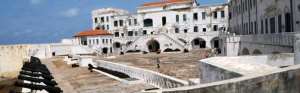
Beneath the imposing white walls of Cape Coast Castle lies a network of dark stone chambers that tell one of humanity’s most painful stories. Today, thousands of visitors descend into these dungeons each year, confronting the reality of a place where countless Africans were imprisoned before being forced onto ships bound for the Americas.
The contrast is striking. Above ground, the castle overlooks the Atlantic Ocean with commanding views and sturdy fortifications. Below, narrow, airless dungeons served as holding cells for men, women, and children caught in the machinery of the transatlantic slave trade. For many visitors, the experience is both educational and deeply emotional, offering a direct connection to a chapter of history whose effects continue to shape societies around the world.
From Trading Post to Slave Trade Hub
Cape Coast Castle was originally established by Swedish traders in 1653 before changing hands several times among European powers. By the late seventeenth century, it had become one of the most important British strongholds on the Gold Coast, present-day Ghana.
While the castle initially facilitated trade in commodities such as gold and timber, its role increasingly shifted toward the trade in enslaved Africans. As demand for labor grew in plantations across the Caribbean and the Americas, Cape Coast Castle evolved into a major center for the capture, detention, and export of enslaved people.
The British expanded the fort over time, constructing larger dungeons and administrative facilities to support the growing trade. Historians estimate that thousands of Africans passed through the castle during the centuries of the slave trade.
Commerce, Competition, and Empire
The slave trade was not only a humanitarian tragedy but also a fiercely competitive commercial enterprise. European powers and trading companies competed for control of West African trade routes, coastal forts, and access to local markets.
In 1672, England established the Royal African Company and granted it extensive trading privileges along the West African coast. Cape Coast Castle became a key administrative center for the company's operations. The company sought to control trade through a monopoly, but independent traders, rival European powers, and private merchants frequently challenged its dominance.
Competition often led to conflicts over prices, territory, and access to captives. French, Dutch, British, and other European traders all sought influence along the Gold Coast, transforming coastal settlements into strategic centers of commerce and imperial rivalry.
Despite efforts to regulate the trade, the monopoly system eventually weakened. In 1750, the British Parliament ended the Royal African Company's exclusive privileges and transferred responsibility for the forts to the Company of Merchants Trading to Africa. The change increased competition but did little to halt the trade itself, which continued for decades.
The Human Cost
While economic records often focus on profits, cargoes, and commercial rivalries, the dungeons remind visitors of the human reality behind the statistics.
Enslaved Africans were held in overcrowded and unsanitary conditions for days, weeks, or even months before being loaded onto ships. Families were separated, communities were disrupted, and millions of lives were forever altered by the transatlantic slave trade.
The castle’s infamous “Door of No Return” became the final point of departure for many captives leaving their homeland. For descendants of enslaved Africans visiting Ghana today, the site serves as both a place of mourning and a symbol of resilience.
A World Heritage Site and Place of Reflection
Today, Cape Coast Castle is recognized as a UNESCO World Heritage Site and stands as one of Ghana’s most significant historical landmarks. It attracts tourists, scholars, students, and members of the African diaspora from across the globe.
Notable figures, including former U.S. President Barack Obama, have visited the castle, highlighting its importance as a site of global historical memory. Educational tours help visitors understand not only the history of the slave trade but also its lasting impact on race relations, migration, identity, and economic development.
Preserving Memory for Future Generations
Cape Coast Castle is more than a historic monument. It is a reminder of the consequences of human exploitation and the enduring struggle for freedom and dignity.
As Ghana continues to position itself as a destination for heritage tourism and diaspora engagement, the castle remains central to efforts to preserve the memory of those who suffered within its walls. Its dungeons stand not only as evidence of a dark past but also as a call to future generations to uphold the values of justice, human rights, and shared humanity.
More than two centuries after the height of the slave trade, the silence inside the dungeons still speaks. It tells a story of suffering and survival, loss and resilience—a story that the world must never forget. Enduring Memorial to the Transatlantic Slave Trade
CAPE COAST, Ghana — Beneath the imposing white walls of Cape Coast Castle lies a network of dark stone chambers that tell one of humanity’s most painful stories. Today, thousands of visitors descend into these dungeons each year, confronting the reality of a place where countless Africans were imprisoned before being forced onto ships bound for the Americas.
The contrast is striking. Above ground, the castle overlooks the Atlantic Ocean with commanding views and sturdy fortifications. Below, narrow, airless dungeons served as holding cells for men, women, and children caught in the machinery of the transatlantic slave trade. For many visitors, the experience is both educational and deeply emotional, offering a direct connection to a chapter of history whose effects continue to shape societies around the world.
From Trading Post to Slave Trade Hub
Cape Coast Castle was originally established by Swedish traders in 1653 before changing hands several times among European powers. By the late seventeenth century, it had become one of the most important British strongholds on the Gold Coast, present-day Ghana.
While the castle initially facilitated trade in commodities such as gold and timber, its role increasingly shifted toward the trade in enslaved Africans. As demand for labor grew in plantations across the Caribbean and the Americas, Cape Coast Castle evolved into a major center for the capture, detention, and export of enslaved people.
The British expanded the fort over time, constructing larger dungeons and administrative facilities to support the growing trade. Historians estimate that thousands of Africans passed through the castle during the centuries of the slave trade.
Commerce, Competition, and Empire
The slave trade was not only a humanitarian tragedy but also a fiercely competitive commercial enterprise. European powers and trading companies competed for control of West African trade routes, coastal forts, and access to local markets.
In 1672, England established the Royal African Company and granted it extensive trading privileges along the West African coast. Cape Coast Castle became a key administrative center for the company's operations. The company sought to control trade through a monopoly, but independent traders, rival European powers, and private merchants frequently challenged its dominance.
Competition often led to conflicts over prices, territory, and access to captives. French, Dutch, British, and other European traders all sought influence along the Gold Coast, transforming coastal settlements into strategic centers of commerce and imperial rivalry.
Despite efforts to regulate the trade, the monopoly system eventually weakened. In 1750, the British Parliament ended the Royal African Company's exclusive privileges and transferred responsibility for the forts to the Company of Merchants Trading to Africa. The change increased competition but did little to halt the trade itself, which continued for decades.
The Human Cost
While economic records often focus on profits, cargoes, and commercial rivalries, the dungeons remind visitors of the human reality behind the statistics.
Enslaved Africans were held in overcrowded and unsanitary conditions for days, weeks, or even months before being loaded onto ships. Families were separated, communities were disrupted, and millions of lives were forever altered by the transatlantic slave trade.
The castle’s infamous “Door of No Return” became the final point of departure for many captives leaving their homeland. For descendants of enslaved Africans visiting Ghana today, the site serves as both a place of mourning and a symbol of resilience.
A World Heritage Site and Place of Reflection
Today, Cape Coast Castle is recognized as a UNESCO World Heritage Site and stands as one of Ghana’s most significant historical landmarks. It attracts tourists, scholars, students, and members of the African diaspora from across the globe.
Notable figures, including former U.S. President Barack Obama, have visited the castle, highlighting its importance as a site of global historical memory. Educational tours help visitors understand not only the history of the slave trade but also its lasting impact on race relations, migration, identity, and economic development.
Preserving Memory for Future Generations
Cape Coast Castle is more than a historic monument. It is a reminder of the consequences of human exploitation and the enduring struggle for freedom and dignity.
As Ghana continues to position itself as a destination for heritage tourism and diaspora engagement, the castle remains central to efforts to preserve the memory of those who suffered within its walls. Its dungeons stand not only as evidence of a dark past but also as a call to future generations to uphold the values of justice, human rights, and shared humanity.
More than two centuries after the height of the slave trade, the silence inside the dungeons still speaks. It tells a story of suffering and survival, loss and resilience—a story that the world must never forget.

 President Mahama to cut sod for Phase 2 of Sentuo Oil Refinery Project
 EC confirms plans to conduct by-election in Anyako electoral area
 Nima Police arrest truck driver after crash leaves many injured
 Here are NPP MPs seeking action against Ken Agyapong over Afari Hospital comment...
 There is no financial clearance to expand school feeding programme this year — G...
 Government to sanction caterers serving substandard meals under school feeding p...
 Rawlings’s legacy extends beyond political leadership — Vice President
 NACOC arrests key suspect in $296m Australia-linked meth case
 Current anti-LGBTQ bill not robust enough to protect family values — GPCC
 MFWA opens applications for Africa-China relations training for West African jou...


