




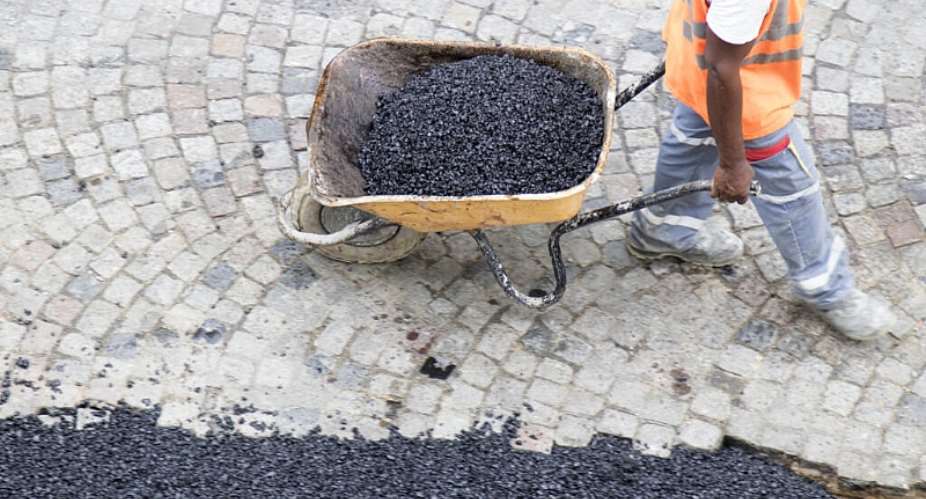
In Madagascar, as in many countries on the continent, bitumen is not produced locally.
"We import the raw material that lets us make asphalt. Without bitumen, we cannot make tar," Richard Ferrazi, director of road-building company Colas, told RFI.
Alternatives are limited.
"There is an alternative, reinforced concrete, but we cannot afford it. For us, that is a luxury," said Dany Michael Ranivo, deputy general administrator of Inframad, a company that oversees building sites in the country.
Geography has traditionally shaped Madagascar's supplies. Most of the country's bitumen came from Gulf producers, shipped from the port of Jebel Ali in Dubai through the Strait of Hormuz. European supplies played only a supporting role.
That situation has now reversed. European bitumen has become the main source, but shipments take an extra 45-60 days to arrive.
Supply shock
The change in suppliers had an unavoidable impact on work sites.
"The stoppage was sudden. It took time to adapt. We lost more than two months on some projects and are only now returning to normal," Ferrazi said.
Two months later, bitumen costs 40-50 percent more in Madagascar. The increase is also affecting Inframad's finances.
"It can delay the release of our bank guarantee or delay the allocation of resources that we wanted to deploy on other projects," Ranivo said.
In Guinea, the price of a tonne of bitumen has risen by around $200 in three months – an increase of more than 20 percent.
Global partnership brings hope amid high pedestrian road deaths in Nairobi
Margins under strain
Some contracts can be renegotiated to absorb the higher costs, explained Mory Diaka Kaba, the deputy director of Guiter, a Guinean roadworks company.
"There are contracts where we negotiated a price adjustment mechanism, which allows us to adapt these costs. In other contracts, that is not provided for and we are forced to cut into our margins, or even incur financial losses."
In Cameroon, MAG, one of the country's biggest construction and public works firms, is building the entrance to the city of Douala under a contract worth 30 billion CFA francs.
Public procurement rules allow contract prices to be revised. A request for a price review is being considered so the company can "cover our costs", said Stéphane Edouma, MAG's deputy director.
Existing commitments have been maintained and no work stoppages have occurred, he added.
Côte d'Ivoire launches West Africa's first agricultural commodities exchange
Rising bills
Future tenders will certainly be negotiated differently and are likely to encourage contractors to plan further ahead.
"Given the supply delays, we will anticipate them by creating buffer stocks to guarantee our schedules," Edouma said.
"Lessons will inevitably be learned from this sudden crisis."
While waiting for prices to return to normal, Kaba's company is buying only the minimum quantities required under its contracts.
"Because of the price, storage has become practically impossible," he said.
Road builders must also cope with higher fuel costs. A single piece of site machinery can consume more than 100 litres of fuel a day.
This article has been adapted from the original version in French by Marie-Pierre Olphand.

 Nana Kwadwo Safo Akofena I installed as new leader of Kristo Asafo Mission
 Kristo Asafo Mission rejects claims of shooting Adwoa Safo, calls for independen...
 Six arrested over Kwabenya shooting incident involving Adwoa Safo
 Details emerges as Kristo Asafo Lawyer gives mission’s account of Adwoa Safo sho...
 "Ghana will lift the 2026 World Cup trophy, it will shock the world" – Prophet P...
 NADMO issues final evacuation order for occupants of dilapidated buildings in Ce...
 Two dead, two rescued alive after building collapse at Gyegyeano in Cape Coast
 Ghana vrs England: "I saw both countries sharing 3 goals with Ghana leading" — P...
 Gov’t suspends SHS graduation ceremonies over rising extravagant celebrations
 Two pilgrims arrested over alleged assault on PAOG communications team member


