




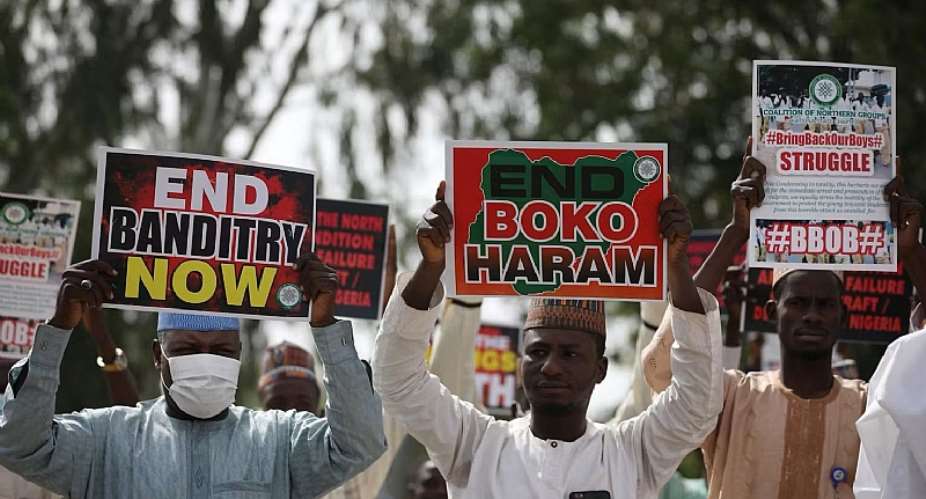
Banditry is widespread in Nigeria. It has been defined as “a loose collection of various criminal groups involved in kidnap-for-ransom, armed robbery, cattle rustling, rape and sexual violence, pillage and attacks on traders, farmers and travellers, particularly in Nigeria's northwest region”.
This criminal activity has caused deaths, displacement, destruction of property and widespread fear. In 2025 alone, 599 attacks were reported, with 2,742 casualties. This was a sharp increase from 2024, when 256 attacks and 1,585 deaths were recorded. Banditry has also extended its reach to the northwest and southwest of Nigeria.
Studies have examined its costs and implications, and possible mechanisms for addressing it. Still, knowledge about the nature and character of banditry remains limited.
As a sociologist, I investigated this national security threat with a view to understanding how the victims experienced it.
The study unpacks the method and timing of attacks and identities of the bandits, providing insights that can inform security planning. Knowing more about how bandits operate can help government and vulnerable communities to design preventive measures and adopt safety behaviours.
Rural banditry in Nigeria
The study used data collected through in-depth interviews with focus group discussions in four of the six geopolitical zones where the problem of banditry is most widespread and prevalent: North-Central, North-West, South-West and South-East. The sample included 48 communities. Two key informant interviews were conducted in each local area: one with a state security official (police, military, paramilitary, or community vigilante) and one with traditional or community leader.
All the participants reported that their communities had experienced violent attacks by bandits, although at different times and in different ways and to varying degrees. They also emphasised the brutal nature of bandit violence.
Experiences ranged from farm invasion and destruction to animal theft, killing and kidnapping, gang rape and sexual violence, displacement of people and the pillaging of communities.
Responses highlighted that:
the timing was typically late at night or early in the morning
men were more frequently killed than women
women were more likely to be abducted and forced into marriages with bandits instead of being killed
although bandits were often strangers to the locations of attacks, insiders often helped them carry out attacks
bandit groups imposed levies on some communities
bandits often carries out operations on market days or Sundays.
Alluding to the brutality of bandit attacks, a participant noted:
There was an attack by bandits where we lost over 20 people. We had the mass burial in a single day.
Participants, especially from rural communities in the North-Central and North-West regions, reported how frequent violent attacks forced many residents to vacate their villages, becoming internally displaced, suffer trauma, and live in perpetual fear.
According to a survivor of bandit attacks in Plateau State:
A month will not go by without someone being killed in this village by bandits. That is how bad and frequent it is.
How bandit attacks happen
Data showed consistent patterns of attack across all four selected regions in Nigeria. Typically, participants reported that bandits come armed with knives, daggers, sticks, guns, machetes and cutlasses. When they launch an attack, they shoot their victims; afterwards, they may slaughter them with knives to ensure death.
At other times, to destroy entire communities, bandits reportedly bring gas to burn villages. Participants also identified the weapons associated with bandits as AK-47, G3S and K2 rifles, swords and pump-action guns, among others.
Bandits ensure that their victims are attacked at times when people are off guard. A traditional leader said:
they come even twice or even thrice in a week. I think their plan is to stop us from going to the farm. Whenever we go, they either kill us or others on the farm, or they wait until people are returning home then attack them on the road, snatch their machines, and either kill or injure them.
Victim targeting
Participants explained that everyone in any community affected is a potential victim. They might be farmers, when farms are destroyed. When villages are destroyed, everybody, young and old, male and female, becomes a victim, as houses are burnt, property stolen and lives endangered. In cases of kidnapping, the bandits sometimes have specific targets, which vary depending on their mission.
Most victims of kidnapping are wealthy and highly placed individuals in society, especially those whose families are believed to be able to raise the ransom.
Men are the main victims of rural banditry, as they can challenge the attackers. But as men are killed, women became widows and children are left fatherless. Participants said the bandits often abducted women. One stated:
Whenever they come, they say 'men come out' but they only take women they find attractive and take them away, and make them their wives.
In some other areas, women fell victim to rape, theft, and in some cases, murder. After the death of their parents, children became destabilised and some were withdrawn from school. During attacks, men sometimes fled for their safety, leaving their families behind, whereas mothers could not abandon their children.
Moving forward
The study found the character and nature of banditry to be violent and associated with specific times and spaces. Banditry manifested in the activities carried out by organised armed groups, including cattle rustling, farm destruction, kidnapping, looting and killings. These activities have heightened insecurity, led to deaths and displacement, and disrupted the livelihoods of households and farming communities.
Rural communities need to know how to detect and report security threats in time to prevent them. Informal security organisations in such communities should align with the formal state security. Federal and state governments should also collaborate to find bandits where they hide.
Oludayo Tade receives funding from the Tertiary Education Trust Fund TETFUND/National Research Fund NRF TETF/DR&D/CE/NRF2020/HSS/03/VOL.1.
By Oludayo Tade, Professor of Sociology (Criminology, Victimology and Security Studies), University of Ibadan
 Registrar of Companies sets June 30 deadline for annual returns, signals strict ...
 South Africa President rejects June 30 ultimatum for African migrants, urges cal...
 Here are areas to be affected by ECG's planned maintenance on Wednesday
 OSP clarifies position on Ofori-Atta’s US residency ruling, says extradition pro...
 Afari Military Hospital: We're engaged in blame games while people are dying — N...
 It is inaccurate to say NPP did no work on Afari Military Hospital — Dr Ekua Amo...
 ORAL must target all corrupt officials, not just political opponents — Tuah-Yebo...
 'That would be so absurd' — Tuah-Yeboah rejects claim Sedina Tamakloe's sentence...
 'NPP seeking Dr. Amoakohene's removal because he's giving them hell' — Tanko Com...
 We were in power for eight years but couldn't complete Afari Military Hospital y...


