




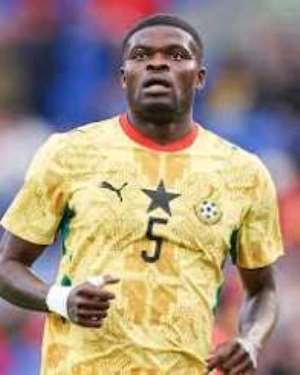
The intersection of sports, law, and international politics has once again come into sharp focus following Canada's decision to deny Ghanaian midfielder Thomas Partey entry ahead of Ghana’s opening match of the 2026 FIFA World Cup.
When Black Stars coach Carlos Queiroz included Partey in Ghana’s World Cup squad, the decision reflected both his experience and importance to the national team. However, events outside football have now overshadowed preparations for the tournament.
Canada’s refusal to grant Partey a visa means the midfielder will miss Ghana’s Group L opener against Panama in Toronto on June 17. FIFA has confirmed that Partey cannot travel from the Black Stars’ training base in Rhode Island, United States, to Canada, emphasizing that immigration decisions remain the exclusive responsibility of sovereign governments.
Although Canadian authorities have not publicly stated the reason for the visa denial, it is widely linked to the fact that Partey is scheduled to stand trial in the United Kingdom in June 2027 on seven counts of rape and one count of sexual assault. The player has denied all allegations and maintains his innocence.
Strong Reactions in Ghana
The decision has sparked significant debate in Ghana.
Sports and Recreation Minister Kofi Adams described the move as unfair and excessive, arguing that it undermines the principle of presumption of innocence. According to him, a criminal charge should not automatically be treated as a conviction.
Speaking on Citi FM, Adams revealed that the Ghanaian government had initiated diplomatic engagement with Canadian authorities under the directive of President John Dramani Mahama.
“Thomas Partey is living freely and enjoying his rights in countries where the allegations originated. It is difficult to understand why Canada is treating a charge as though it were a conviction,” the minister argued.
Many Ghanaian football fans have expressed similar sentiments. Some question why the United States allowed Partey to enter the country while Canada refused him access, viewing the differing decisions as inconsistent and unfair.
Former Ivory Coast captain Didier Drogba also entered the debate, describing the situation as a major setback for Ghana and suggesting that African teams and supporters often face disproportionate visa-related challenges at international competitions.
Canada’s Legal Position
Canadian authorities, however, maintain that the decision is consistent with national immigration laws.
Immigration Minister Lena Diab stated that hosting major sporting events does not exempt individuals from Canada's immigration requirements.
“Every person seeking to come to Canada is assessed individually, based on the facts available and the law that applies,” she explained.
FIFA has supported this position, reiterating that host countries retain full authority over decisions concerning entry into their territory.
Key Issues Raised by the Case
1. Presumption of Innocence Versus Border Sovereignty
At the heart of the controversy is a difficult legal and ethical question.
On one hand, democratic societies uphold the principle that individuals are innocent until proven guilty in a court of law. Partey has not been convicted of any offence and continues to deny all allegations against him.
On the other hand, immigration systems operate under different standards. Countries routinely deny entry to individuals considered potential risks, even when criminal proceedings are ongoing and no conviction exists.
Canada's decision highlights the tension between protecting national borders and respecting the presumption of innocence.
2. Consistency and Perceptions of Fairness
The differing approaches taken by the United States and Canada have intensified criticism.
While the United States permitted Partey to enter and train with Ghana’s squad, Canada reached a different conclusion. Such inconsistencies inevitably raise questions about fairness, transparency, and uniformity in international sporting events.
Drogba’s observation that African teams often bear the brunt of visa complications resonates with a broader concern across the continent. Many African athletes, officials, and supporters have long faced travel barriers that competitors from other regions rarely encounter.
Whether justified or not, perceptions of unequal treatment can damage trust in international sporting governance.
3. A Football Challenge for Ghana
Beyond the political and legal debate lies the practical reality facing the Black Stars.
For more than a decade, Thomas Partey has been one of Ghana’s most influential players. His experience at the highest level of European football has made him a central figure in the national team.
Yet football is ultimately about adaptation.
Partey’s recent club performances have raised questions about his role in Ghana’s future. During the 2025–26 season with Villarreal, he struggled for regular playing time, starting only a limited number of league matches.
His absence may therefore accelerate a midfield transition that Ghana has postponed for several years. Younger players now have an opportunity to prove themselves on the world stage.
The Way Forward
For the Government of Ghana
Diplomatic engagement is appropriate and necessary. However, experience shows that immigration decisions are rarely reversed through public criticism alone. Quiet diplomacy, legal representation, and sustained engagement through Ghana’s High Commission in Ottawa may prove more effective.
For FIFA and Tournament Organizers
The incident exposes a gap in tournament planning. Clearer visa guidelines should be established well before major competitions begin, particularly for players facing unresolved legal matters.
Greater transparency would help teams prepare adequately and avoid last-minute disruptions.
For the Black Stars
Regardless of the circumstances, Ghana must focus on the competition itself. Coach Carlos Queiroz now faces the challenge of reshaping his midfield and building a team capable of succeeding without one of its most recognizable figures.
Great teams are defined not by their dependence on individuals but by their ability to adapt when circumstances change.
Conclusion
The Thomas Partey visa controversy presents no easy answers.
Canada has the sovereign right to determine who may enter its territory. Ghana has the right to question a decision it views as unfair, particularly when no conviction has been secured against the player.
Both positions can be valid at the same time.
What remains certain is that football will continue. When Ghana faces Panama on June 17, the outcome will be decided not by immigration officers or diplomatic statements, but by the players on the pitch.
National pride is bigger than any one individual. For Ghana, the challenge now is to ensure that the story of its World Cup campaign is defined by performance, resilience, and results—not by a visa dispute.

 Ashaiman Police arrest suspects in two separate robbery incidents within hours
 Ghana to challenge Canada over Thomas Partey visa denial ahead of World Cup Open...
 Govt announces transitional measures for LLB graduates under new legal education...
 Two midwives remanded over disappearance of newborn at Salaga Municipal Hospital
 'They razed everything': Ivorians lose homes in murky operation
 US, Iran signal peace deal is close after Trump lashes out at ‘dishonorable’ Ira...
 Nigeria's Ex-Jihadists Seek New Lives After Vocational Training
 BTU in Turmoil: GTEC rejects finance director appointment amid degree verificati...
 Twifo Praso Pra River commuters appeal for govt intervention to stop galamsey


