




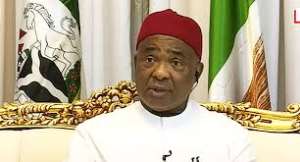
In recent days, a video clip extracted from the June 4, 2026 Convocation ceremony of the Federal University of Technology, Owerri (FUTO) has gone viral on social media. The segment being circulated focuses on a moment during the lecture delivered by Governor Hope Uzodinma, where he appeared to struggle with the pronunciation of the word “indistinguishable.” Since then, social media critics, political opponents, and professional fault-finders have capitalized on the clip as an opportunity to ridicule the governor and portray him as an embarrassment to Imo State.
This reaction is not only unfair, it is a deeply troubling travesty of justice. It reflects a growing culture in which public figures are not judged by the substance of their contributions to society but by isolated moments that can be manipulated to create misleading impressions. The attempt to define Governor Uzodinma’s personality by a few seconds in a lengthy speech is neither objective nor intellectually honest. The reality is that nobody is perfect.
Anyone who watched the entire event rather than the carefully selected viral segment would have noticed several important facts. First, Governor Uzodinma was not addressing an unfamiliar audience. He was among his own people. Throughout the event, speakers repeatedly referred to him as “our own.” The outgoing Vice Chancellor, Professor Nnenna Oti, and the female Master of Ceremonies both emphasized the governor’s connection to the institution. Governor Uzodinma himself confirmed his status as an alumnus of the university in his own lecture.
Such repeated references may have been intended as compliments, but they also created enormous expectations. Every public speaker understands that when an audience repeatedly reminds you that you are one of them, the pressure to perform flawlessly increases significantly. But human beings react differently under different circumstances.
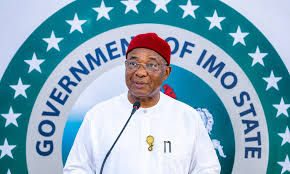
Public speaking is not merely about reading words from a script. It requires concentration, confidence, mental coordination, and emotional stability. Even highly accomplished speakers occasionally stumble over words, lose their train of thought, mispronounce expressions, or commit grammatical errors. This happens in universities, in parliaments, in courtrooms, in churches, and even in international conferences every day. What many people seem to ignore is that Governor Uzodinma was reading a lengthy lecture. Delivering such a presentation is not the same as reading a short prepared statement. Long speeches demand sustained concentration over an extended period. Fatigue, distractions, interruptions, and psychological pressure can affect even the most experienced speakers to struggle over any word.
Anyone who objectively observes the footage can see that there were moments when the governor appeared fully in command of his presentation and other moments when he seemed to be navigating portions of the text with greater difficulty. That is not evidence of incompetence. It is evidence of humanity. Therefore, the effort to transform a brief pronunciation difficulty into a national scandal says more about the critics than it does about the governor.
Unfortunately, Nigeria’s political environment has become increasingly polarized. The ruling All Progressives Congress (APC) faces criticism from many Nigerians over serious national challenges it failed to deal with, including insecurity, unemployment, inflation, and widespread economic hardship. Citizens have every right to express dissatisfaction with government policies and outcomes. Democracy thrives when leaders are held accountable. However, accountability should not be confused with hostility.
There is a growing tendency to transfer frustration with national problems onto individual personalities regardless of the facts. In the case of Governor Uzodinma, many critics appear determined to use every available opportunity to attack him because of his association with the APC. Their dissatisfaction with the party has become a lens through which every action of the governor is interpreted negatively. This is misplaced aggression. APC is not Hope Uzodinma.
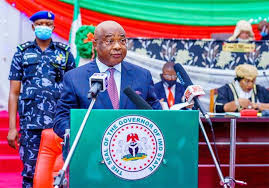
Whether one supports or opposes the ruling party, fairness demands that individuals be assessed on their own merits and shortcomings rather than reduced to symbols of broader political grievances. A governor struggling momentarily with a word during a lengthy speech does not prove intellectual deficiency, nor does it justify the avalanche of insults that has followed.
The public should also remember that some of the greatest leaders in history were not flawless speakers. Numerous presidents, prime ministers, professors, business executives, and renowned scholars have experienced embarrassing verbal slips in public. Some had forgotten names. Others had mispronounced words. Still others had completely lost their place while delivering speeches. Yet society did not define their entire careers by those isolated incidents. Why should Governor Uzodinma be treated differently? The answer lies partly in the nature of social media. Modern digital platforms reward mockery more than fairness. A thirty-second clip can travel around the world faster than a two-hour event. Context disappears. Nuance vanishes. Complexity is sacrificed for entertainment. And the result is a dangerous culture of public humiliation.
Those circulating the video with such captions as “See how Governor Uzodinma disgraced himself” are not engaging in constructive criticism. They are participating in a campaign of ridicule designed to diminish a public figure in the eyes of society. Such behaviour contributes little to democratic discourse and even less to national development. Leadership should be evaluated through policies, achievements, decisions, and service to the people. If critics disagree with Governor Uzodinma’s governance, they should challenge his policies, question his performance, and present alternative ideas. That is how democracy works.
Mocking a man because he momentarily struggled with a word is not political analysis. It is simply public shaming. But the truth remains that every human being is vulnerable to mistakes. The journalist writing an article can make a typographical error. The professor delivering a lecture can forget a point. The lawyer arguing a case can misspeak. The doctor can mispronounce a medical term. The broadcaster can stumble over a sentence. The student can forget an answer during an examination. Human imperfection is universal.
For this reason, society should resist the temptation to magnify ordinary mistakes into defining character judgments. Governor Hope Uzodinma may have found it difficult to pronounce the word “indistinguishable” during his lecture. If that happened, it simply confirms that he is human like the rest of us. Nothing more.
The campaign to portray him as a disgrace to Imo State on that basis is therefore unjustified, excessive, and intellectually dishonest. Nigerians should reject such blackmail and return to a culture where public figures are assessed fairly and in context. A mature society does not crucify people for minor mistakes. It recognizes that excellence and imperfection often coexist. The governor’s momentary struggle with a word should not overshadow his presence at an important academic event, nor should it become a weapon for political score-settling. Nobody is perfect. And that includes those who are now making a huge joke out of Governor Hope Uzodinma’s lecture at FUTO on the 4th of June 2026. They too, cannot claim to be perfect.

 Ablakwa deserve no applause over South Africa evacuation – Kofi Kapito
 Weak enforcement of building regulations worsening floods — Mustapha Gbande
 I have done a lot to deserve Best Regional Minister award — Linda Ocloo
 'I have defeated him four times' — Linda Ocloo jabs Prof Kpessa Whyte over 'paid...
 Pope denounces 'scourge' of abuse before meeting victims
 Mahama's anti-flood committee has failed to present any plan — Miracles Aboagye
 June 8: Cedi sells at GHS12.50 on forex market, GHS11.86 on BoG interbank
 'The rain didn't fail us; we failed ourselves' — Kennedy Agyapong on Ghana's flo...
 Awards from ‘Awardpreneurs?’: NDC activist slams ministers
 Nonsense – Prof Prempeh rips into ministers over awards


