




Ghana is often cited as one of Africa’s democratic success stories. The country enjoys political stability, regular elections, abundant natural resources, and a youthful population eager to contribute to national development. It is one of the continent’s leading producers of gold and cocoa, has significant oil reserves, and has largely maintained peace in a region that has experienced political instability.
Yet despite these advantages, many of the country’s developmental challenges remain stubbornly unresolved. Roads deteriorate shortly after construction, hospitals continue to struggle with overcrowding and the persistent "no bed syndrome," and major public projects frequently stall or disappear altogether after changes in government.
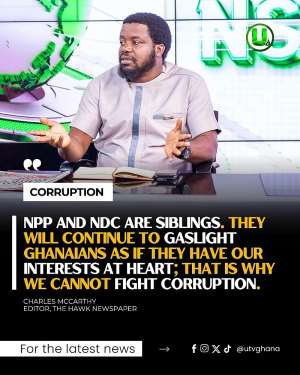
The problem is not democracy itself. Competitive politics is essential to accountability and good governance. Rather, the challenge lies in the way politics is often practiced — where partisan interests frequently take precedence over national priorities, and long-term development is sacrificed for short-term political gains.
The Politics of Starting Over
One of Ghana’s most persistent governance challenges is the tendency for successive governments to discontinue or alter projects initiated by their predecessors.
Across sectors such as education, healthcare, agriculture, and infrastructure, projects that required years of planning and significant public investment have sometimes been delayed, redesigned, or abandoned after elections. Critics argue that political leaders are often reluctant to continue initiatives associated with rival parties, even when those projects show promise.
Development experts have long noted that meaningful national transformation requires continuity. Major infrastructure projects, educational reforms, and industrialization strategies typically take decades to yield results. However, Ghana’s political cycle often encourages planning around four-year electoral timelines rather than long-term national objectives.
The result is a pattern of interrupted progress and wasted resources.
Loyalty Over Competence
Another concern frequently raised by governance analysts is the politicization of appointments within state institutions.
While every government naturally seeks to appoint individuals who share its vision, excessive political influence in technical institutions can undermine efficiency and professionalism. When expertise becomes secondary to political loyalty, public institutions often struggle to deliver optimal results.
State agencies such as the Electricity Company of Ghana (ECG), the Ghana Health Service (GHS), and various regulatory bodies require highly skilled professionals capable of managing complex systems. Schools need qualified teachers, hospitals need competent administrators, and infrastructure projects require experienced engineers.
When appointments are perceived as rewards for political support rather than merit, public confidence in institutions suffers, and performance often declines.
The High Cost of Political Competition
Election seasons in Ghana are characterized by massive spending. Political parties invest heavily in rallies, campaign materials, transportation, advertising, and grassroots mobilization.
While campaigning is a legitimate aspect of democracy, concerns persist about the scale of spending and the incentives it creates. Critics argue that the pressure to recover campaign expenditures can contribute to patronage politics and influence public procurement decisions after elections.
Resources devoted to political competition could otherwise support critical public needs. Communities lacking healthcare facilities, quality roads, clean water systems, or educational infrastructure often question whether national priorities are being properly aligned.
The issue is not whether elections should be funded, but whether the balance between political spending and development spending serves the country’s long-term interests.
The Danger of Political Polarization
Perhaps the most damaging consequence of intense partisanship is the growing tendency to view national development through a political lens.
In highly polarized environments, projects can become associated with political parties rather than national interests. Citizens sometimes evaluate initiatives based on who proposed them rather than whether they are beneficial.
This dynamic can deepen regional tensions and create perceptions that development resources are distributed according to political loyalty rather than objective need. Such perceptions, whether accurate or not, can weaken national unity and trust in public institutions.
Sustainable development requires a shared national vision that transcends electoral competition.
The Economic and Social Cost
The consequences of politicized development are visible across multiple sectors.
Investment and Employment
Investors seek stability and predictability. Frequent policy reversals can discourage both domestic and foreign investment, limiting job creation and slowing economic growth.
When businesses cannot confidently plan beyond a single political cycle, investment decisions become more cautious, affecting employment opportunities for thousands of young Ghanaians entering the workforce each year.
Public Services
Challenges such as inadequate hospital capacity, unreliable infrastructure, recurring power concerns, and unfinished public projects often reflect broader governance issues. Delays, interruptions, and policy inconsistencies can significantly reduce the effectiveness of public spending.
Youth Disillusionment
Perhaps most concerning is the effect on young people. Many young Ghanaians increasingly express frustration with a system they perceive as driven by political connections rather than merit and performance.
This frustration contributes to growing interest in emigration, voter apathy, and declining confidence in public institutions. A nation cannot afford to lose the trust of its next generation.
A Path Forward
Ghana’s challenges are not unique, and they are not insurmountable. Many countries have successfully built systems that encourage policy continuity regardless of which party is in power.
Several reforms could help strengthen Ghana’s development trajectory:
Build Cross-Party Consensus
Major national projects in infrastructure, healthcare, education, and industrialization should be anchored in broad political agreement. Policies that receive bipartisan support are more likely to survive changes in government.
Measure Results, Not Rhetoric
Citizens need access to clear, transparent performance indicators. Governments should be evaluated not only by campaign promises but by measurable outcomes such as roads completed, hospital capacity expanded, school performance improved, and jobs created.
Strengthen Campaign Finance Oversight
Greater transparency and accountability in political financing could reduce excessive spending and help curb the influence of money in public decision-making.
Protect Professional Institutions
Technical agencies should be insulated from excessive political interference. Professional managers, engineers, economists, healthcare administrators, and educators should be empowered to perform their duties based on competence and evidence.
The Bottom Line
Politics should be a tool for national development, not an obstacle to it.
Ghana does not suffer from a lack of resources, talent, or potential. The country possesses many of the ingredients needed for sustained progress. What remains in question is whether political actors can consistently place national interests above partisan advantage.
Democracy is strongest when political competition produces better ideas, stronger institutions, and improved outcomes for citizens. It becomes weaker when every election threatens to erase previous gains.
The choice facing Ghana is not between one political party and another. It is between a future built on continuity, competence, and national purpose, and a future constrained by perpetual political rivalry.
If the country is to achieve its full potential, development must become a national project that survives elections, changes in leadership, and shifts in political fortunes.
Only then can Ghana move beyond cycles of stagnation and fully realize the promise of its democracy.

 Ablakwa deserve no applause over South Africa evacuation – Kofi Kapito
 Weak enforcement of building regulations worsening floods — Mustapha Gbande
 I have done a lot to deserve Best Regional Minister award — Linda Ocloo
 'I have defeated him four times' — Linda Ocloo jabs Prof Kpessa Whyte over 'paid...
 Pope denounces 'scourge' of abuse before meeting victims
 Mahama's anti-flood committee has failed to present any plan — Miracles Aboagye
 June 8: Cedi sells at GHS12.50 on forex market, GHS11.86 on BoG interbank
 'The rain didn't fail us; we failed ourselves' — Kennedy Agyapong on Ghana's flo...
 Awards from ‘Awardpreneurs?’: NDC activist slams ministers
 Nonsense – Prof Prempeh rips into ministers over awards


