




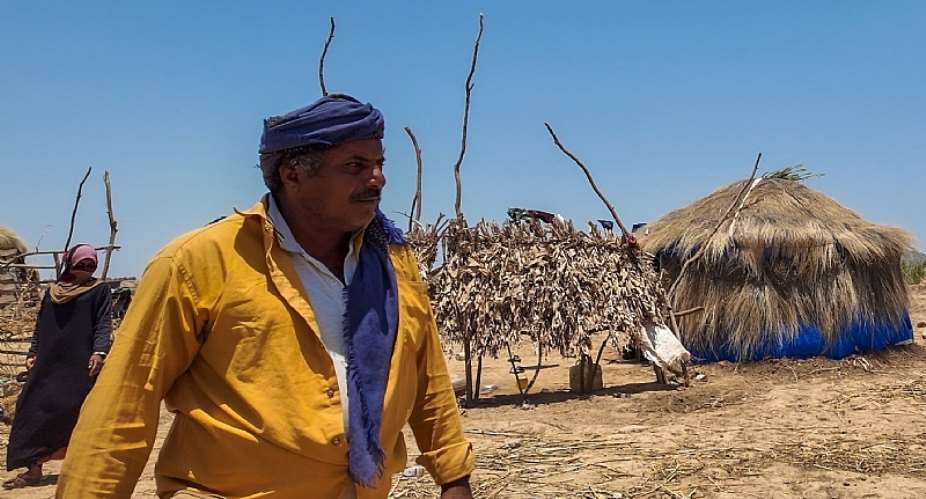
West Coast, Yemen – The water came from every direction. Within minutes, Wadi Nakhla turned into a torrent, swallowing homes, cutting off escape routes and forcing families to fight for their lives in the dark.
For those who had lived for years along the valley, the scale and speed of the flood were unlike anything they had seen before.
For Naser, 57, it all unfolded quickly. The rain had felt normal at first, but before long, water was rushing through the valley from every direction, carrying soil, stones and trees. In some areas, the ground beneath their homes began to give way.
Naser and his family had been displaced by conflict before settling in Wadi Nakhla, where they rebuilt their lives as shepherds. In the six years they had lived there, they had never seen anything like this.
The water rose rapidly, surrounding their home and cutting off escape routes within minutes. Naser shouted for his family to run, but there was nowhere to go.
“The water came from everywhere,” he says. “There was no time to gather anything or think.”
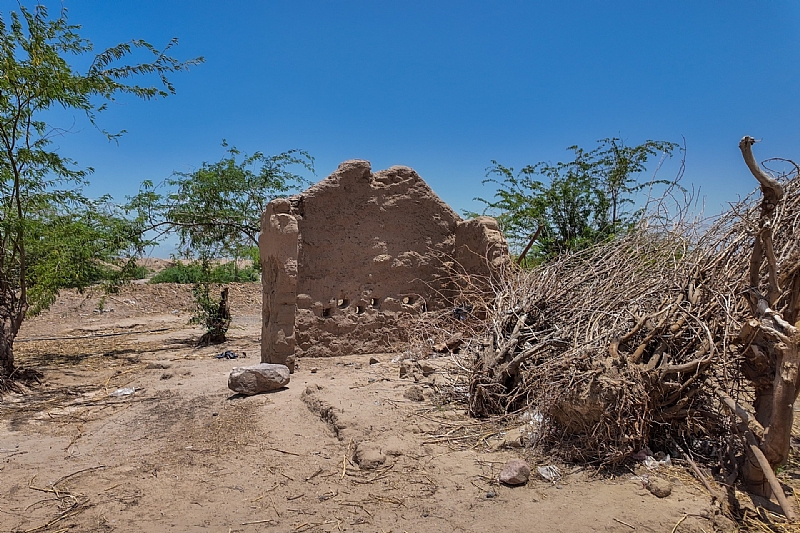
A damaged mud-built shelter stands in Al Nakhla Valley on Yemen’s West Coast, destroyed by flash floods that left families without shelter or belongings. Photo: IOM 2026/Haithm Abdulbaqi
With no clear way out, they moved instinctively towards a nearby tree, the only solid ground they could reach.
His wife was holding three of their children as Naser tried to reach the others. At one point, she managed to hand their youngest son to him, but the current kept shifting, rising in sudden surges that made it impossible to stand.
As the water surged, they were pulled apart. Two of his daughters were swept into the current, appearing only briefly between the waves. Each time Naser surfaced for air, he reached for whoever was closest, pushing them towards the tree and fighting against the water pulling them back.
“One of my daughters held on to a branch while the other was being carried away,” Naser recalls. “I pushed them both towards the tree.”
But the water kept rising. Naser then saw his wife being carried by the current, barely conscious. He reached her and pulled her back, struggling to keep her above the water.
“I grabbed her clothes and held on,” he says. “She was exhausted and had swallowed a lot of water.”
Then came the moment that still haunts him.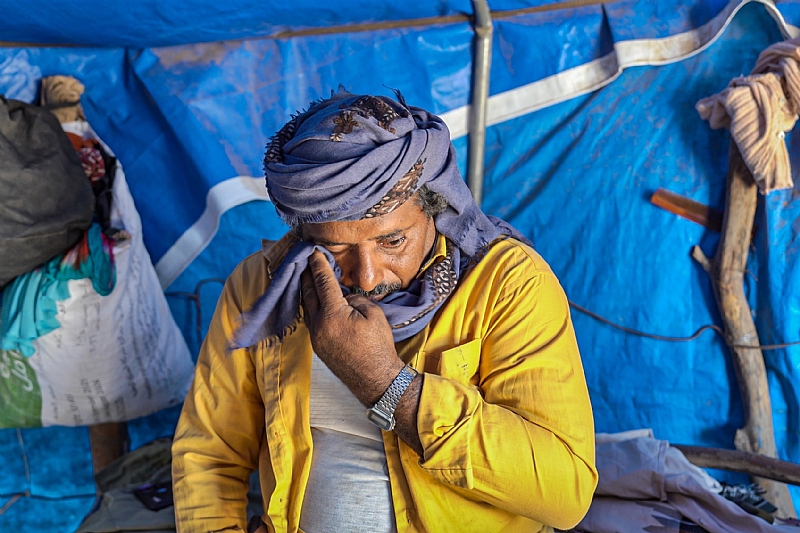
Naser sits inside his shelter, reflecting on the events he and his family endured during the floods in Al Nakhla Valley on Yemen’s West Coast. Photo: IOM 2026/Haithm Abdulbaqi
“I was fighting for my own breath when my little son slipped from my hand into the water,” Naser says. “I grabbed his legs and pushed him towards his mother with all my strength.”
By then, it was already dark. In the confusion, he called out to his wife, asking if she had their son. She said yes, though she had not been able to reach him, afraid the truth might break him. He held on to that belief as they both clung to the tree.
When the water began to recede, the noise gave way to silence. What remained was scattered across the valley: collapsed shelters, dead livestock and belongings strewn across the mud. But for Naser, the worst was yet to come.
“I went back into the water to look for my son, but I couldn’t find him anywhere.”
The next day, he walked along the flood path, searching through debris and unstable ground, hoping for a trace that never came.
“What hurts me most is that I had him in my hands and I let him go,” he says. “I pray that one day he comes back.”
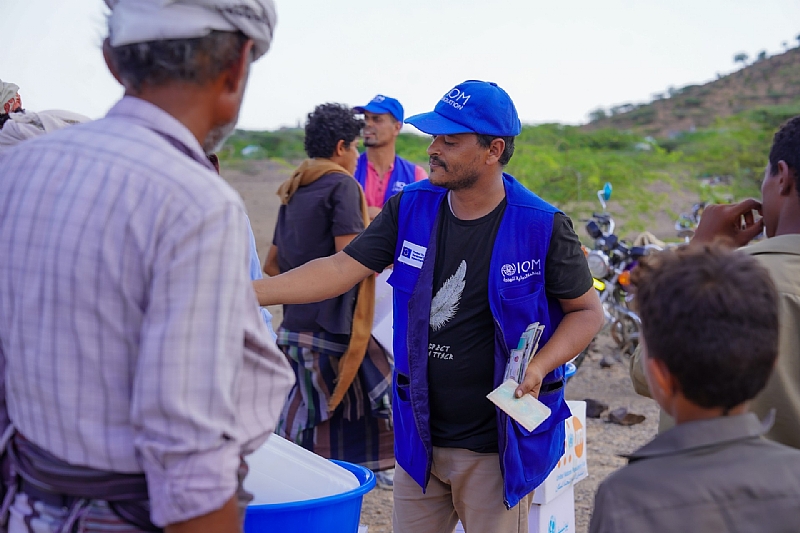
IOM staff speak with flood-affected families on Yemen’s West Coast, assessing needs and preparing emergency relief. Photo: IOM 2026/Haithm Abdulbaqi
The flood did more than damage homes. It also swept landmines from nearby frontlines into new areas of the valley, making it more dangerous for those who stayed. In the end, Naser and his family left Wadi Nakhla.
By the time the water receded, they had lost everything. Naser’s youngest son was gone. Their shelter, livestock, and belongings had been swept away. His brother’s and sister’s families, who had been living in the same settlement, were also forced to leave.
Across Yemen’s West Coast, Naser’s experience is part of a wider pattern. Since early April 2026, unusually intense seasonal rains have triggered flash floods across Al Makha, Mawza, Al Wazeyah, Al Khukhah and Hays, hitting low-lying communities and displacement sites already weakened by years of conflict and poverty.
Interagency assessments estimate that more than 32,700 households have been affected, with at least 23 confirmed deaths, including children, and widespread damage to shelters, roads, water systems and health infrastructure. Four of those deaths were reported in Wadi Nakhla alone, one of the hardest-hit areas.
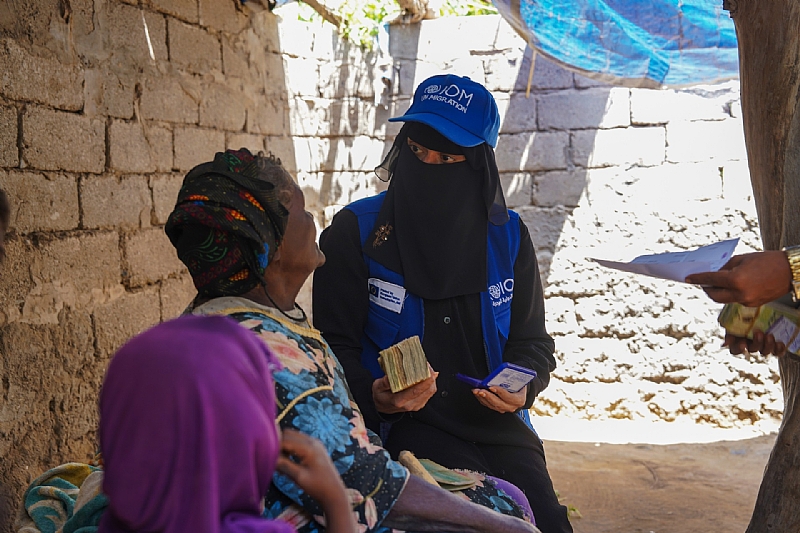
IOM staff distribute cash and relief kits to flood-affected families on Yemen’s West Coast, supporting immediate recovery. Photo: IOM 2026/Haithm Abdulbaqi
For families like Naser’s, recovery depends on timely support. In the days after the flood, he received assistance from the International Organization for Migration (IOM), including rapid response mechanism kits with food, hygiene and dignity items, emergency multi-purpose cash assistance, and cash support for shelter.
Throughout Yemen, IOM and its partners have responded to the floods with emergency relief, health and hygiene support, and work to stabilize damaged infrastructure such as drainage systems and protective barriers.
Thousands of people affected by the floods, many of them already displaced, have been reached. But needs continue to grow, and resources are running low, making it harder to sustain and expand the response in the weeks ahead.
For Naser, moving forward has meant leaving the valley behind. Later, he began rebuilding on higher ground, away from the waterway that had once sustained his family and then taken so much from them.
Even now, he cannot bring himself to go back to that night. But his decision about the valley is clear.
“If I see anyone living there, I tell them to leave. No one should risk their family the way we did.”
IOM was able to support Naser’s family thanks to funding from EU Humanitarian Aid.
This story was written by Mennatallah Homaid, Communication Assistant with IOM Yemen.

 National Clean-up Exercise Day 2: 'We will follow up and collect all garbage lef...
 Dambai traditional authorities perform rites to officially open 2026 new yam tra...
 Traditional protocols once restricted women on menstruation from entering the pa...
 Nigerian forces suffered casualties in Oyo kidnap rescue: army
 EPCG condemns shooting incident at Zohe E.P. Cluster of schools in Yendi
 Supreme Court should throw out Mahama third-term petition – Akosua Manu
 'Don't allow third-term temptation overshadow your legacy' — CDD's Osae-Kwapong ...
 NPP group runs to Council of Elders to remove Justin Kodua
 Bawumia should've gone by his word, show some credibility by joining the nationa...
 July 11: Cedi sells at GHS12.20 on forex market, GHS11.49 on BoG interbank

