




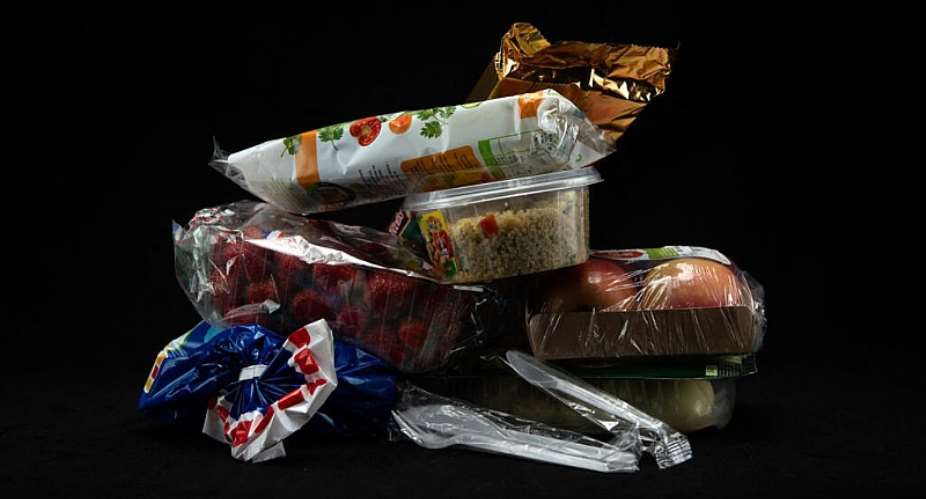
Most major retailers have made little progress towards targets set under France's anti-waste laws, the survey by consumer group Que Choisir Ensemble and NGO No Plastic In My Sea said.
Volunteers visited 1,659 stores from 11 major chains including Carrefour, Lidl, E.Leclerc, Intermarché and Auchan between 7 and 21 February.
France's AGEC anti-waste law, adopted in 2020, requires single-use plastics to be phased out by 2040. A second law passed in 2021 aims for 20 percent of supermarket products to be sold without packaging by 2030.
“There is a gap between the commitments being displayed and the reality on supermarket shelves,” Lucile Buisson, environment officer at Que Choisir Ensemble, said. “Plastic remains omnipresent.”
France's first advanced chemical recycling plant opens, to criticism from NGOs
Bottled water boom
The water and drinks section accounts for nearly 40 percent of all single-use plastic in supermarkets, the survey found. Sales of bottled water rose by 3.3 percent in 2025.
“No retailer has put in place a real strategy to reach the legal target of cutting plastic bottles by 50 percent by 2030,” the report said.
Mini-format bottles were singled out as one of the worst examples.
Evian sells packs of 24 bottles of 33 centilitres while Hépar sells packs of eight. The groups said the products use large amounts of plastic for small quantities of water. Mini-format bottles were found in 81 percent of stores surveyed.
“Numerous alternatives exist,” Muriel Papin from No Plastic In My Sea said, pointing to reusable glass bottles along with filtration and carbonation systems for tap water.
Only Biocoop was praised in the report after ending sales of still bottled water in 2017.
“It's an issue we have been aware of for a long time,” Philippe Joguet from the Federation of Commerce and Distribution, a retail industry body, said.
Reducing plastic use requires action from everyone involved, from packaging makers to consumers, he added.
France delays plastic cup ban by four years as alternatives fall short
'Economy of laziness'
Fruit and vegetables also remain heavily packaged despite rules designed to reduce plastic waste. Of five common fruit and vegetables surveyed, 60 percent were sold packaged in conventional supermarkets.
Organic produce was even more likely to be wrapped. The survey found only 9 percent of organic fruit and vegetables were sold loose, while nearly half were packaged in plastic.
Another growing trend identified by the groups was the sale of peeled and chopped vegetables wrapped in plastic. Nearly one supermarket in two now offers ready-to-cook vegetables packaged in plastic.
“After cut fruit and vegetables packaged for snacking, we are now seeing mushrooms or courgettes ready to cook, sliced and peeled under ever more plastic wrapping,” Buisson said.
“It costs much more and benefits the consumer very little.”
The report described the trend as an “economy of laziness” that runs against waste reduction efforts.
The mammoth task of mapping and removing plastic waste from Aldabra atoll
Bulk sections in retreat
The proportion of supermarkets with dedicated bulk sections fell from 57 percent in 2023 to 38 percent in 2026, the survey found. The average number of bulk items available also dropped sharply.
Discount chains Aldi and Lidl offered almost no bulk options, while organic retailers maintained stronger bulk ranges.
Bertrand Swiderski from Carrefour said the retailer had already reduced its packaging by 10 percent, equal to 20,000 tonnes over three years, and planned to remove another 15,000 tonnes by 2030.
The two organisations called on retailers to introduce clear timetables for reducing single-use plastics and abandon what they described as the most wasteful practices, including wrapped produce and mini-format bottles.
They also urged the French government to maintain the reduction targets set out under the AGEC law.
(with newswires)

 Accra Is Sinking Yet Again — Time to Be Truthful With Ourselves
 Fire guts rubber factory at Circle Odawna as flooding hampers firefighting effor...
 Flooding strands commuters on Winneba Cape Coast Highway
 Three feared dead after electrocution in Alajo flooding incident
 Nine missing after floods hit Awutu Senya East
 'Your mother, I should go to heaven and ask Nebuchadnezzar to stop the rain?' — ...
 Flood victim found dead along Alajo Railway track as rescue operations continue
 GMet warns more rain as flooding disrupts movement across Greater Accra
 'You sit on social media and talk nkwasiasem' — Nigel Gaisie blasts critics over...
 Osahen Afenyo-Markin accuses NDC of using GoldBod to promote illegal mining
