




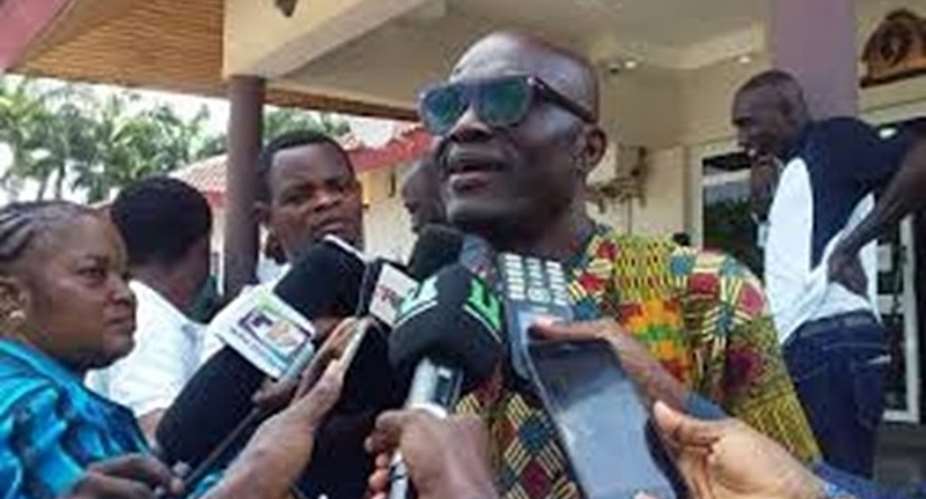
The Network of Journalists in Kumasi, under the banner of the Science and Technology Communicators of Ghana (SaTCOG), declared that “a free press is not a favour; it is the oxygen of democracy.”
The firm and uncompromising message on the state of press freedom in Ghana was delivered by the group in commemoration of World Press Freedom Day on Sunday, May 3, 2026.
In a statement issued on behalf of the network, Kingsley E. Hope stressed that press freedom must not be seen as a privilege granted by those in authority, but rather as an inalienable right belonging to the people.
"We speak today not only for ourselves,” he said, emphasising that the role of journalists extends far beyond the newsroom into the everyday lives of ordinary citizens.
The statement highlighted the critical role of the media in safeguarding public interest, pointing to the market woman in Kejetia, the student in Kumasi, and the farmer near Tamale as examples of citizens who depend on accurate and timely information.
According to the group, these individuals rely on the press to expose unsafe conditions, track public spending, and scrutinise policies made in their name.
“The press is their representative,” the statement noted. “And when the press is silenced, it is the people who go deaf,” it added.
The network underscored that access to credible information is not a luxury but a necessity for participation in democratic governance.
Referencing the global theme of this year’s observance, the group linked the fight for press freedom to the broader struggle for truth.
It cited ongoing challenges faced by journalists worldwide, including imprisonment, surveillance, and targeted legal actions designed to suppress critical reporting.
While acknowledging Ghana’s reputation as a relatively free media environment within Africa, the network cautioned against complacency.
“We must not mistake our relative advantage for absolute safety,” the statement warned.
The journalists pointed to a range of systemic challenges affecting media practice in Ghana.
These include economic hardship within the profession, which they say leaves journalists vulnerable to undue influence, as well as intimidation of sources and lack of adequate protection for whistleblowers.
They also raised concerns over the misuse of legal processes, noting that some lawsuits are designed not to seek justice but to exhaust the financial capacity of media organisations.
Additionally, the group criticised delays and barriers in accessing public information, despite legal guarantees, describing such practices as undermining transparency and accountability.
The statement concluded with a call for sustained vigilance and collective responsibility in defending press freedom.
The group maintained that identifying and confronting threats to media independence is essential to preserving democratic values.
“We do not raise these concerns to alarm,” Kingsley E. Hope said. “We raise them because naming a threat is the first step to defeating it.”
 BoG gets clean audit opinion but KPMG flags investment risk areas
 Amaniampong SHS student beaten for refusing to attend all-night service
 Ghanaian evacuated from South Africa after xenophobic attacks
 I'll transfer you to North as punishment if you approve illegal buildings—Linda ...
 Former scholarship secretariat boss Dr. Kingsley Agyemang denies BNI arrest
 You will be blacklisted for registering SIM cards for others — Sam George
 Here are areas to face power outages in Ashanti and Central Regions for ECG main...
 Fire guts Sunyani GBC
 NSB trial: Witness says Adu-Boahene and wife pre-signed cheques used for cash wi...
 Woman mistakenly shot dead by hunter at Okanease


